Burnsius albezens
White Checkered-Skipper
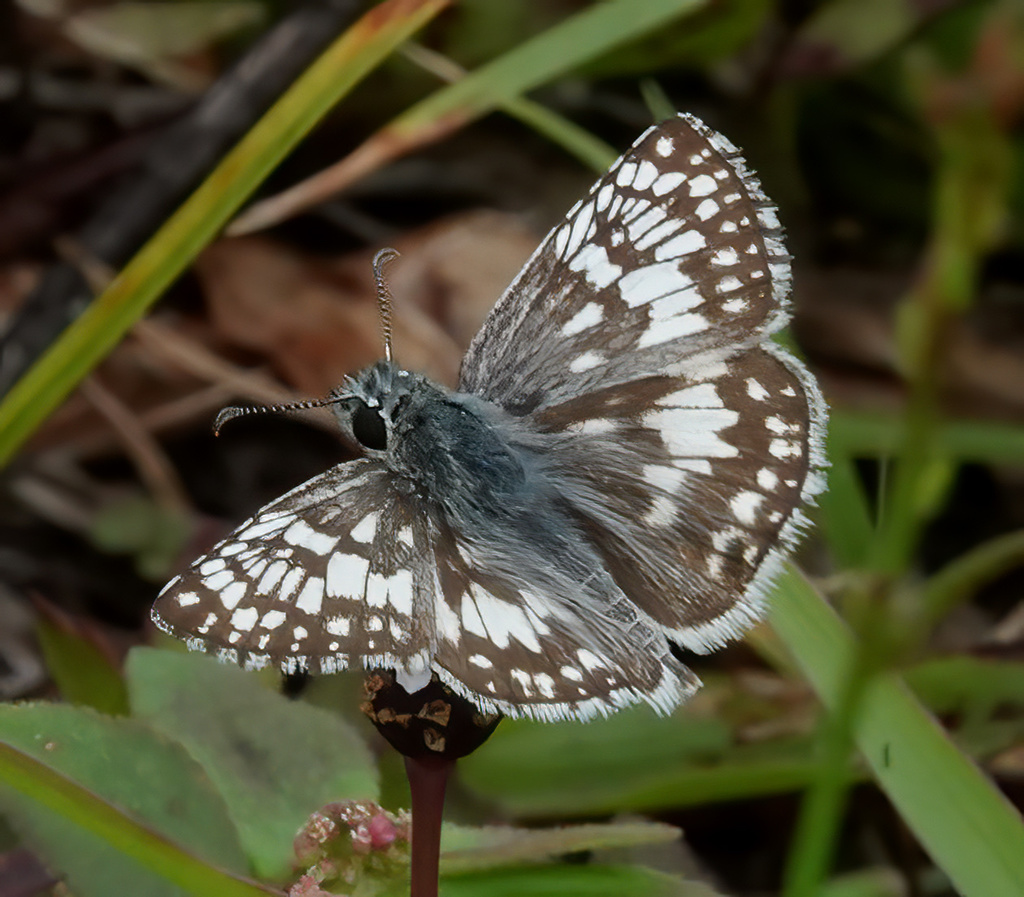
(c) Pam Kleinsasser, some rights reserved (CC BY) · licence
Family: Hesperiidae · Class: Insecta · Order: Lepidoptera
Burnsius albezens (White Checkered-Skipper) is a California animal in the Hesperiidae family.
The White Checkered-Skipper is a small butterfly in the family Hesperiidae, distinguished by its checkered wing pattern of white and dark markings. Adults are relatively small skippers with a wingspan typically ranging from 19 to 25 mm (0.75 to 1.0 inches). The dorsal wing surfaces display a distinctive pattern of white spots and patches against a darker brown or grayish-brown background, creating the characteristic checkered appearance that gives this species its common name. The ventral wing surfaces are generally lighter with more pronounced white markings. This species occurs at low altitudes across the southern United States and Mexico. In California, it is found in southern regions, extending through southern Arizona, southern New Mexico, and west and south Texas. The range also includes Florida populations and extends into Mexico. The species occasionally appears as a rare stray in southwest Utah and central Texas, indicating some dispersal capability beyond its core range. According to NatureServe, the species has a Global Rank of G5, indicating it is widespread and expanding its range. White Checkered-Skippers inhabit a variety of dry, open habitats at low elevations. These include scrubland, desert areas, weedy disturbed sites, and other xeric environments typical of the southwestern United States. The species shows a preference for areas with sparse vegetation and open ground, which facilitates their characteristic rapid, low flight patterns common to many skipper species. Host plant relationships for this species have not been reliably documented in the literature, though it probably utilizes several plants in the mallow family (Malvaceae). Suspected host plants include globemallows (Sphaeralcea species), velvet-leaf (Abutilon species), and poppy mallow (Callirhoe species). Adult butterflies are typically observed from spring through fall in appropriate habitat, with multiple broods possible in warmer climates. Like other skippers, adults feed on flower nectar from various low-growing plants and have rapid, darting flight behavior. Taxonomically, this species has undergone several name changes and was formerly known as Burnsius albescens and Pyrgus albescens. The current accepted scientific name is Burnsius albezens, reflecting recent revisions in skipper taxonomy that separated this genus from Pyrgus. The White Checkered-Skipper appears to have stable populations throughout most of its range and faces no immediate conservation concerns. The species may be expanding its range eastward, as suggested by increasing reports from the Gulf Coast region. Its ability to utilize disturbed habitats and weedy areas may actually benefit the species in landscapes modified by human activities. However, specific population trend data and comprehensive monitoring information are limited for this species, as is common for many smaller butterfly species in the southwestern United States.
Classification
Class: Insecta · Order: Lepidoptera · Family: Hesperiidae
Frequently asked questions
How is Burnsius albezens classified?
Burnsius albezens belongs to class Insecta, order Lepidoptera, family Hesperiidae.
What family does Burnsius albezens belong to?
Burnsius albezens is in the Hesperiidae family.
What is Burnsius albezens?
The White Checkered-Skipper is a small butterfly in the family Hesperiidae, distinguished by its checkered wing pattern of white and dark markings.
Is Burnsius albezens found in California?
Yes. Burnsius albezens is recorded in California in The California Species Project's catalogue.
Related species
Other California species in the same genus, family, or bioregion.
Data from The California Species Project — 14,000+ California species with verified data from CNPS, CDFW, USFWS, and more.