Burnsius communis
Common Checkered-Skipper
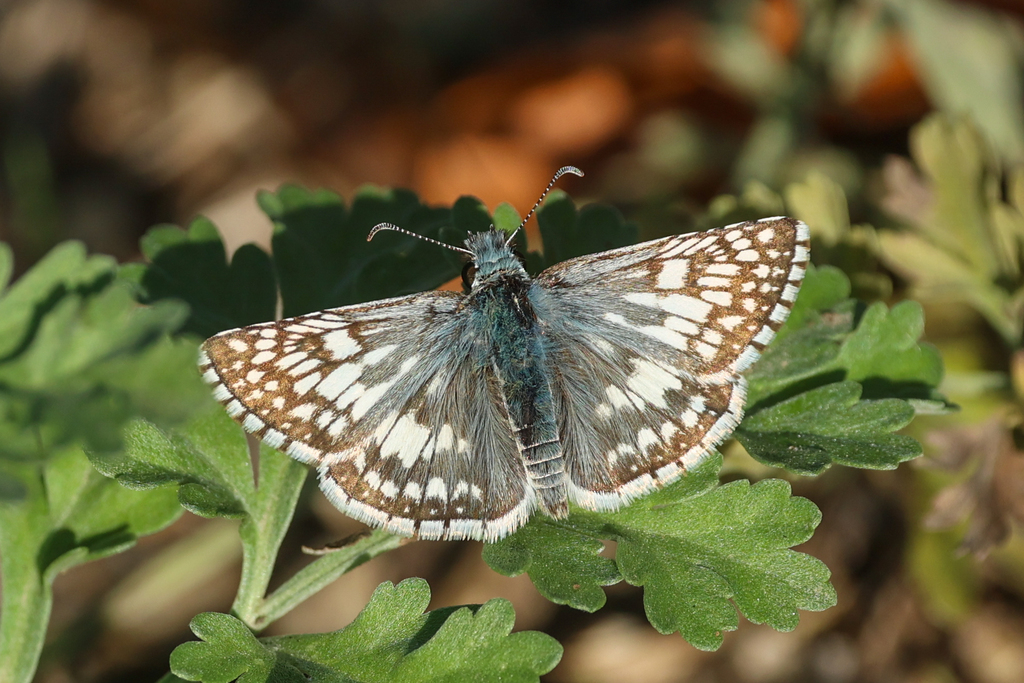
(c) Tom Field, some rights reserved (CC BY) · licence
Family: Hesperiidae · Class: Insecta · Order: Lepidoptera
Burnsius communis (Common Checkered-Skipper) is a California animal in the Hesperiidae family.
The Common Checkered-Skipper is a small butterfly with a wingspan of 19-32 mm (0.75-1.25 inches). Males display dark brown wings with numerous white checkered spots and patches, creating a distinctive checkerboard pattern most prominent on the forewings. The hindwings show similar white spotting but with more subdued contrast. Females are typically larger and darker than males, with reduced white markings and more brownish-gray coloration. The undersides of both sexes show cream-colored to pale yellow ground color with white spots. Adults have relatively short, thick antennae with curved clubs typical of skipper butterflies, and a robust, hairy body. The Common Checkered-Skipper ranges across most of the temperate United States south to the Gulf Coast, western Texas, southeastern Arizona, southern California, and the mountains of northern Mexico. The species colonizes as far north as central Alberta, southern Ontario, and southern New England, though it cannot survive very cold winters and may not maintain permanent populations north of the 40th parallel. In California, populations occur primarily in the southern regions and Central Valley, with occasional records from coastal areas during favorable years. This species inhabits a variety of open, disturbed habitats including vacant lots, roadsides, agricultural areas, desert washes, and suburban gardens. The butterfly shows a strong preference for areas containing host plants in the mallow family and thrives in sunny, weedy locations from sea level to approximately 2,100 meters (6,900 feet) elevation. Urban and agricultural environments often provide ideal conditions due to the presence of weedy mallows and reduced competition. Common Checkered-Skippers utilize several plants in the mallow family (Malvaceae) as larval hosts, including globemallows (Sphaeralcea), mallow (Malva), hollyhock (Althaea), alkali mallows (Sida), velvet-leaf (Abutilon), and poppy mallow (Callirhoe). Adults are active fliers that feed on nectar from various flowers including lantana, asters, and other composites. Males exhibit territorial behavior, perching on low vegetation or bare ground and pursuing passing insects. The species produces multiple generations per year in warmer climates, with continuous breeding in southern California and the Southwest. Females lay single white eggs on host plant leaves and buds. Larvae construct silk shelters by folding leaves and feed primarily at night. Overwintering occurs in the pupal stage in most regions. The Common Checkered-Skipper has no federal or state conservation listing and maintains stable populations across most of its range. The species benefits from human-modified landscapes and often increases in abundance in disturbed areas where weedy mallows proliferate. Climate change may be expanding the northern limits of permanent populations, as warmer winters allow survival at higher latitudes. The butterfly's adaptability to urban environments and use of common, weedy host plants suggest populations will remain secure, though localized declines may occur due to intensive herbicide use or elimination of ruderal habitats.
Classification
Class: Insecta · Order: Lepidoptera · Family: Hesperiidae
Frequently asked questions
How is Burnsius communis classified?
Burnsius communis belongs to class Insecta, order Lepidoptera, family Hesperiidae.
What family does Burnsius communis belong to?
Burnsius communis is in the Hesperiidae family.
What is Burnsius communis?
The Common Checkered-Skipper is a small butterfly with a wingspan of 19-32 mm (0.75-1.25 inches).
Is Burnsius communis found in California?
Yes. Burnsius communis is recorded in California in The California Species Project's catalogue.
Related species
Other California species in the same genus, family, or bioregion.
Data from The California Species Project — 14,000+ California species with verified data from CNPS, CDFW, USFWS, and more.