Buteo platypterus
Broad-winged Hawk
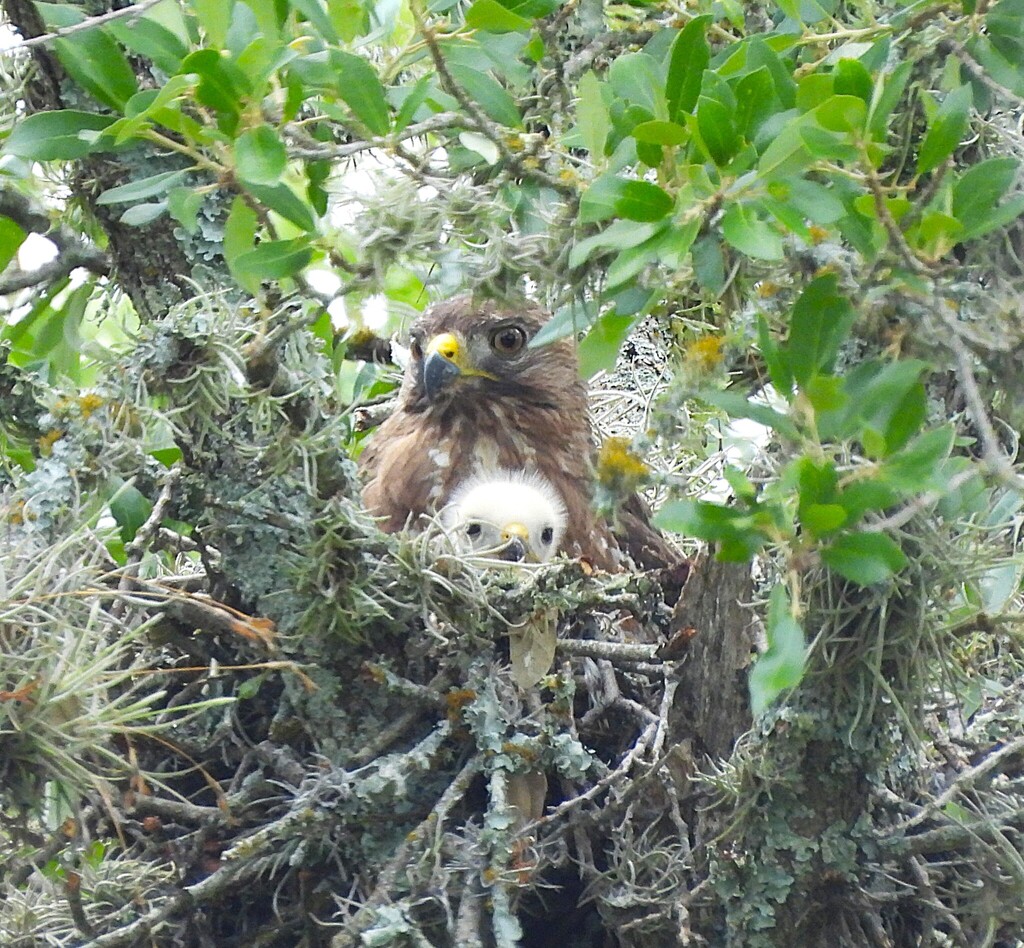
(c) Craig Hensley, some rights reserved (CC BY) · licence
Family: Accipitridae · Class: Aves · Order: Accipitriformes
Buteo platypterus (Broad-winged Hawk) is a California animal in the Accipitridae family.
The Broad-winged Hawk (Buteo platypterus) is a medium-sized raptor measuring 34-44 cm (13.4-17.3 inches) in length with a wingspan of 81-100 cm (32-39 inches). Adults weigh 265-560 grams (9.3-19.8 ounces). The species exhibits distinct plumage variation between adults and juveniles. Adult birds display dark brown upperparts with white underparts heavily barred with reddish-brown. The tail features broad white and dark bands, with the white bands typically wider than the dark ones. In flight, adults show distinctive white underwing coverts contrasting with dark flight feathers. Juveniles present brown streaking on white underparts rather than barring, and their tails show numerous narrow bands rather than the bold pattern of adults. Historically, Broad-winged Hawks bred across eastern North America from central Alberta to Nova Scotia, south to east-central Texas and northern Florida. The species' western range extends to the eastern edges of the Great Plains. In California, Broad-winged Hawks are considered rare visitors, typically observed during migration periods in fall and occasionally in spring. Most California records come from the eastern desert regions and Central Valley, with sporadic sightings in coastal areas. The species does not breed in California, with nearest breeding populations occurring in Colorado and New Mexico. Breeding habitat consists of mature deciduous and mixed deciduous-coniferous forests, particularly those containing American beech, sugar maple, and yellow birch. The species requires forest interior conditions with canopy cover exceeding 60%. Nests are typically placed 4.5-18 meters (15-60 feet) high in the main crotch of a deciduous tree. During migration, Broad-winged Hawks utilize various habitats including open woodlands, forest edges, and agricultural areas. Wintering habitat in Central and South America includes tropical forests from sea level to 2,000 meters elevation. Broad-winged Hawks are specialized predators focusing on small mammals, amphibians, reptiles, and insects. Primary prey includes chipmunks, red squirrels, frogs, toads, small snakes, and large insects such as caterpillars and beetles. The species employs sit-and-wait hunting tactics, perching motionlessly before swooping down on prey. Breeding occurs from late April through August, with females laying 2-3 eggs in stick nests lined with bark and green leaves. Incubation lasts 28-31 days, performed primarily by females. Young fledge after 29-35 days but remain dependent on parents for an additional 4-8 weeks. Broad-winged Hawks are known for their large-scale migration behavior, forming large flocks called kettles that spiral upward on thermal currents. Peak migration occurs in mid-September, with thousands of individuals passing through traditional flyways. The species overwinters primarily in Central and South America, from Mexico to northern Argentina. The Broad-winged Hawk is not federally listed and maintains stable populations across most of its range. According to North American Breeding Bird Survey data, populations have remained relatively stable since 1966, with some regional increases noted in reforesting areas. Primary conservation concerns include forest fragmentation in breeding areas and habitat loss in wintering ranges. Climate change may affect migration timing and breeding range boundaries, but current population trends suggest the species remains secure.
Classification
Class: Aves · Order: Accipitriformes · Family: Accipitridae
Frequently asked questions
How is Buteo platypterus classified?
Buteo platypterus belongs to class Aves, order Accipitriformes, family Accipitridae.
What family does Buteo platypterus belong to?
Buteo platypterus is in the Accipitridae family.
What is Buteo platypterus?
The Broad-winged Hawk (Buteo platypterus) is a medium-sized raptor measuring 34-44 cm (13.4-17.3 inches) in length with a wingspan of 81-100 cm (32-39 inches).
Is Buteo platypterus found in California?
Yes. Buteo platypterus is recorded in California in The California Species Project's catalogue.
Related species
Other California species in the same genus, family, or bioregion.
Data from The California Species Project — 14,000+ California species with verified data from CNPS, CDFW, USFWS, and more.