Buteo regalis
Ferruginous Hawk
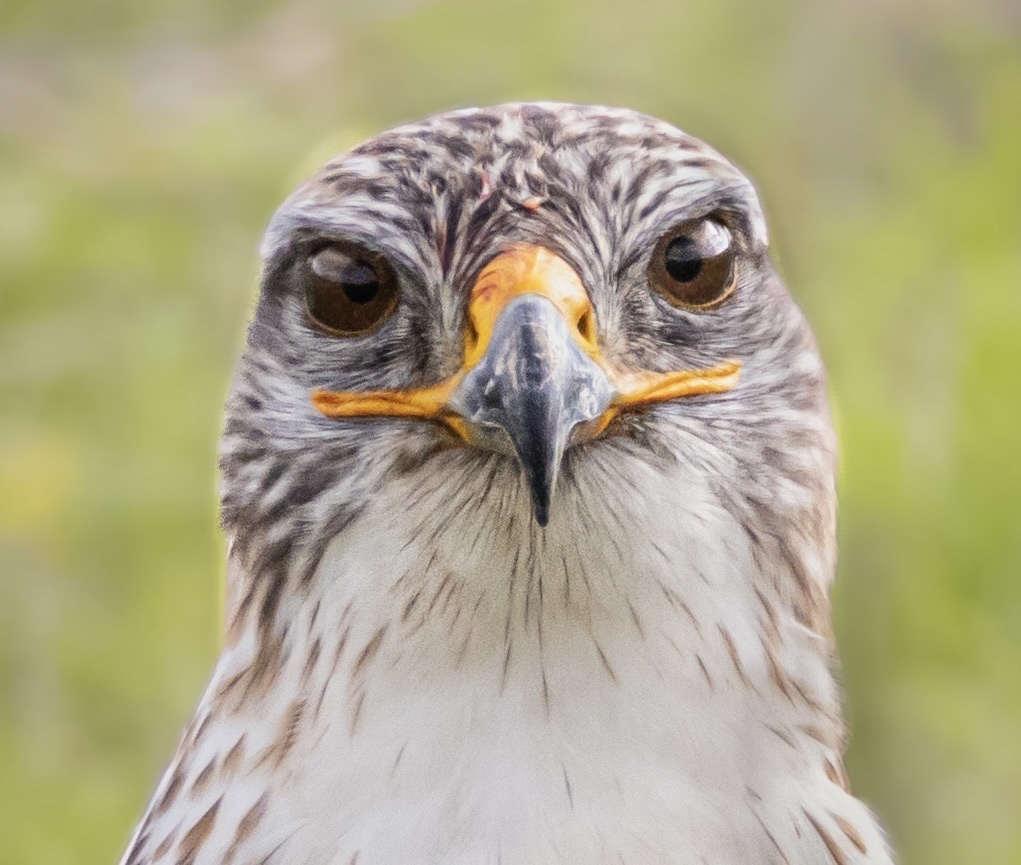
(c) Brooke J., some rights reserved (CC BY) · licence
Family: Accipitridae · Class: Aves · Order: Accipitriformes
Conservation status: WL · G4 S3S4
Buteo regalis (Ferruginous Hawk) is a California animal in the Accipitridae family.
The ferruginous hawk (Buteo regalis) is the largest hawk in North America, measuring 56 to 69 cm (22 to 27 inches) in length with a wingspan reaching 122 to 152 cm (48 to 60 inches). Adults weigh between 977 to 2,074 grams (2.2 to 4.6 pounds), with females typically larger than males. The species exhibits significant color polymorphism, with light and dark morphs occurring throughout its range. Light-morph adults display rusty-red (ferruginous) shoulders, back, and leg feathers, contrasting with white underparts marked by dark comma-shaped patches on the flanks. The head is pale with a whitish throat and dark eye stripe. Dark-morph individuals are predominantly chocolate-brown to blackish, comprising approximately 10 to 15 percent of the population. All morphs show distinctive white tail patches and pale flight feathers visible during flight. In California, ferruginous hawks occur primarily as winter residents and migrants in the Central Valley, Antelope Valley, and desert regions of southeastern California. Historical breeding occurred in northeastern California, but confirmed nesting has become increasingly rare. The species' breeding range extends from the Canadian prairies south through the Great Plains to New Mexico and Arizona. Winter distribution includes California's agricultural valleys, with concentrations in Kern, Fresno, and Imperial counties. Ferruginous hawks inhabit open grasslands, shrub-steppe, prairie, and agricultural areas with scattered trees or elevated perches. During winter in California, they utilize alfalfa fields, pastures, and fallow agricultural lands. Breeding habitat requires open terrain with minimal human disturbance, elevated nest sites including trees, cliffs, or artificial structures, and abundant small mammal populations. The species avoids heavily forested or developed areas. Ferruginous hawks are specialized predators of ground squirrels, prairie dogs, and other medium-sized mammals. In California, they primarily hunt Belding's ground squirrels, California ground squirrels, and black-tailed jackrabbits. Hunting occurs from elevated perches or during low, coursing flights over open terrain. Breeding begins in March to April, with females laying 2 to 4 eggs in large stick nests. Incubation lasts 32 to 33 days, and young fledge after 38 to 50 days. The species typically raises one brood annually. Ferruginous hawks are designated as a California Watch List species with a state rank of S3S4, indicating moderate concern for population viability. Continental populations have declined by approximately 64 percent since 1966, according to Breeding Bird Survey data. Primary threats include habitat conversion of native grasslands to agriculture, urban development, and energy infrastructure. Shooting and disturbance at nest sites continue to impact breeding populations. Climate change may affect prey availability and suitable habitat distribution. Conservation efforts focus on protecting remaining grassland habitats and implementing wildlife-friendly agricultural practices in wintering areas.
Classification
Class: Aves · Order: Accipitriformes · Family: Accipitridae
Conservation status
WL · G4 S3S4
Frequently asked questions
How is Buteo regalis classified?
Buteo regalis belongs to class Aves, order Accipitriformes, family Accipitridae.
What family does Buteo regalis belong to?
Buteo regalis is in the Accipitridae family.
Is Buteo regalis protected or of conservation concern?
Buteo regalis carries the following status: WL · G4 S3S4.
What is Buteo regalis?
The ferruginous hawk (Buteo regalis) is the largest hawk in North America, measuring 56 to 69 cm (22 to 27 inches) in length with a wingspan reaching 122 to 152 cm (48 to 60 inches).
Is Buteo regalis found in California?
Yes. Buteo regalis is recorded in California in The California Species Project's catalogue.
Related species
Other California species in the same genus, family, or bioregion.
Data from The California Species Project — 14,000+ California species with verified data from CNPS, CDFW, USFWS, and more.