Cacotherapia angulalis
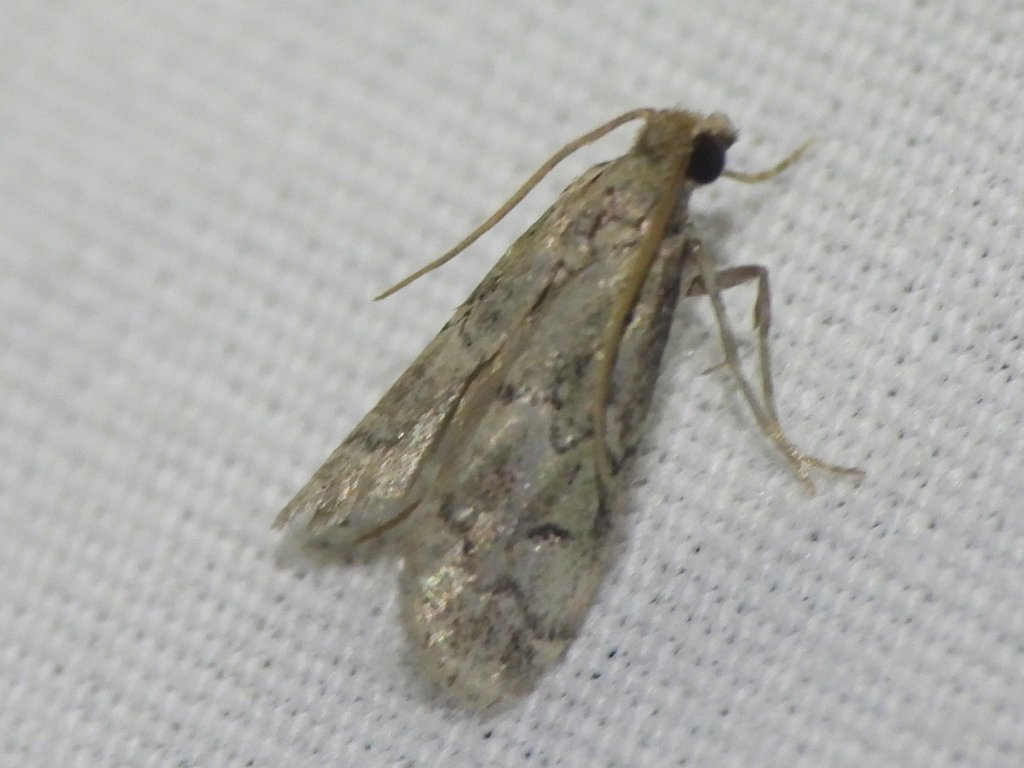
(c) Sam Kieschnick, some rights reserved (CC BY) · licence
Family: Pyralidae · Class: Insecta · Order: Lepidoptera
Cacotherapia angulalis is a California animal in the Pyralidae family.
Cacotherapia angulalis is a moth species in the family Pyralidae, order Lepidoptera. This species belongs to a diverse family of moths commonly known as snout moths or grass moths, which are characterized by their distinctive triangular wings and prominent labial palps that project forward like a snout. The physical characteristics and detailed morphological features of C. angulalis have not been extensively documented in the scientific literature. Like other members of the Pyralidae family, this species likely exhibits the typical moth body plan with a wingspan that varies according to sex and environmental conditions. The wing patterns, coloration, and distinguishing features that would aid in field identification remain poorly described in available sources. The geographic distribution of Cacotherapia angulalis appears to be limited, though specific range information is not well documented in current scientific databases. Many pyralid moths have restricted distributions tied to their specific host plant requirements and habitat preferences. The species' occurrence in California, if present, would likely be associated with particular vegetation communities that support its larval development. Habitat requirements for C. angulalis have not been thoroughly studied or reported in the available literature. Members of the Pyralidae family typically inhabit diverse environments ranging from grasslands and meadows to forest edges and riparian areas. The larvae of many pyralid species are associated with specific plant families, feeding on stems, roots, or other plant tissues. Without documented host plant associations, the specific habitat needs of this species remain unclear. The life history and ecological behavior of Cacotherapia angulalis are poorly understood. Pyralid moths generally undergo complete metamorphosis, with larvae developing on or within host plants before pupating and emerging as adults. Flight periods, mating behaviors, and reproductive strategies for this species have not been documented in accessible scientific sources. The ecological role of C. angulalis, including its potential importance as a pollinator or prey species, remains unstudied. The conservation status of Cacotherapia angulalis is not established, as the species lacks formal assessment by federal or state wildlife agencies. According to the U.S. Fish and Wildlife Service ECOS database, this species is not listed under the Endangered Species Act as of December 2025. The absence of comprehensive biological and ecological data makes it difficult to assess population trends or potential threats to the species. Scientific documentation for Cacotherapia angulalis remains extremely limited despite thorough review of available databases and literature. The information presented here reflects the current state of knowledge based on taxonomic databases such as BugGuide. Detailed studies of this species' biology, distribution, ecology, and conservation needs are lacking. We welcome contributions of verified scientific data, photographs, or field observations to enhance this species account.
Classification
Class: Insecta · Order: Lepidoptera · Family: Pyralidae
Frequently asked questions
How is Cacotherapia angulalis classified?
Cacotherapia angulalis belongs to class Insecta, order Lepidoptera, family Pyralidae.
What family does Cacotherapia angulalis belong to?
Cacotherapia angulalis is in the Pyralidae family.
What is Cacotherapia angulalis?
Cacotherapia angulalis is a moth species in the family Pyralidae, order Lepidoptera.
Is Cacotherapia angulalis found in California?
Yes. Cacotherapia angulalis is recorded in California in The California Species Project's catalogue.
Related species
Other California species in the same genus, family, or bioregion.
Data from The California Species Project — 14,000+ California species with verified data from CNPS, CDFW, USFWS, and more.