Cadlina flavomaculata
Yellow-spotted Cadlina
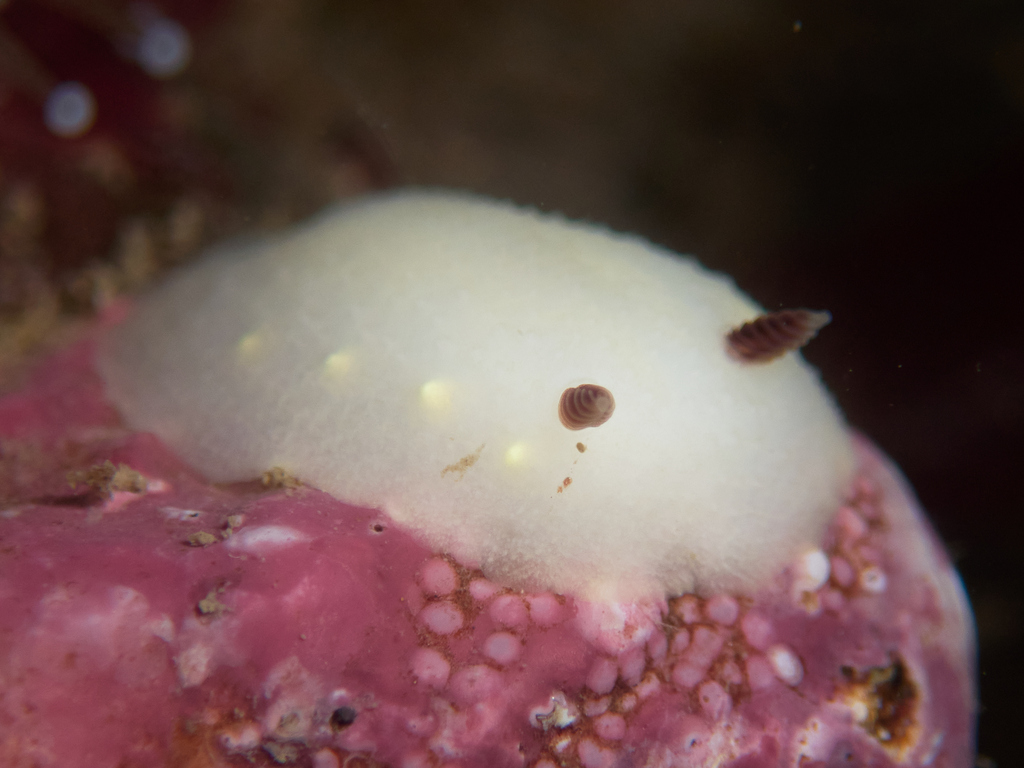
(c) Ken-ichi Ueda, some rights reserved (CC BY) · licence
Family: Cadlinidae · Class: Gastropoda · Order: Nudibranchia
Cadlina flavomaculata (Yellow-spotted Cadlina) is a California animal in the Cadlinidae family.
The Yellow-spotted Cadlina (Cadlina flavomaculata) is a marine nudibranch belonging to the family Cadlinidae. This sea slug species is characterized by its distinctive yellow spots on the dorsal surface, which give it its common name. Like other nudibranchs, it lacks a shell and possesses cerata or other external structures for respiration and defense. The species occurs along the Pacific Coast, though specific range details and population data are not well documented in current scientific literature. Based on the taxonomic classification confirmed by USFWS records, C. flavomaculata is part of the diverse order Nudibranchia, which includes over 500 species tracked by federal wildlife agencies. Habitat requirements for this species have not been thoroughly studied or documented. Like most nudibranchs, it likely inhabits marine environments, potentially associated with rocky intertidal zones or subtidal areas where its prey species occur. The specific depth range, substrate preferences, and microhabitat requirements remain undocumented in available scientific sources. Ecological information about C. flavomaculata is extremely limited. Most nudibranchs are specialized predators, often feeding on specific prey such as sponges, hydroids, or other cnidarians. The diet, reproductive behavior, seasonal activity patterns, and life cycle of this species have not been adequately studied or published in accessible scientific literature. Details about spawning periods, egg mass characteristics, larval development, and longevity are not currently available. The conservation status of the Yellow-spotted Cadlina is not established under federal or state endangered species frameworks. The species does not appear on USFWS threatened and endangered species lists as of December 2025, nor does it have designated critical habitat. Population trends, abundance estimates, and specific threats are unknown due to the lack of systematic surveys and research focus on this group. Many nudibranch species face potential threats from ocean acidification, climate change impacts on marine ecosystems, and coastal development, but species-specific vulnerability assessments have not been conducted for C. flavomaculata. The limited scientific documentation for this species reflects broader knowledge gaps in nudibranch biology and ecology. While the species is recognized taxonomically by federal wildlife agencies, comprehensive biological studies are lacking. Research priorities would include basic life history studies, distribution mapping, habitat characterization, and ecological role assessment. Community-based monitoring through citizen science platforms like iNaturalist could help gather additional occurrence data and photographic records to support future research efforts. Scientific documentation for this species remains extremely limited. The information presented here is based on available federal taxonomic records and general nudibranch biology. We welcome contributions of verified scientific data, photographs, or field observations to enhance this species account.
Classification
Class: Gastropoda · Order: Nudibranchia · Family: Cadlinidae
Frequently asked questions
How is Cadlina flavomaculata classified?
Cadlina flavomaculata belongs to class Gastropoda, order Nudibranchia, family Cadlinidae.
What family does Cadlina flavomaculata belong to?
Cadlina flavomaculata is in the Cadlinidae family.
What is Cadlina flavomaculata?
The Yellow-spotted Cadlina (Cadlina flavomaculata) is a marine nudibranch belonging to the family Cadlinidae.
Is Cadlina flavomaculata found in California?
Yes. Cadlina flavomaculata is recorded in California in The California Species Project's catalogue.
More California species
This species has no close relatives in our California data — here are other species to explore.
Data from The California Species Project — 14,000+ California species with verified data from CNPS, CDFW, USFWS, and more.