Caecidotea tomalensis
Tomales Isopod
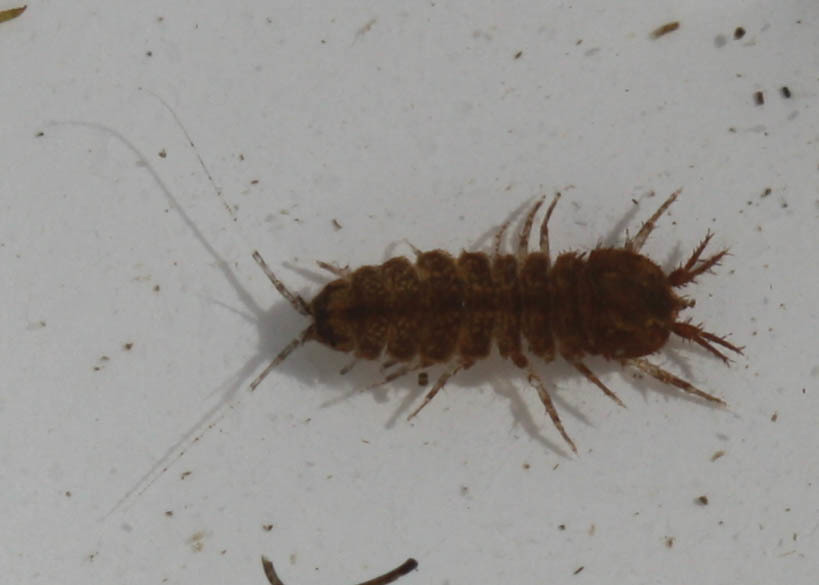
no rights reserved · CC0
Family: Asellidae · Class: Malacostraca · Order: Isopoda
Conservation status: G2 S2S3
Caecidotea tomalensis (Tomales Isopod) is a California animal in the Asellidae family.
The Tomales isopod (Caecidotea tomalensis) is a small freshwater crustacean endemic to coastal California. This aquatic invertebrate belongs to the family Asellidae and represents one of the limited number of isopod species restricted to specific watersheds in the region. Caecidotea tomalensis is endemic to San Francisco and San Mateo counties, extending north through Sonoma and Mendocino counties in California (NatureServe). The species appears to have a highly restricted distribution within this range, occurring in specific freshwater systems associated with coastal watersheds. Historical records indicate the species was documented from multiple locations within this geographic area, though recent surveys suggest some population losses. This isopod inhabits freshwater environments, including streams, springs, and associated aquatic habitats within its coastal California range. Like other members of the genus Caecidotea, this species likely requires clean, well-oxygenated water with appropriate substrate conditions. The specific microhabitat preferences and environmental requirements of C. tomalensis have not been extensively documented, though the species' restricted distribution suggests specialized habitat needs. As a freshwater isopod, C. tomalensis likely feeds on detritus, algae, and organic matter found in aquatic sediments and on submerged surfaces. Reproduction in related Caecidotea species typically involves direct development, with females carrying eggs and young in a marsupium (brood pouch) until they are released as miniature adults. Specific details about the reproductive biology, life cycle duration, and seasonal activity patterns of C. tomalensis remain poorly documented in the scientific literature. The Tomales isopod carries a Global rank of G2 (imperiled) and a State rank of S2S3 (imperiled to vulnerable) according to NatureServe, reflecting its restricted range and apparent population declines. Recent research by Graening et al. published in the California Fish and Wildlife Journal examined the conservation status of this species, reporting on the loss of some known populations from historic locations (CDFW). The species faces typical threats associated with freshwater invertebrates in coastal California, including habitat modification, water quality degradation, and potential impacts from urban development and agricultural activities within its watershed range. The limited distribution and specialized habitat requirements of C. tomalensis, combined with documented population losses, highlight the conservation challenges facing endemic freshwater invertebrates in California's coastal regions. Continued monitoring and habitat protection will be essential for maintaining viable populations of this species. Scientific documentation for this species remains limited, and additional research on its biology, distribution, and specific habitat requirements would contribute to more effective conservation planning.
Classification
Class: Malacostraca · Order: Isopoda · Family: Asellidae
Conservation status
G2 S2S3
Frequently asked questions
How is Caecidotea tomalensis classified?
Caecidotea tomalensis belongs to class Malacostraca, order Isopoda, family Asellidae.
What family does Caecidotea tomalensis belong to?
Caecidotea tomalensis is in the Asellidae family.
Is Caecidotea tomalensis protected or of conservation concern?
Caecidotea tomalensis carries the following status: G2 S2S3.
What is Caecidotea tomalensis?
The Tomales isopod (Caecidotea tomalensis) is a small freshwater crustacean endemic to coastal California.
Is Caecidotea tomalensis found in California?
Yes. Caecidotea tomalensis is recorded in California in The California Species Project's catalogue.
Related species
Other California species in the same genus, family, or bioregion.
Data from The California Species Project — 14,000+ California species with verified data from CNPS, CDFW, USFWS, and more.