Caenurgina caerulea
Cerulean Looper
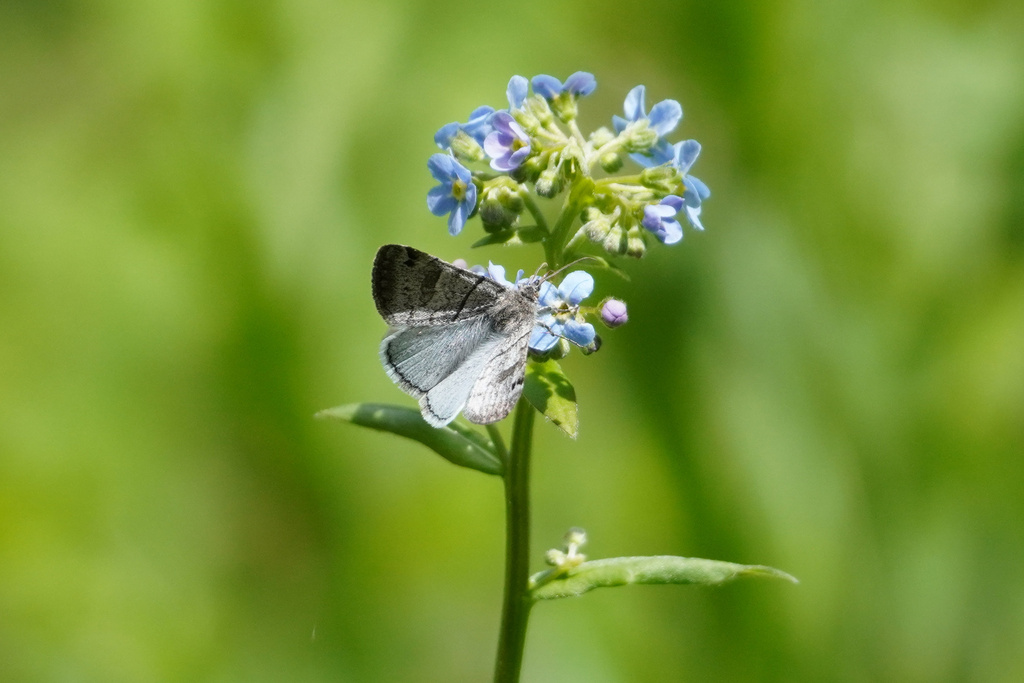
no rights reserved · CC0
Family: Erebidae · Class: Insecta · Order: Lepidoptera
Caenurgina caerulea (Cerulean Looper) is a California animal in the Erebidae family.
The Cerulean Looper (Caenurgina caerulea) is a moth in the family Erebidae, subfamily Erebinae, tribe Euclidiini. This species is part of the diverse noctuoid moth fauna of western North America, distinguished by taxonomic placement and regional distribution patterns. The Cerulean Looper exhibits the typical erebid moth morphology with nocturnal adaptations. Adult moths display the characteristic wing patterns and coloration associated with the genus Caenurgina, though detailed morphological descriptions require further scientific documentation. The species is assigned Hodges number 8736 in the standardized numbering system for North American Lepidoptera. This species occurs in western North America, with documented records from California, Oregon, Washington, Idaho, and western Montana (BugGuide). In California, the Cerulean Looper has been recorded from Lassen County, with specific documentation from areas near Westwood in June 2008 (BugGuide). The species appears to have a broader Pacific Northwest distribution, extending into southern British Columbia. Oregon records include observations from Linn County locations such as Cone Peak Trail, documented in September 2014 (News of the Lepidopterists' Society 2015). Habitat requirements for Caenurgina caerulea have not been comprehensively studied. Based on collection localities, the species appears to utilize diverse forested and transitional habitats across its western range. The Lassen County record suggests adaptation to montane environments, while Oregon collections from various elevations indicate habitat flexibility. Specific microhabitat preferences, elevation ranges, and vegetation associations require additional field research to document thoroughly. Ecological details including larval host plants, adult flight periods, and reproductive biology remain poorly documented in scientific literature. The June collection date from California and September record from Oregon suggest an extended flight period, though complete phenology data are lacking. Adult moths are presumably nocturnal like other erebid species, attracted to artificial light sources during nighttime activity periods. Larval feeding ecology, overwintering strategies, and generation number per year have not been established through systematic study. No formal conservation status has been assigned to Caenurgina caerulea at federal or state levels. The species appears to maintain stable populations across its documented range, with regular observations reported through citizen science platforms and lepidopterological surveys. However, comprehensive population assessments and trend analyses have not been conducted. As with many western North American moths, potential threats may include habitat modification, wildfire regime changes, and climate-induced range shifts, though specific vulnerability assessments are needed. Scientific documentation for this species remains limited despite its recognition in taxonomic databases. Research priorities include detailed morphological descriptions, comprehensive distributional surveys, host plant identification, and ecological studies. Community observations through platforms like BugGuide and iNaturalist provide valuable occurrence data but systematic biological research is needed to fully understand this species' requirements and conservation needs.
Classification
Class: Insecta · Order: Lepidoptera · Family: Erebidae
Frequently asked questions
How is Caenurgina caerulea classified?
Caenurgina caerulea belongs to class Insecta, order Lepidoptera, family Erebidae.
What family does Caenurgina caerulea belong to?
Caenurgina caerulea is in the Erebidae family.
What is Caenurgina caerulea?
The Cerulean Looper (Caenurgina caerulea) is a moth in the family Erebidae, subfamily Erebinae, tribe Euclidiini.
Is Caenurgina caerulea found in California?
Yes. Caenurgina caerulea is recorded in California in The California Species Project's catalogue.
Related species
Other California species in the same genus, family, or bioregion.
Data from The California Species Project — 14,000+ California species with verified data from CNPS, CDFW, USFWS, and more.