Cairina moschata
Muscovy Duck
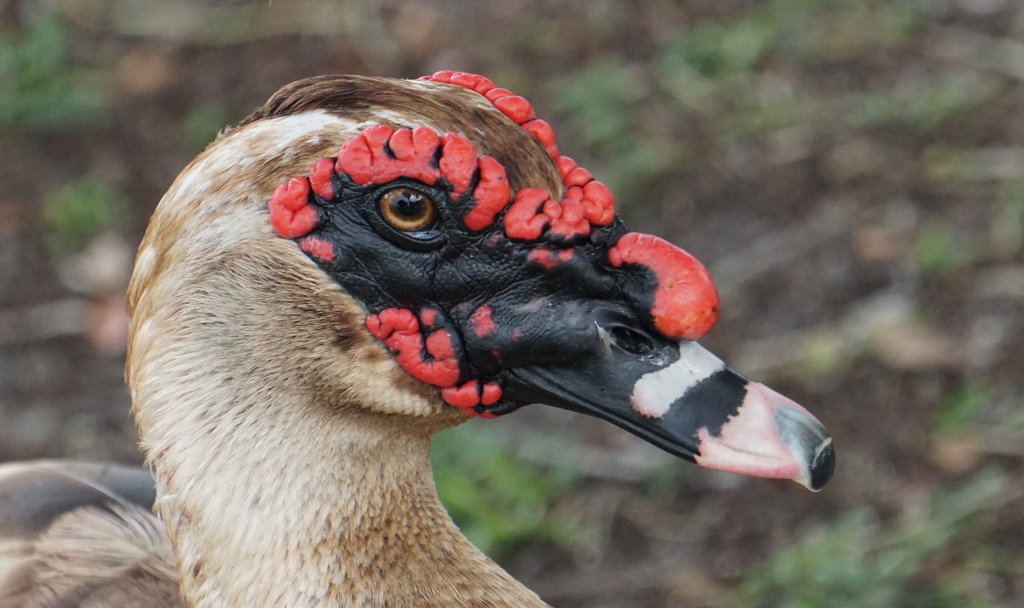
(c) Eridan Xharahi, some rights reserved (CC BY) · licence
Family: Anatidae · Class: Aves · Order: Anseriformes
Cairina moschata (Muscovy Duck) is a California animal in the Anatidae family.
The Muscovy Duck is a large, heavily-built waterfowl native to tropical regions of the Americas. Adult males can reach 76 cm (30 inches) in length and weigh up to 4.8 kg (10.6 pounds), making them significantly larger than females, which typically measure 64 cm (25 inches) and weigh 1.3-2.3 kg (2.9-5.1 pounds). The species displays predominantly black plumage with distinctive white wing patches visible during flight. Adults develop prominent red facial caruncles and warty growths around the bill, particularly pronounced in males. Despite their size, Muscovy Ducks are partially arboreal and capable of perching in trees. The natural range of Cairina moschata extends from extreme southern Texas and northern Mexico south through Central America to northern Argentina (Birds of the World). In the United States, wild populations are restricted to the Rio Grande Valley of Texas, specifically in Hidalgo, Starr, and Zapata counties. However, feral and domestic populations have established well beyond this native range throughout much of the United States, particularly in Florida and other southern states. Muscovy Ducks inhabit tropical rivers, ponds, marshes, and wooded swamplands. They prefer freshwater environments with adjacent forest cover, utilizing tree cavities for nesting and roosting. The species demonstrates strong arboreal tendencies, often perching on branches overhanging water bodies. In their native range, they occupy lowland tropical forests near permanent water sources. This species exhibits omnivorous feeding behavior, consuming aquatic vegetation, grains, fruits, nuts, small fish, insects, and crabs. Muscovy Ducks are most active during early morning and late evening hours, particularly in areas where they face hunting pressure. Breeding occurs in tree cavities, with females laying 8-15 glossy white eggs. The species shows strong site fidelity and may use the same nesting cavity across multiple seasons. Males play no role in incubation or chick-rearing, leaving parental duties entirely to females. The conservation status of wild Muscovy Duck populations varies by region. While not federally protected in the United States, the species faces significant pressure from habitat loss and hunting throughout its native range. According to U.S. Fish and Wildlife Service regulations, feral Muscovy Ducks and their hybrids may be removed without permits anywhere in the United States except the three Texas counties where native populations occur (USFWS Migratory Bird Permitting Handbook 2025). This management approach reflects concerns about genetic pollution of wild populations and ecosystem impacts from non-native populations. In their native range, wild Muscovy Ducks have become increasingly wary due to hunting pressure and habitat conversion. The species benefits from wetland conservation efforts and protected area designations throughout Central and South America, though population trends require continued monitoring to ensure long-term viability.
Classification
Class: Aves · Order: Anseriformes · Family: Anatidae
Frequently asked questions
How is Cairina moschata classified?
Cairina moschata belongs to class Aves, order Anseriformes, family Anatidae.
What family does Cairina moschata belong to?
Cairina moschata is in the Anatidae family.
What is Cairina moschata?
The Muscovy Duck is a large, heavily-built waterfowl native to tropical regions of the Americas.
Is Cairina moschata found in California?
Yes. Cairina moschata is recorded in California in The California Species Project's catalogue.
Related species
Other California species in the same genus, family, or bioregion.
Data from The California Species Project — 14,000+ California species with verified data from CNPS, CDFW, USFWS, and more.