Calameuta clavata
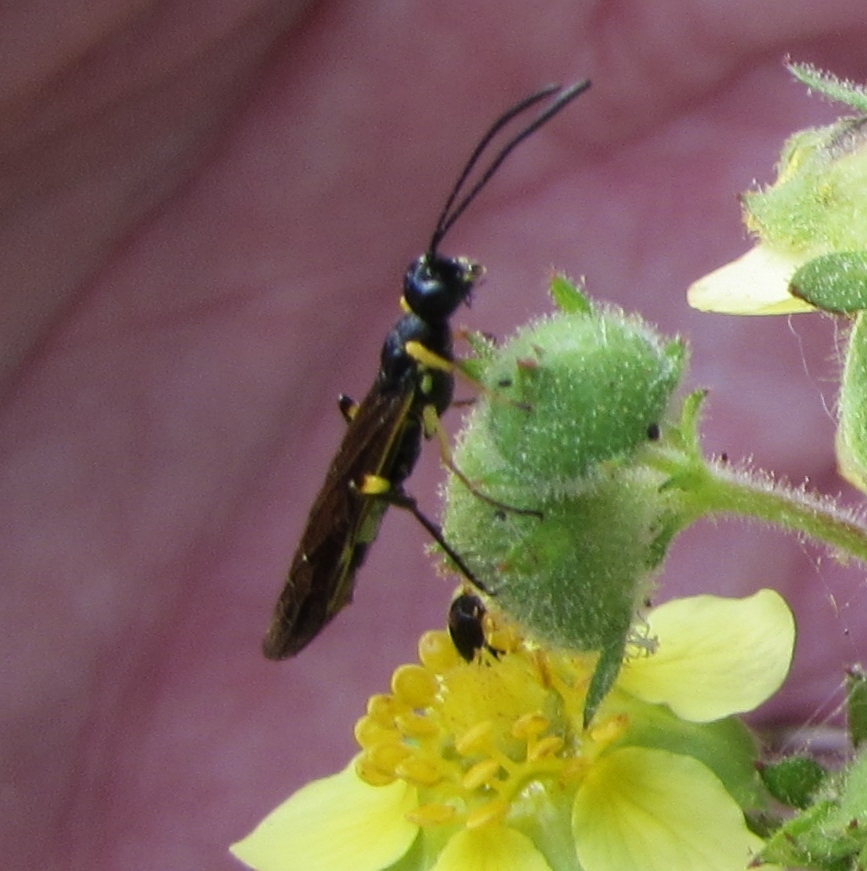
(c) Justin Johnsen, some rights reserved (CC BY) · licence
Family: Cephidae · Class: Insecta · Order: Hymenoptera
Calameuta clavata is a California animal in the Cephidae family.
Calameuta clavata is a stem sawfly in the family Cephidae, order Hymenoptera. This species belongs to a group of specialized wasps whose larvae develop as internal borers within plant stems. Adults are typically small, slender insects with the characteristic narrow-waisted body plan of hymenopterans, though specific morphological details for this species have not been comprehensively documented in available literature. The distribution of Calameuta clavata extends across North America, with documented occurrences in both the United States and Canada. According to NatureServe, the species has a global conservation rank of G5, indicating it is considered secure across its range with no immediate conservation concerns (NatureServe Explorer). The species appears to have a broad continental distribution, though specific county-level records within California remain poorly documented in accessible databases. Like other members of the family Cephidae, C. clavata likely inhabits areas where suitable host plants are present. Stem sawflies typically require herbaceous plants or shrubs with pithy stems that can accommodate larval development. The species has been documented in grassland habitats, suggesting an association with native or naturalized herbaceous vegetation (Shorthouse & Floate 2010). Specific elevation ranges and microhabitat preferences for this species have not been well characterized in the scientific literature. The biology and ecology of C. clavata follow the general life cycle pattern of stem sawflies. Adult females use their saw-like ovipositor to cut slits in plant stems, depositing eggs directly into the pith. Larvae develop as internal stem borers, feeding on the soft interior tissues of their host plants. This feeding behavior can cause stem galling or weakening, though the ecological impact varies depending on host plant species and larval density. Pupation typically occurs within the host stem, with adults emerging to mate and begin the next generation. Specific details regarding seasonal activity patterns, host plant relationships, and reproductive biology for C. clavata require further research. As a species ranked G5 by NatureServe, C. clavata is not currently considered threatened or endangered. The secure global ranking suggests stable populations across the species' range, with no major conservation threats identified. However, like many specialized herbivorous insects, the species could potentially be affected by habitat loss, changes in host plant availability, or broader ecosystem modifications. The lack of detailed ecological studies limits our understanding of potential vulnerabilities or conservation needs. Scientific documentation for this species remains limited despite its apparently widespread distribution. Much of the available information is derived from taxonomic databases and broad surveys rather than focused ecological studies. We welcome contributions of verified scientific data, photographs, or field observations to enhance this species account and improve our understanding of C. clavata's biology and distribution patterns in California.
Classification
Class: Insecta · Order: Hymenoptera · Family: Cephidae
Frequently asked questions
How is Calameuta clavata classified?
Calameuta clavata belongs to class Insecta, order Hymenoptera, family Cephidae.
What family does Calameuta clavata belong to?
Calameuta clavata is in the Cephidae family.
What is Calameuta clavata?
Calameuta clavata is a stem sawfly in the family Cephidae, order Hymenoptera.
Is Calameuta clavata found in California?
Yes. Calameuta clavata is recorded in California in The California Species Project's catalogue.
More California species
This species has no close relatives in our California data — here are other species to explore.
Data from The California Species Project — 14,000+ California species with verified data from CNPS, CDFW, USFWS, and more.