Calasellus californicus
An Isopod
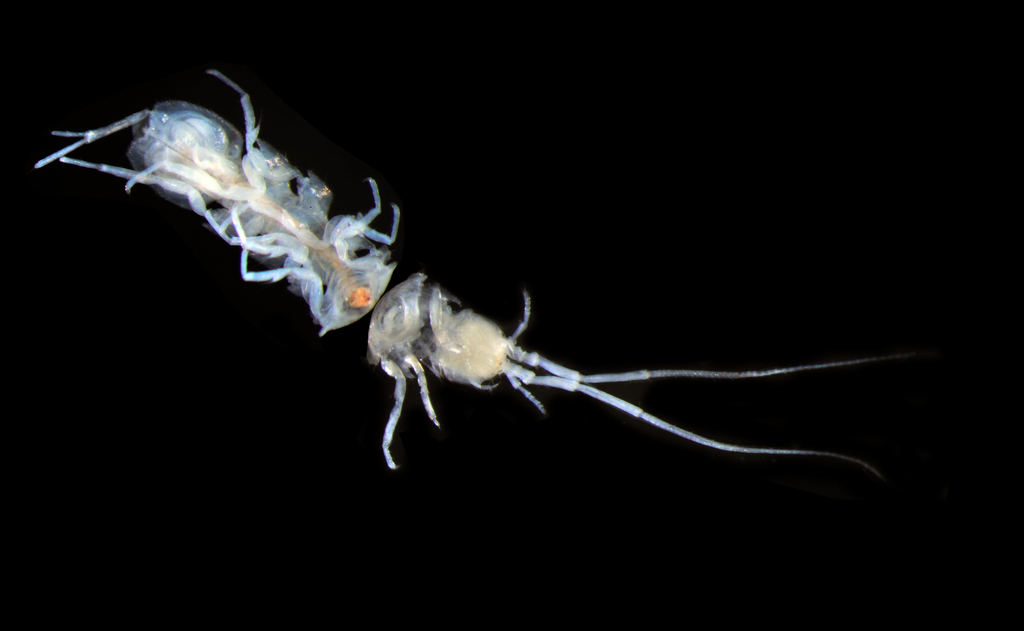
(c) Dr. Andrew G. Cannizzaro, some rights reserved (CC BY) · licence
Family: Asellidae · Class: Malacostraca · Order: Isopoda
Conservation status: G2 S3
Calasellus californicus (An Isopod) is a California animal in the Asellidae family.
Calasellus californicus is a small freshwater isopod crustacean endemic to California. This subterranean species belongs to the family Asellidae and represents one of the specialized cave-dwelling invertebrates found in the western United States. Like other members of its genus, C. californicus exhibits adaptations to life in groundwater environments, including springs and wells. Physical characteristics of C. californicus are typical of subterranean asellids, though specific morphometric data for this species remains limited in the scientific literature. As a member of the genus Calasellus, it likely possesses the elongated, flattened body form characteristic of freshwater isopods, with seven pairs of walking legs and segmented antennae. Subterranean asellids often show reduced pigmentation and eye development compared to surface-dwelling relatives, adaptations common to cave-dwelling crustaceans. The species has a highly restricted distribution within California. According to NatureServe, C. californicus has been reported from springs in Napa and Santa Clara counties, as well as from a well in Lake County (NatureServe Explorer). This limited geographic range places the species among California's endemic groundwater fauna, which are particularly vulnerable due to their specialized habitat requirements and restricted distributions. Calasellus californicus inhabits subterranean freshwater environments, including natural springs and groundwater accessed through wells. These habitats represent the interface between surface and groundwater systems, where the species likely occupies interstitial spaces within sediments and rock crevices. The groundwater environments that support this species are characterized by stable temperatures, limited light penetration, and specific water chemistry conditions that have remained relatively constant over geological time scales. As a subterranean crustacean, C. californicus likely feeds on organic matter that enters the groundwater system, including decomposing plant material, bacteria, and other microorganisms. The species' ecological role involves processing organic matter in groundwater ecosystems, contributing to nutrient cycling in these specialized environments. Reproductive biology and life history details for this species have not been well documented in the available literature. The conservation status of Calasellus californicus reflects significant concern for its long-term viability. NatureServe assigns the species a global rank of G2, indicating it is imperiled globally due to rarity or other factors that make it vulnerable to extinction. The species receives a state rank of S3 in California, suggesting it is vulnerable to extirpation from the state. The highly localized distribution in just three California counties makes the species particularly susceptible to habitat degradation, groundwater extraction, and contamination. Threats to subterranean crustaceans typically include groundwater pumping, pollution of aquifers, and development activities that alter hydrological patterns. The specialized nature of groundwater habitats means that populations of C. californicus have limited ability to recolonize areas once local extinctions occur, emphasizing the importance of protecting known spring and groundwater sites where the species persists.
Classification
Class: Malacostraca · Order: Isopoda · Family: Asellidae
Conservation status
G2 S3
Frequently asked questions
How is Calasellus californicus classified?
Calasellus californicus belongs to class Malacostraca, order Isopoda, family Asellidae.
What family does Calasellus californicus belong to?
Calasellus californicus is in the Asellidae family.
Is Calasellus californicus protected or of conservation concern?
Calasellus californicus carries the following status: G2 S3.
What is Calasellus californicus?
Calasellus californicus is a small freshwater isopod crustacean endemic to California.
Is Calasellus californicus found in California?
Yes. Calasellus californicus is recorded in California in The California Species Project's catalogue.
Related species
Other California species in the same genus, family, or bioregion.
Data from The California Species Project — 14,000+ California species with verified data from CNPS, CDFW, USFWS, and more.