Calathus ruficollis
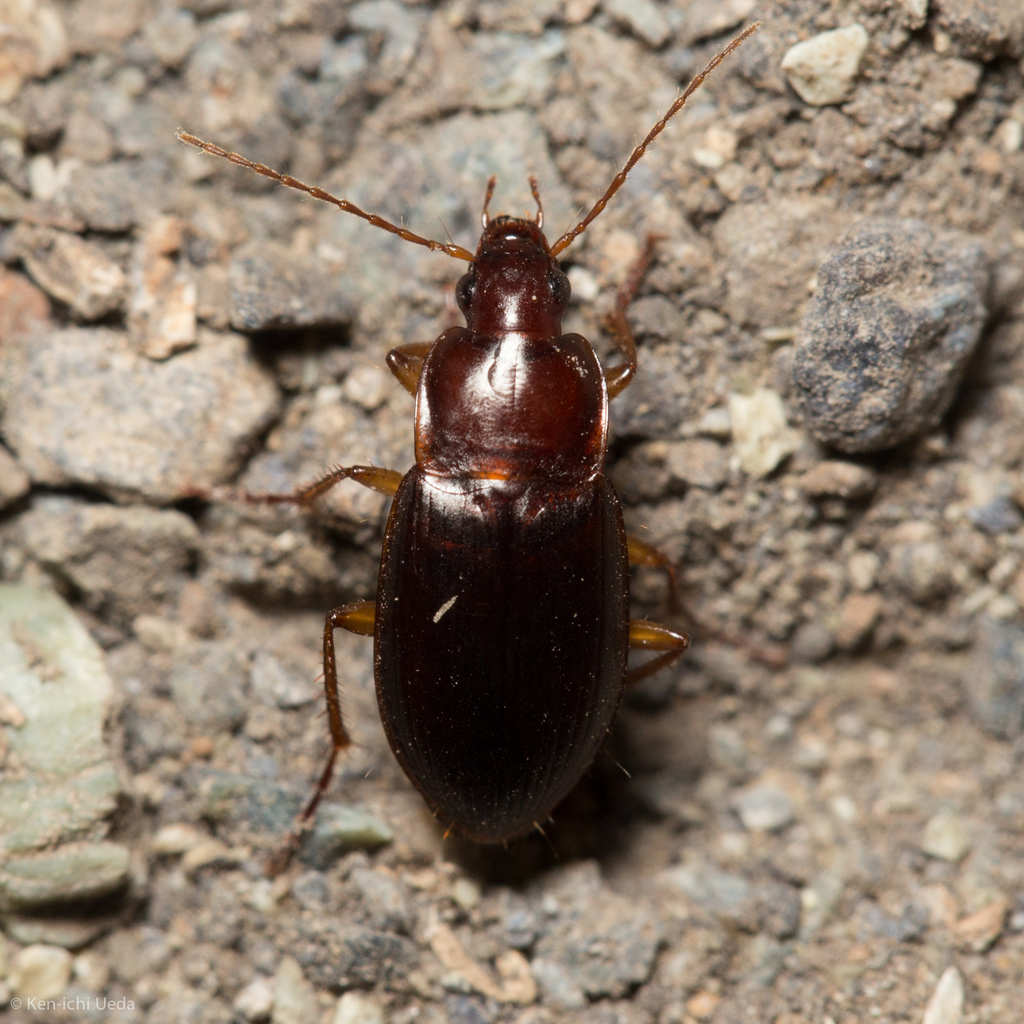
(c) Ken-ichi Ueda, some rights reserved (CC BY) · licence
Family: Carabidae · Class: Insecta · Order: Coleoptera
Calathus ruficollis is a California animal in the Carabidae family.
Calathus ruficollis is a ground beetle in the family Carabidae, subfamily Harpalinae, tribe Sphodrini. This species belongs to the subgenus Calathus (Neocalathus) and includes at least two recognized subspecies: C. r. ruficollis and C. r. grandicollis. As with most carabid beetles, C. ruficollis exhibits the characteristic predatory adaptations of the family, including powerful mandibles and well-developed legs for pursuing prey on the ground surface. The species occurs in California, where it has been documented in coastal and near-coastal environments. According to a biological assessment from the greater Ballona Wetlands area, C. ruficollis was recorded in both dune and wetland margin habitats in Los Angeles County (Mattoni 1991). The species' broader distribution within California and its elevation range have not been comprehensively documented in available literature. Calathus ruficollis inhabits diverse terrestrial environments, including coastal dune systems and wetland peripheries. The Ballona Wetlands study documented the species in areas characterized by sandy soils and native plant communities typical of Southern California coastal ecosystems. Like other members of the genus Calathus, this species likely prefers areas with some ground cover that provides shelter during daylight hours, as most carabids are nocturnal or crepuscular in their activity patterns. As a predatory ground beetle, C. ruficollis feeds on various small invertebrates including other insects, larvae, and possibly soft-bodied arthropods. Carabid beetles are generally beneficial in agricultural and natural systems due to their role in controlling pest species. The species likely exhibits seasonal activity patterns typical of California carabids, with peak activity during cooler, moister periods of the year. Reproduction probably follows the standard carabid pattern of egg-laying in soil or under debris, followed by several larval instars before pupation and adult emergence. The conservation status of C. ruficollis has not been formally assessed at federal or state levels. However, the species' occurrence in coastal Southern California suggests potential vulnerability to habitat loss from urban development and coastal modifications. The Ballona Wetlands, where the species was historically documented, have experienced significant human impacts over the past century. Many coastal dune and wetland systems in California have been reduced to small fragments of their original extent, potentially affecting populations of specialized ground beetles like C. ruficollis. Climate change may pose additional challenges through altered precipitation patterns and increased temperatures in coastal regions. Scientific documentation for this species remains limited compared to more conspicuous beetle groups. The information presented here synthesizes available observations from biological surveys and taxonomic databases. Additional field studies would be valuable to better understand the species' current distribution, habitat requirements, and population status throughout its California range.
Classification
Class: Insecta · Order: Coleoptera · Family: Carabidae
Frequently asked questions
How is Calathus ruficollis classified?
Calathus ruficollis belongs to class Insecta, order Coleoptera, family Carabidae.
What family does Calathus ruficollis belong to?
Calathus ruficollis is in the Carabidae family.
What is Calathus ruficollis?
Calathus ruficollis is a ground beetle in the family Carabidae, subfamily Harpalinae, tribe Sphodrini.
Is Calathus ruficollis found in California?
Yes. Calathus ruficollis is recorded in California in The California Species Project's catalogue.
Related species
Other California species in the same genus, family, or bioregion.
Data from The California Species Project — 14,000+ California species with verified data from CNPS, CDFW, USFWS, and more.