Calcarius lapponicus
Lapland Longspur
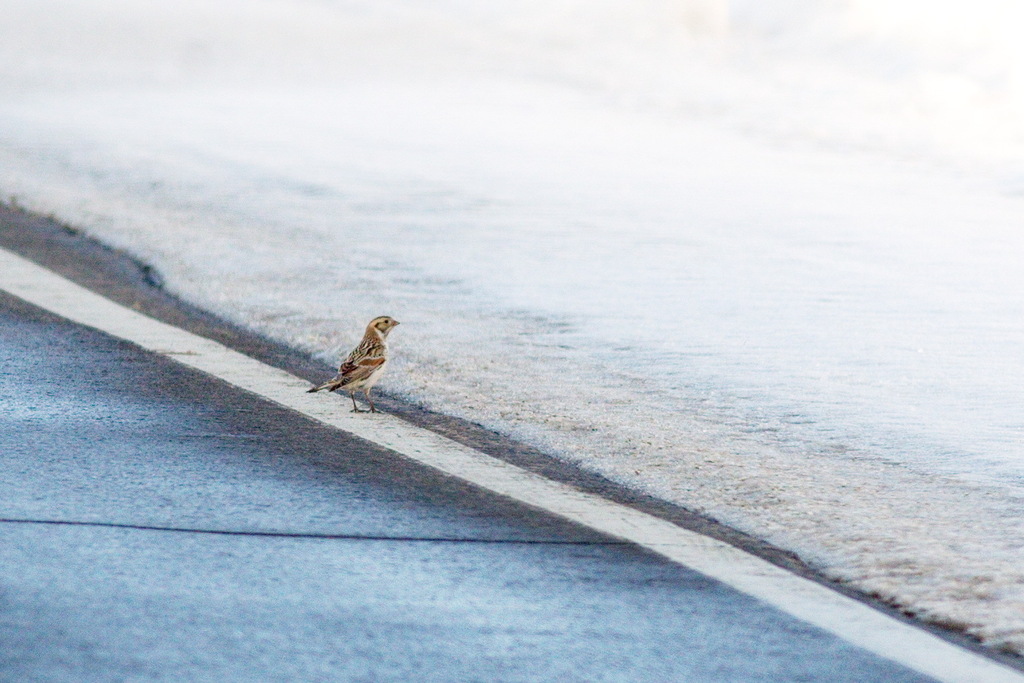
(c) Вячеслав Юсупов, some rights reserved (CC BY) · licence
Family: Calcariidae · Class: Aves · Order: Passeriformes
Calcarius lapponicus (Lapland Longspur) is a California animal in the Calcariidae family.
The Lapland Longspur is a medium-sized songbird measuring 14-17 cm (5.5-6.7 inches) in length with a wingspan of 25-28 cm (9.8-11.0 inches). Adult males in breeding plumage display a distinctive black head and throat with a white stripe extending from behind the eye to the nape. The back is streaked brown and black, while the underparts are white with a black bib. Females and non-breeding males show more subdued coloration with brownish-gray upperparts, streaked crowns, and buffy underparts with dark streaking on the breast. The species is distinguished from other longspurs by its relatively short, thick bill and the distinctive chestnut patch on the nape of breeding males. The Lapland Longspur breeds across the Arctic tundra of Alaska, northern Canada, northern Scandinavia, and northern Russia. In North America, the species winters primarily in the Great Plains, extending from southern Canada through the central United States. In California, Lapland Longspurs are uncommon winter visitors and passage migrants, occurring primarily in the Central Valley, coastal areas, and desert regions from October through March. The species is most frequently observed in agricultural areas of the Sacramento and San Joaquin valleys. During winter in California, Lapland Longspurs inhabit open grasslands, agricultural fields, stubble fields, and short-grass prairies. They prefer areas with sparse vegetation and bare ground patches for foraging. The species can be found from sea level to moderate elevations, typically below 1,500 meters (4,920 feet). On breeding grounds, they occupy Arctic and subarctic tundra with low shrubs, sedges, and grasses. Lapland Longspurs are primarily granivorous during winter, feeding on seeds of grasses and forbs, including those of cultivated grains. During the breeding season, adults supplement their diet with insects, particularly flies, beetles, and caterpillars, which are essential protein sources for growing nestlings. The species forages on the ground, often in flocks that may include other longspur species and snow buntings. Breeding occurs on Arctic tundra from May through July, with females constructing cup-shaped nests in depressions lined with grass and feathers. Clutch size typically ranges from 3-6 eggs, with an incubation period of 10-14 days. The Lapland Longspur is not federally listed and is considered a species of least concern globally. According to the North American Breeding Bird Survey, populations have remained relatively stable over the past several decades, though some regional declines have been documented. Climate change poses potential long-term threats to Arctic breeding populations through habitat modification and shifts in vegetation zones. In California, the species benefits from agricultural practices that maintain suitable winter habitat, though intensive farming methods and habitat conversion may affect local abundance during winter months.
Classification
Class: Aves · Order: Passeriformes · Family: Calcariidae
Frequently asked questions
How is Calcarius lapponicus classified?
Calcarius lapponicus belongs to class Aves, order Passeriformes, family Calcariidae.
What family does Calcarius lapponicus belong to?
Calcarius lapponicus is in the Calcariidae family.
What is Calcarius lapponicus?
The Lapland Longspur is a medium-sized songbird measuring 14-17 cm (5.5-6.7 inches) in length with a wingspan of 25-28 cm (9.8-11.0 inches).
Is Calcarius lapponicus found in California?
Yes. Calcarius lapponicus is recorded in California in The California Species Project's catalogue.
Related species
Other California species in the same genus, family, or bioregion.
Data from The California Species Project — 14,000+ California species with verified data from CNPS, CDFW, USFWS, and more.