Calcarius ornatus
Chestnut-collared Longspur
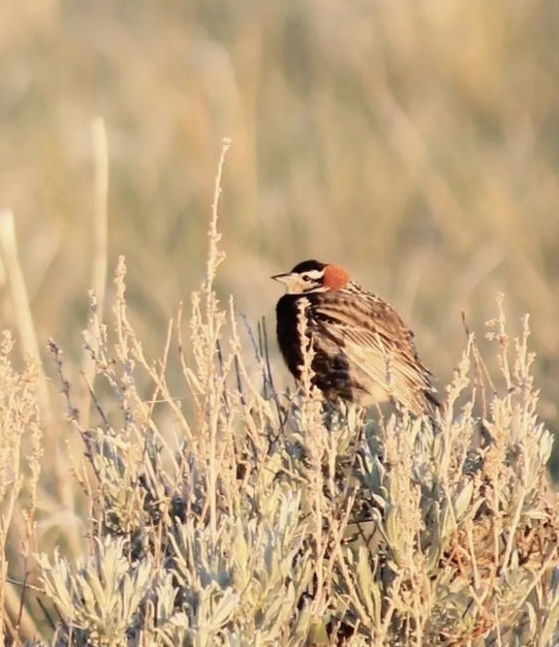
no rights reserved · CC0
Family: Calcariidae · Class: Aves · Order: Passeriformes
Calcarius ornatus (Chestnut-collared Longspur) is a California animal in the Calcariidae family.
The Chestnut-collared Longspur is a small grassland songbird measuring 14-16 cm (5.5-6.3 inches) in length with a wingspan of 25-27 cm (9.8-10.6 inches). During breeding season, males display distinctive plumage with a black head and throat, white cheek patches, and a prominent chestnut collar across the nape. The underparts are white with a black breast band, while the back is streaked brown and buff. Females and non-breeding males are more subdued, with streaked brown upperparts, buffy underparts, and less distinct facial markings. Both sexes show white outer tail feathers visible in flight and pale legs with a slightly curved bill. Historically, Chestnut-collared Longspurs bred across the northern Great Plains from southern Alberta and Saskatchewan south to Colorado and Nebraska. In California, the species occurs as an uncommon to rare winter visitor and migrant, primarily in the Central Valley, Salton Sea region, and occasionally along the coast. Winter records are most frequent in Imperial, Riverside, Kern, and Fresno counties, with scattered observations in other Central Valley locations. The species inhabits short-grass prairie, agricultural fields, and other open grasslands during both breeding and winter seasons. In California, Chestnut-collared Longspurs are typically found in recently harvested grain fields, stubble fields, grazed pastures, and areas with sparse, short vegetation. They prefer habitats with grass heights of 5-15 cm (2-6 inches) and often associate with other grassland species including Horned Larks and other longspur species. Chestnut-collared Longspurs are ground-foraging birds that feed primarily on seeds of grasses and forbs, supplemented by insects during breeding season. They exhibit a distinctive running gait when foraging and often crouch low when threatened rather than immediately taking flight. Breeding occurs on northern prairies from May through July, where females construct ground nests in grass clumps and lay 3-5 eggs. The species is gregarious during migration and winter, forming mixed flocks with other grassland birds. While not federally listed, Chestnut-collared Longspurs have experienced significant population declines across their range due to habitat loss and degradation. According to the North American Breeding Bird Survey, populations declined by approximately 87% between 1966 and 2019, earning the species designation as a Bird of Conservation Concern by the U.S. Fish and Wildlife Service. Primary threats include conversion of native grasslands to agriculture, urban development, and changes in grazing practices that alter vegetation structure. Climate change may further impact the species by shifting suitable habitat northward. In California, the species benefits from conservation programs that maintain suitable agricultural practices and preserve remnant grassland habitats.
Classification
Class: Aves · Order: Passeriformes · Family: Calcariidae
Frequently asked questions
How is Calcarius ornatus classified?
Calcarius ornatus belongs to class Aves, order Passeriformes, family Calcariidae.
What family does Calcarius ornatus belong to?
Calcarius ornatus is in the Calcariidae family.
What is Calcarius ornatus?
The Chestnut-collared Longspur is a small grassland songbird measuring 14-16 cm (5.5-6.3 inches) in length with a wingspan of 25-27 cm (9.8-10.6 inches).
Is Calcarius ornatus found in California?
Yes. Calcarius ornatus is recorded in California in The California Species Project's catalogue.
Related species
Other California species in the same genus, family, or bioregion.
Data from The California Species Project — 14,000+ California species with verified data from CNPS, CDFW, USFWS, and more.