Calephelis nemesis
Fatal Metalmark
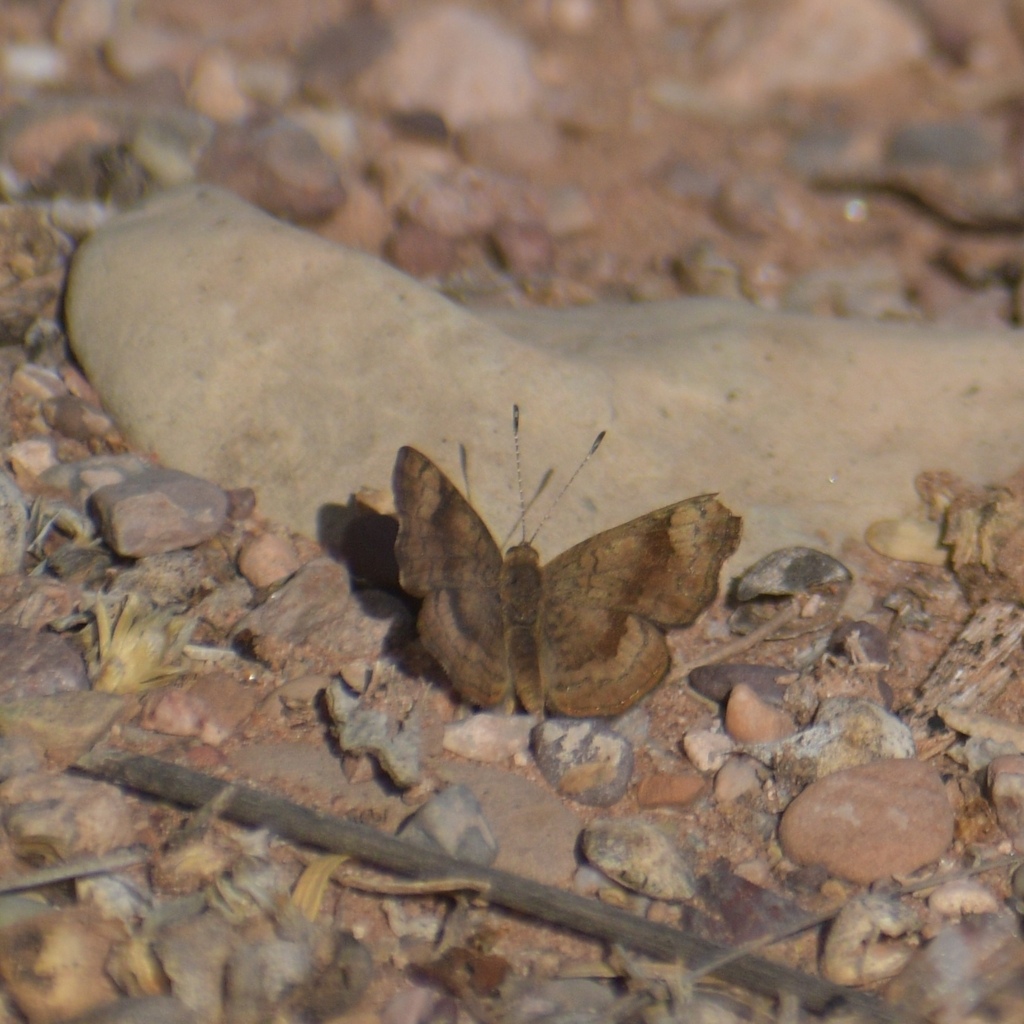
no rights reserved · CC0
Family: Riodinidae · Class: Insecta · Order: Lepidoptera
Calephelis nemesis (Fatal Metalmark) is a California animal in the Riodinidae family.
The Fatal Metalmark (Calephelis nemesis) is a small butterfly in the family Riodinidae, distinguished by its metallic wing markings characteristic of the metalmark group. Adults typically measure 20 to 25 mm (0.8 to 1.0 inches) in wingspan. The dorsal wing surfaces are orange-brown with darker markings, while the ventral surfaces display the diagnostic metallic silver or white spots that give metalmarks their common name. Males possess scent patches on their forewings used in courtship behaviors. The Fatal Metalmark ranges from southern California through the southwestern United States to central Texas, extending south into Mexico. Within California, populations occur primarily in desert regions of Riverside, Imperial, and San Bernardino counties. The species' distribution follows riparian corridors and desert washes where its host plants are established. This broad range reflects the butterfly's adaptation to arid environments across the Sonoran and Chihuahuan desert regions. This species inhabits desert riparian areas, washes, and canyon bottoms where moisture supports dense stands of host vegetation. Fatal Metalmarks are typically found at elevations below 1,200 meters (4,000 feet) in areas with permanent or seasonal water sources. The butterflies require specific microhabitats that combine open areas for basking and flight with nearby host plants for reproduction. Adults are often observed on flowers along streambanks and in desert oases. Fatal Metalmarks are specialized herbivores with larvae feeding exclusively on seepwillow (Baccharis glutinosa), a shrub common in southwestern riparian areas. Virgin's bower (Clematis species) may serve as an additional host plant in some portions of the range. Adults are active during warm months, typically from March through October in southern California, with peak flight periods varying by elevation and local climate conditions. Males establish territories near host plants and engage in patrolling behavior to locate mates. Females deposit eggs singly on host plant leaves, with larvae developing through multiple instars before pupating. The Fatal Metalmark lacks formal conservation listing status at federal or state levels, though local populations face threats from habitat modification and water diversion in desert regions. Riparian habitat destruction, invasive plant species, and altered hydrology from development and agricultural practices pose ongoing challenges. Urban expansion in southern California has eliminated some historical populations through direct habitat loss and fragmentation. Climate change may affect the species through altered precipitation patterns that influence host plant distribution and abundance. The butterfly's dependence on riparian corridors makes it particularly vulnerable to water management practices that reduce streamflow or eliminate seasonal flooding patterns essential for maintaining seepwillow communities. Conservation efforts focus on maintaining natural water regimes and protecting remaining riparian habitat from development pressures.
Classification
Class: Insecta · Order: Lepidoptera · Family: Riodinidae
Frequently asked questions
How is Calephelis nemesis classified?
Calephelis nemesis belongs to class Insecta, order Lepidoptera, family Riodinidae.
What family does Calephelis nemesis belong to?
Calephelis nemesis is in the Riodinidae family.
What is Calephelis nemesis?
The Fatal Metalmark (Calephelis nemesis) is a small butterfly in the family Riodinidae, distinguished by its metallic wing markings characteristic of the metalmark group.
Is Calephelis nemesis found in California?
Yes. Calephelis nemesis is recorded in California in The California Species Project's catalogue.
Related species
Other California species in the same genus, family, or bioregion.
Data from The California Species Project — 14,000+ California species with verified data from CNPS, CDFW, USFWS, and more.