Caliadurgus fasciatellus
Blotchwing Spider Wasp
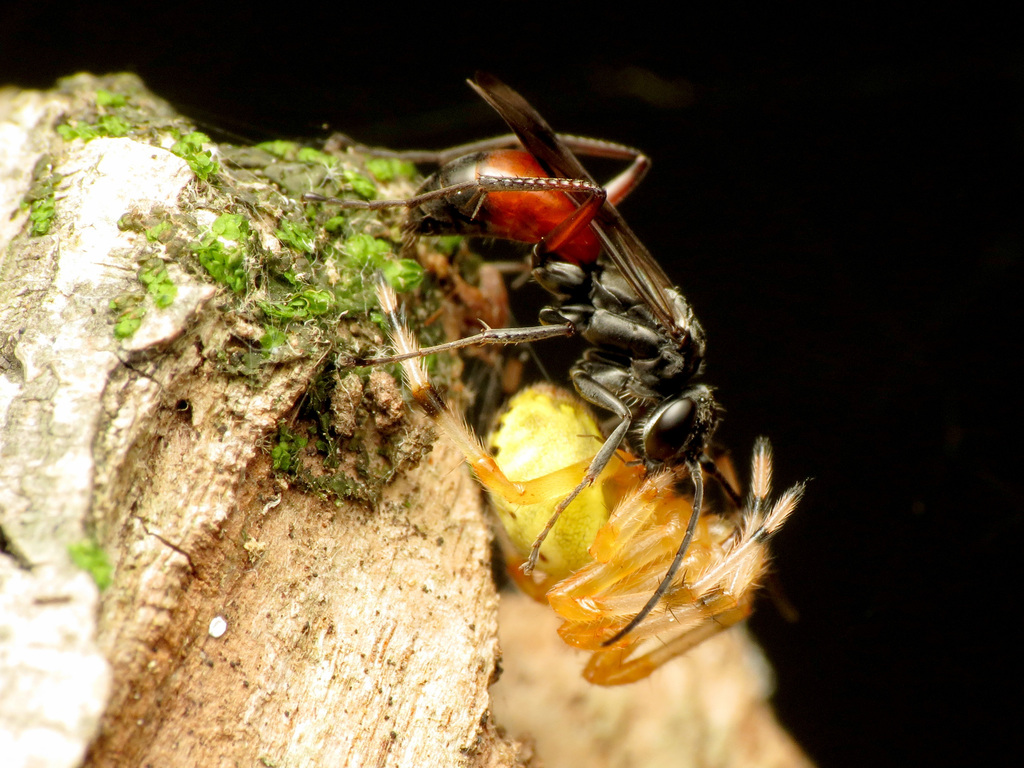
(c) Katja Schulz, some rights reserved (CC BY) · licence
Family: Pompilidae · Class: Insecta · Order: Hymenoptera
Caliadurgus fasciatellus (Blotchwing Spider Wasp) is a California animal in the Pompilidae family.
The blotchwing spider wasp (Caliadurgus fasciatellus) is a medium-sized solitary wasp belonging to the family Pompilidae. Adult females measure approximately 10-15 mm in length, with a robust black body and distinctive transparent wings that may show dark banding or blotching patterns, giving the species its common name. The antennae are typically black, and the legs are dark with some species showing reddish-brown coloration on the tibiae and tarsi. This species occurs throughout much of North America, with documented populations extending from the eastern United States westward to at least Iowa and potentially into western regions. The taxonomic status of this species has undergone revision, with some sources using the name Caliadurgus hyalinatus, though current BugGuide taxonomy recognizes it as Caliadurgus fasciatellus (BugGuide 2025). Blotchwing spider wasps inhabit a variety of open and semi-open habitats including prairie edges, woodland clearings, gardens, and disturbed areas where their spider prey is abundant. They are commonly observed on flowers where adults feed on nectar, particularly favoring umbellifer flowers and other shallow-flowered plants that provide easily accessible nectar sources. As specialized spider hunters, female blotchwing spider wasps exhibit specialized behavioral adaptations for capturing and provisioning their nests. Females actively hunt spiders, which they paralyze with a venomous sting before transporting to underground burrows or pre-existing cavities. A notable behavior documented in this species involves suspending captured spiders from vegetation using the spider's own silk thread while the female prepares or constructs the nest burrow (BugGuide 2025). This temporary caching behavior prevents other insects from stealing the paralyzed prey during nest preparation. The female then drags the spider into the completed burrow, deposits a single egg on the spider's abdomen, and seals the chamber. The developing larva feeds on the living but paralyzed spider, ensuring fresh provisions throughout its development. Males are typically smaller than females and focus primarily on locating mates and feeding on floral nectar. The species appears to be univoltine in most regions, with adult activity peaking during mid to late summer months from July through August. Currently, Caliadurgus fasciatellus has no formal conservation status and is not listed under federal or state endangered species legislation. The species appears to maintain stable populations across its range, though like many native wasps, it may face localized pressures from habitat loss, pesticide use, and declining spider prey populations in intensively managed agricultural or urban areas. As a beneficial predator that helps control spider populations and serves as a pollinator while visiting flowers, this species contributes to ecosystem balance in the habitats it occupies.
Classification
Class: Insecta · Order: Hymenoptera · Family: Pompilidae
Frequently asked questions
How is Caliadurgus fasciatellus classified?
Caliadurgus fasciatellus belongs to class Insecta, order Hymenoptera, family Pompilidae.
What family does Caliadurgus fasciatellus belong to?
Caliadurgus fasciatellus is in the Pompilidae family.
What is Caliadurgus fasciatellus?
The blotchwing spider wasp (Caliadurgus fasciatellus) is a medium-sized solitary wasp belonging to the family Pompilidae.
Is Caliadurgus fasciatellus found in California?
Yes. Caliadurgus fasciatellus is recorded in California in The California Species Project's catalogue.
Related species
Other California species in the same genus, family, or bioregion.
Data from The California Species Project — 14,000+ California species with verified data from CNPS, CDFW, USFWS, and more.