Calicina arida
San Benito Harvestman
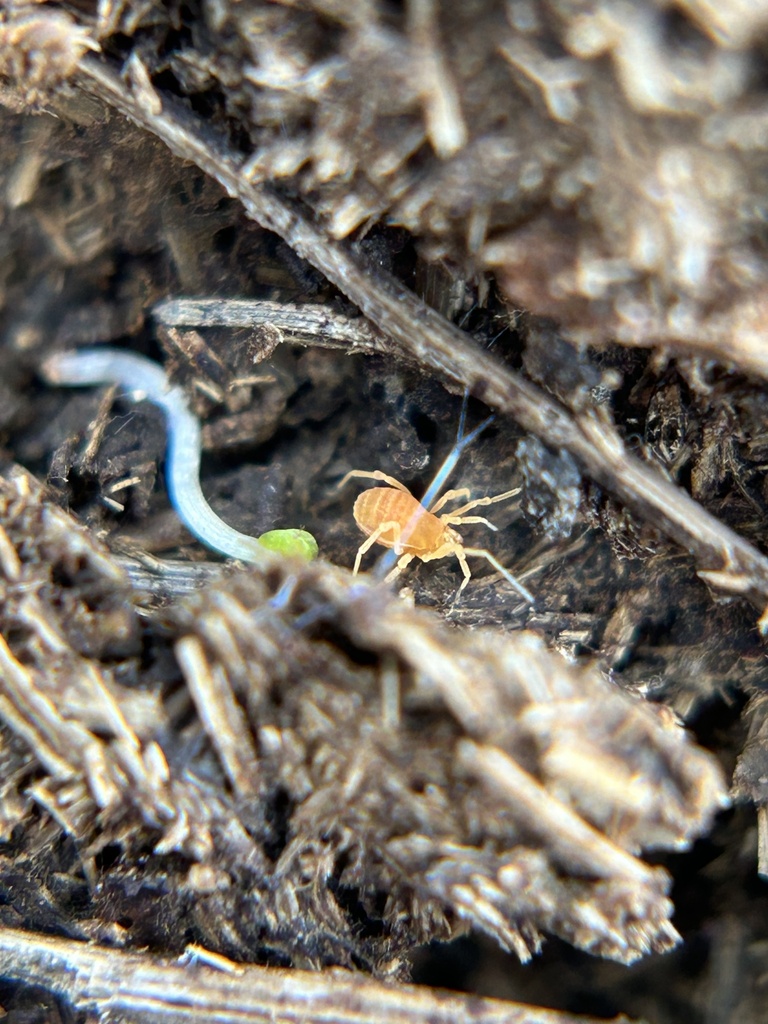
no rights reserved · CC0
Family: Phalangodidae · Class: Arachnida · Order: Opiliones
Conservation status: G1 S1
Calicina arida (San Benito Harvestman) is a California animal in the Phalangodidae family.
The San Benito harvestman (Calicina arida) is a small arachnid belonging to the order Opiliones, family Phalangodidae. Like other members of the genus Calicina, this species is adapted to life in specialized serpentine soil habitats of California. Harvestmen are distinguished from spiders by their fused body segments and lack of venom glands, with eight long, slender legs extending from their compact body. Calicina arida is endemic to serpentine grasslands in the San Francisco Bay Area and adjacent foothills. The species' range appears to be restricted to San Benito County and potentially neighboring areas with suitable serpentine outcrops. The genus Calicina contains 25 species according to federal taxonomic databases, with several species occurring in the greater Bay Area region including the Edgewood blind harvestman (C. minor), Marin blind harvestman (C. diminua), and Silver Creek blind harvestman (C. jungi). This harvestman inhabits dry, nutrient-poor serpentine soil grasslands characterized by specialized plant communities adapted to these challenging substrates. Serpentine soils contain high levels of heavy metals and low levels of essential nutrients, creating unique ecological conditions. The species is found exclusively on the undersides of moist rocks situated within these serpentine grassland ecosystems. These microhabitats provide necessary moisture retention and protection from temperature extremes in an otherwise arid environment. Like other Calicina species, C. arida likely feeds on small arthropods, detritus, and organic matter found in the cryptic spaces beneath rocks. The species' behavior and life cycle remain poorly documented, but related harvestmen are typically nocturnal, emerging from rock crevices to forage during cooler, more humid conditions. Reproduction likely involves direct transfer of sperm packages, with females depositing eggs in protected locations within the rock substrate. The San Benito harvestman carries a conservation ranking of G1 S1, indicating it is critically imperiled both globally and within California. This ranking reflects extremely limited distribution, small population sizes, and high vulnerability to extinction. Serpentine soil habitats throughout the Bay Area and Central Coast have experienced significant conversion to urban and industrial development, resulting in habitat fragmentation and population isolation. The remaining natural serpentine grasslands represent only a fraction of the species' historical range. Primary threats include continued habitat loss through development, recreational activities that disturb rock substrates, invasive plant species that alter grassland structure, and climate change effects on already marginal habitats. The species' highly specialized habitat requirements and limited dispersal ability make it particularly vulnerable to local extinctions. Conservation efforts for serpentine-dependent species focus on protecting remaining natural grasslands, managing invasive species, and maintaining the integrity of rock outcrop microhabitats essential for these specialized arachnids. Detailed ecological studies of Calicina arida remain limited. Additional research on population size, distribution, life history, and specific habitat requirements would greatly enhance conservation planning for this critically imperiled endemic species.
Classification
Class: Arachnida · Order: Opiliones · Family: Phalangodidae
Conservation status
G1 S1
Frequently asked questions
How is Calicina arida classified?
Calicina arida belongs to class Arachnida, order Opiliones, family Phalangodidae.
What family does Calicina arida belong to?
Calicina arida is in the Phalangodidae family.
Is Calicina arida protected or of conservation concern?
Calicina arida carries the following status: G1 S1.
What is Calicina arida?
The San Benito harvestman (Calicina arida) is a small arachnid belonging to the order Opiliones, family Phalangodidae.
Is Calicina arida found in California?
Yes. Calicina arida is recorded in California in The California Species Project's catalogue.
Related species
Other California species in the same genus, family, or bioregion.
Data from The California Species Project — 14,000+ California species with verified data from CNPS, CDFW, USFWS, and more.