Calicina diminua
Marin Blind Harvestman
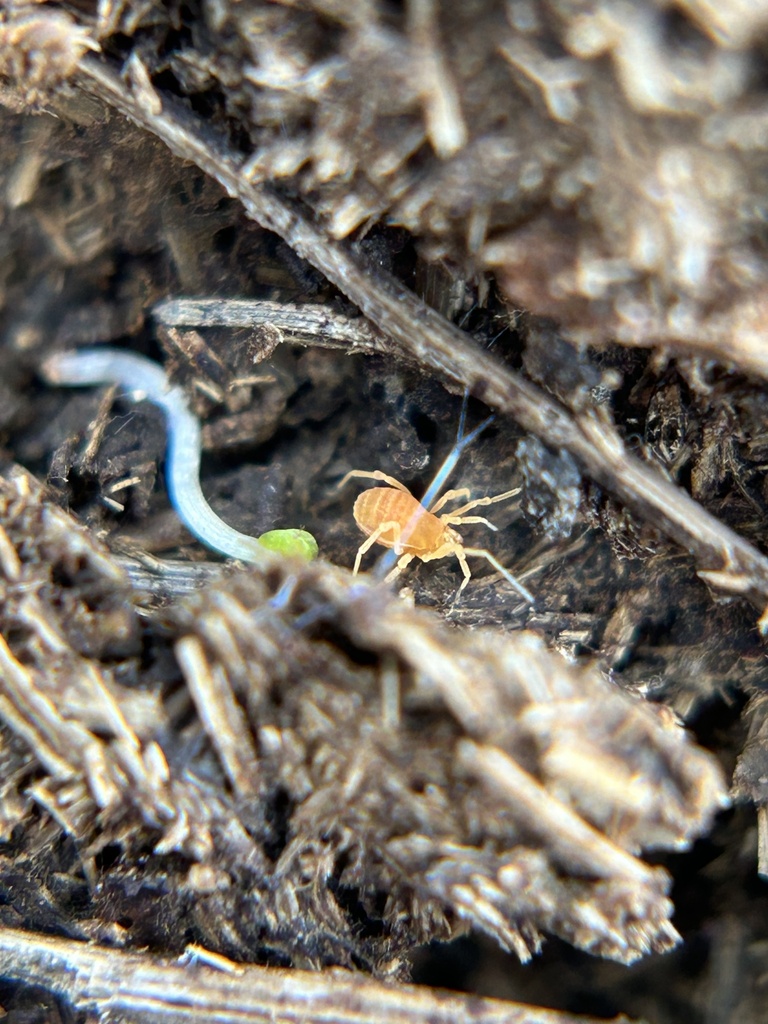
no rights reserved · CC0
Family: Phalangodidae · Class: Arachnida · Order: Opiliones
Conservation status: G1 S1
Calicina diminua (Marin Blind Harvestman) is a California animal in the Phalangodidae family.
The Marin blind harvestman is a small arachnid in the order Opiliones, family Phalangodidae. This species belongs to a specialized group of harvestmen that have adapted to subterranean environments, lacking functional eyes as suggested by its common name. Like other members of the genus Calicina, this species exhibits the characteristic body plan of harvestmen with a compact, oval-shaped body and eight long, slender legs that extend well beyond the body length. Calicina diminua is endemic to a highly restricted range in Marin County, California. The species occurs exclusively within the San Francisco Bay Area serpentine soil ecosystem, representing one of the most geographically limited arachnids in North America. This extreme range restriction places it among California's rarest invertebrates. The species inhabits serpentine grassland environments, where it occupies a highly specific microhabitat beneath moist rocks situated in serpentine soils. These serpentine substrates create unique soil chemistry conditions that support specialized plant communities and associated invertebrate fauna. The harvestman requires consistently humid conditions under rock shelters, making it sensitive to environmental changes that affect moisture levels. The serpentine grasslands of Marin County provide the precise combination of soil type, vegetation structure, and microclimate necessary for this species' survival. As a member of the Opiliones, Calicina diminua likely feeds on small invertebrates, detritus, and organic matter found in its rock crevice habitat. The species' subterranean lifestyle and reduced visual capabilities suggest it relies heavily on tactile and chemical sensory mechanisms for locating prey and navigating its environment. Reproduction and life cycle details remain poorly documented, though related harvestmen typically exhibit direct development without larval stages. The species' dependence on stable moisture conditions likely restricts its activity patterns and reproductive timing. Calicina diminua carries a global conservation rank of G1, indicating it is critically imperiled throughout its range, with typically fewer than 5 occurrences or very few remaining individuals. The species also holds a state rank of S1 in California, reflecting the same level of imperilment at the state level. While not currently listed under the federal Endangered Species Act, the species was included in the 1998 Recovery Plan for Serpentine Soil Species of the San Francisco Bay Area as a species of concern. The primary threats to this species include habitat loss and degradation of serpentine grasslands through urban development, invasive plant species that alter soil conditions and vegetation structure, and climate change impacts that may affect the delicate moisture balance required for survival. The species' extremely limited range makes it particularly vulnerable to localized disturbances, as loss of even small habitat areas could result in significant population declines or local extinctions. Conservation efforts focus on protecting remaining serpentine grassland habitats and managing invasive species that threaten the ecological integrity of these unique ecosystems.
Classification
Class: Arachnida · Order: Opiliones · Family: Phalangodidae
Conservation status
G1 S1
Frequently asked questions
How is Calicina diminua classified?
Calicina diminua belongs to class Arachnida, order Opiliones, family Phalangodidae.
What family does Calicina diminua belong to?
Calicina diminua is in the Phalangodidae family.
Is Calicina diminua protected or of conservation concern?
Calicina diminua carries the following status: G1 S1.
What is Calicina diminua?
The Marin blind harvestman is a small arachnid in the order Opiliones, family Phalangodidae.
Is Calicina diminua found in California?
Yes. Calicina diminua is recorded in California in The California Species Project's catalogue.
Related species
Other California species in the same genus, family, or bioregion.
Data from The California Species Project — 14,000+ California species with verified data from CNPS, CDFW, USFWS, and more.