Calicina macula
Marbled Harvestman
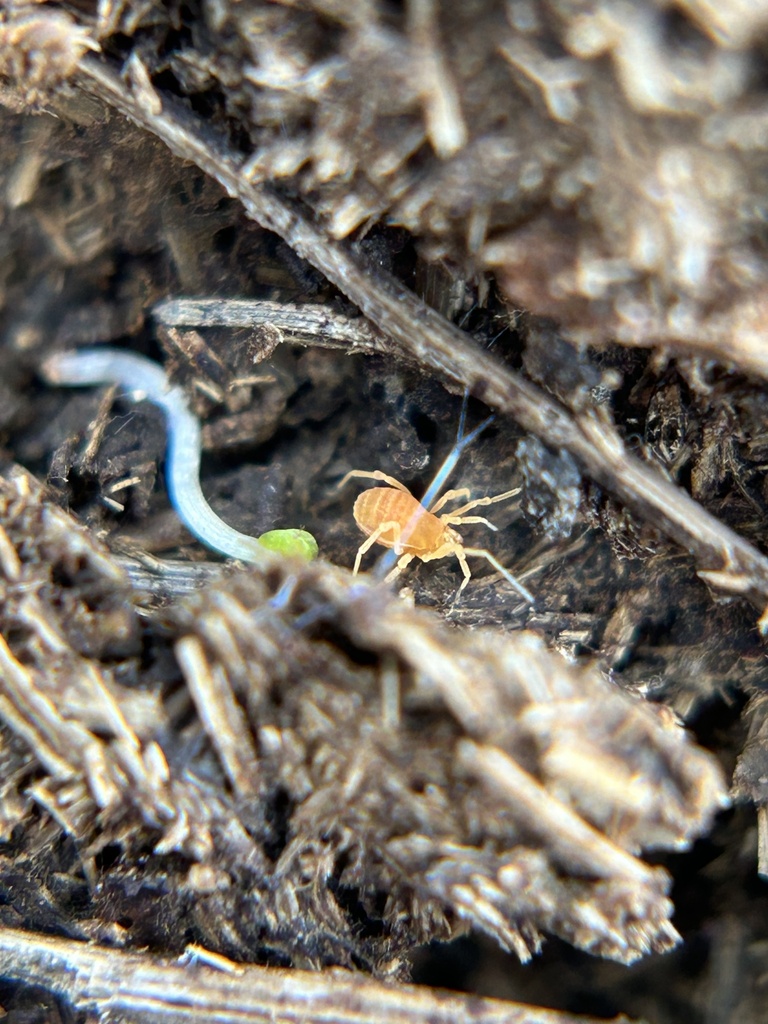
no rights reserved · CC0
Family: Phalangodidae · Class: Arachnida · Order: Opiliones
Conservation status: G1 S1
Calicina macula (Marbled Harvestman) is a California animal in the Phalangodidae family.
The Marbled Harvestman (Calicina macula) is an arachnid species endemic to California, classified within the order Opiliones. As a harvestman, this species differs from spiders by having a single body segment and lacking the ability to produce silk or venom. The specific physical characteristics of C. macula, including size and coloration patterns that give rise to its "marbled" common name, have not been well documented in available scientific literature. The species is endemic to California, though its precise historical and current distribution within the state remains poorly documented. The limited available records suggest an extremely restricted range, consistent with its G1 S1 conservation ranking indicating both global and state rarity. Specific counties or geographic regions where the species occurs have not been clearly established in accessible scientific databases. Habitat requirements for the Marbled Harvestman are not well characterized in current literature. Like many harvestman species, C. macula likely inhabits terrestrial environments, potentially including leaf litter, under logs, or in cave or rock crevice systems. The specific vegetation types, elevation ranges, and microhabitat preferences that support this species require further scientific investigation. Ecological information for C. macula is extremely limited. Harvestmen generally function as predators and scavengers, feeding on small invertebrates, decaying organic matter, and plant material. Reproductive biology, including mating behavior, egg-laying habits, and seasonal activity patterns, has not been documented for this species. Life cycle duration and population dynamics remain unknown. The conservation status of the Marbled Harvestman reflects significant concern for its long-term survival. The species carries a G1 S1 ranking from NatureServe, indicating it is critically imperiled both globally and within California, typically with five or fewer occurrences or very few remaining individuals. Population size estimates are not available, but the ranking suggests extremely small numbers. The species does not appear on current federal endangered species lists, though its rarity may warrant consideration for protection status. Primary threats to C. macula likely include habitat loss and fragmentation, though specific threat assessments have not been conducted. California's harvestman fauna faces pressures from urban development, agricultural conversion, and climate change effects on specialized microhabitats. The species' apparent rarity may also make it vulnerable to stochastic events and genetic bottlenecks. The limited scientific documentation available for this species highlights the need for comprehensive biological surveys and taxonomic research. Many aspects of C. macula's biology, distribution, and conservation needs remain unknown, representing significant knowledge gaps that impede effective conservation planning. Enhanced field studies and habitat assessments would be valuable for understanding this rare California endemic. Detailed ecological studies of this species are lacking. The above information synthesizes available data from NatureServe and California Department of Fish and Wildlife databases. We welcome contributions of verified scientific data, photographs, or field observations to enhance this species account.
Classification
Class: Arachnida · Order: Opiliones · Family: Phalangodidae
Conservation status
G1 S1
Frequently asked questions
How is Calicina macula classified?
Calicina macula belongs to class Arachnida, order Opiliones, family Phalangodidae.
What family does Calicina macula belong to?
Calicina macula is in the Phalangodidae family.
Is Calicina macula protected or of conservation concern?
Calicina macula carries the following status: G1 S1.
What is Calicina macula?
The Marbled Harvestman (Calicina macula) is an arachnid species endemic to California, classified within the order Opiliones.
Is Calicina macula found in California?
Yes. Calicina macula is recorded in California in The California Species Project's catalogue.
Related species
Other California species in the same genus, family, or bioregion.
Data from The California Species Project — 14,000+ California species with verified data from CNPS, CDFW, USFWS, and more.