Calicina minor
Edgewood Blind Harvestman
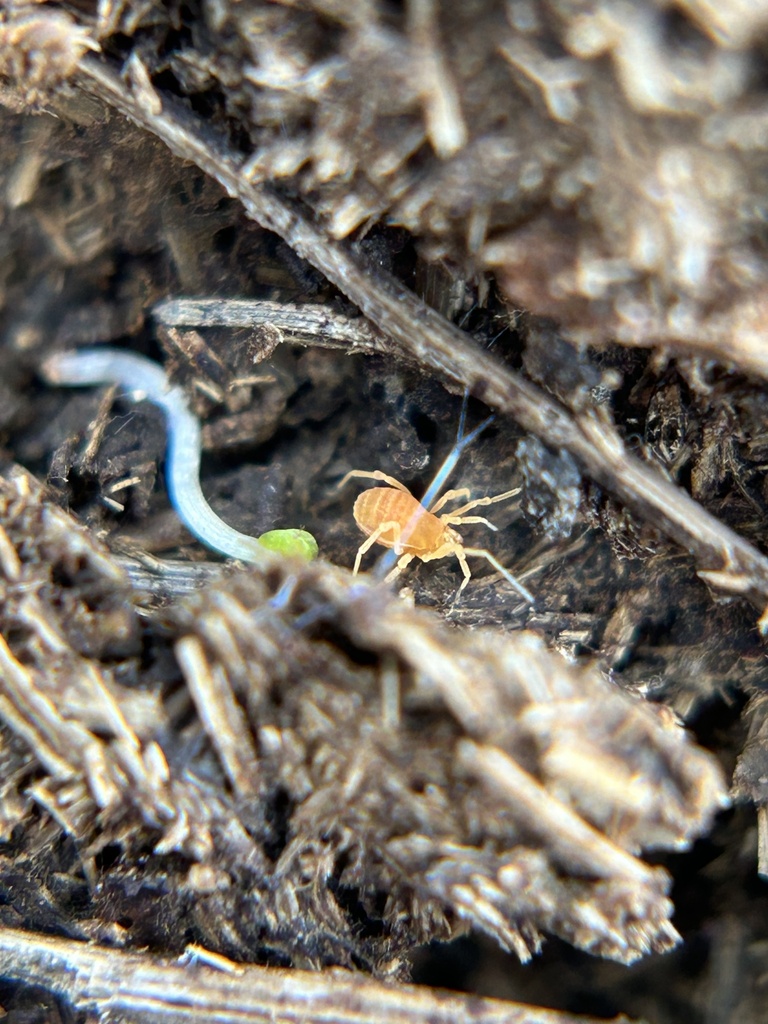
no rights reserved · CC0
Family: Phalangodidae · Class: Arachnida · Order: Opiliones
Conservation status: G1 S1
Calicina minor (Edgewood Blind Harvestman) is a California animal in the Phalangodidae family.
The Edgewood Blind Harvestman (Calicina minor) is a minute arachnid endemic to serpentine soils of the San Francisco Bay Area. This yellow-orange harvestman exhibits neotenic characters, retaining juvenile characteristics into adulthood, most notably the absence of functional eyes (California Department of Fish and Wildlife). The species belongs to the family Phalangodidae within the order Opiliones, commonly known as harvestmen or daddy longlegs. Calicina minor occurs exclusively in California within a highly restricted range in the San Francisco Bay Area. According to NatureServe Explorer, this species is apparently a narrow endemic with extremely limited distribution. The species is associated with serpentine soil habitats, which are characterized by unique mineral compositions and support specialized plant communities adapted to these harsh substrates. The habitat requirements of the Edgewood Blind Harvestman are intimately linked to serpentine soils and their associated vegetation communities. These specialized geological formations create nutrient-poor, heavy metal-rich conditions that exclude most plant species while supporting endemic flora. The species likely inhabits the soil and leaf litter layers within these serpentine grassland and chaparral communities, where it occupies microhabitats beneath rocks, in soil crevices, and among organic debris. As a member of the Opiliones, Calicina minor is likely an opportunistic predator and scavenger, feeding on small invertebrates, detritus, and organic matter found within its soil habitat. The species' blindness suggests adaptation to a cryptic, subterranean lifestyle where visual cues are unnecessary for survival. Like other harvestmen, reproduction likely involves direct transfer of sperm, with females depositing eggs in protected soil microhabitats. The neotenic characteristics may represent adaptations to the specialized serpentine environment, where reduced dispersal ability and simplified morphology may be advantageous. The conservation status of this species reflects its extreme rarity and habitat specificity. With a Global and State Rank of G1 S1, Calicina minor is considered critically imperiled both globally and within California. NatureServe Explorer notes that while the species receives some protection from outright extirpation, it is likely impacted by recreational activities. The species was included in the U.S. Fish and Wildlife Service's Recovery Plan for Serpentine Soil Species of the San Francisco Bay Area, highlighting the conservation significance of these unique habitats (USFWS Recovery Plan 1998). Primary threats to serpentine soil communities include urban development, recreational trampling, invasive plant species, and habitat fragmentation. The extremely limited range makes the species particularly vulnerable to local disturbances and environmental changes that could affect serpentine soil integrity and associated plant communities.
Classification
Class: Arachnida · Order: Opiliones · Family: Phalangodidae
Conservation status
G1 S1
Frequently asked questions
How is Calicina minor classified?
Calicina minor belongs to class Arachnida, order Opiliones, family Phalangodidae.
What family does Calicina minor belong to?
Calicina minor is in the Phalangodidae family.
Is Calicina minor protected or of conservation concern?
Calicina minor carries the following status: G1 S1.
What is Calicina minor?
The Edgewood Blind Harvestman (Calicina minor) is a minute arachnid endemic to serpentine soils of the San Francisco Bay Area.
Is Calicina minor found in California?
Yes. Calicina minor is recorded in California in The California Species Project's catalogue.
Related species
Other California species in the same genus, family, or bioregion.
Data from The California Species Project — 14,000+ California species with verified data from CNPS, CDFW, USFWS, and more.