Calicina piedra
Piedra Harvestman
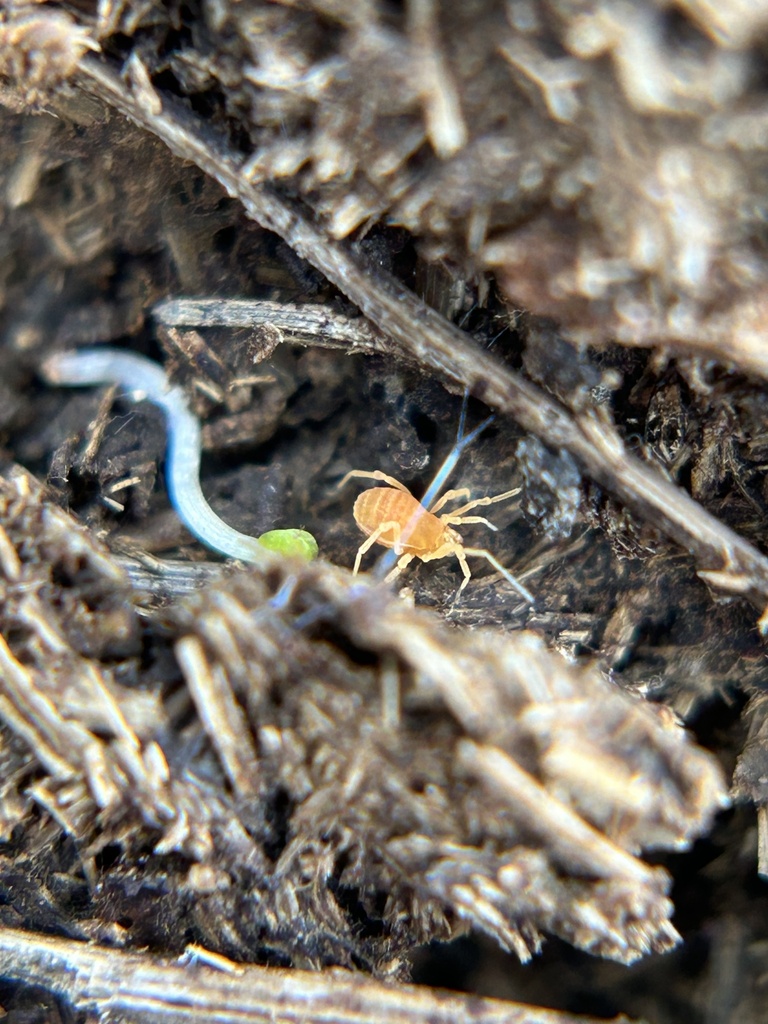
no rights reserved · CC0
Family: Phalangodidae · Class: Arachnida · Order: Opiliones
Conservation status: G1 S1
Calicina piedra (Piedra Harvestman) is a California animal in the Phalangodidae family.
The Piedra harvestman is an arachnid in the order Opiliones, distinguished from spiders by having a single body segment and lacking the ability to produce silk or venom. Like other harvestmen, this species possesses eight long, slender legs that are easily shed when threatened, a defensive mechanism known as autotomy. The body is typically small and compact, measuring only a few millimeters in length, with chelicerae adapted for feeding on small invertebrates and organic matter. Calicina piedra has an extremely restricted distribution, known only from Piedra in Fresno County, California (NatureServe 2025). This represents one of the most limited ranges of any North American harvestman species. The species appears to be endemic to the central Sierra Nevada foothills region, though the full extent of its historical range remains poorly documented. The species inhabits areas beneath sandstone rocks in what appears to be specialized microhabitat conditions. Based on the Piedra locality, the species likely occurs in oak woodland or chaparral communities typical of the Sierra Nevada foothills at moderate elevations. The association with sandstone substrates suggests specific geological requirements that may contribute to the species' restricted distribution. Harvestmen typically require areas with adequate moisture retention and shelter from temperature extremes, conditions that sandstone rock crevices and overhangs can provide. Like other members of the Opiliones, the Piedra harvestman is likely a generalist predator and scavenger, feeding on small arthropods, dead insects, and decomposing organic matter. Harvestmen are primarily nocturnal, emerging from their rock shelters during evening hours to forage. Reproduction in harvestmen typically involves direct sperm transfer, with females depositing eggs in soil crevices or under rocks. The species likely has a single generation per year, with activity patterns influenced by seasonal moisture availability in California's Mediterranean climate. The Piedra harvestman carries a conservation ranking of G1 S1, indicating it is critically imperiled both globally and within California (NatureServe 2025). This ranking reflects the species' extremely limited known distribution and small population size. As a G1 species, fewer than six occurrences or 1,000 individuals are estimated to exist globally. The species faces potential threats common to California's foothill ecosystems, including habitat loss from development, altered fire regimes, climate change impacts on moisture availability, and potential collection pressure given its rarity. The specialized habitat requirements beneath sandstone formations make this species particularly vulnerable to localized disturbances such as quarrying, road construction, or recreational activities that could alter or destroy critical microhabitat features. Conservation of this species requires protection of the specific sandstone rock habitats at the known Piedra locality and surveys to determine if additional populations exist in similar geological formations throughout the Sierra Nevada foothills.
Classification
Class: Arachnida · Order: Opiliones · Family: Phalangodidae
Conservation status
G1 S1
Frequently asked questions
How is Calicina piedra classified?
Calicina piedra belongs to class Arachnida, order Opiliones, family Phalangodidae.
What family does Calicina piedra belong to?
Calicina piedra is in the Phalangodidae family.
Is Calicina piedra protected or of conservation concern?
Calicina piedra carries the following status: G1 S1.
What is Calicina piedra?
The Piedra harvestman is an arachnid in the order Opiliones, distinguished from spiders by having a single body segment and lacking the ability to produce silk or venom.
Is Calicina piedra found in California?
Yes. Calicina piedra is recorded in California in The California Species Project's catalogue.
Related species
Other California species in the same genus, family, or bioregion.
Data from The California Species Project — 14,000+ California species with verified data from CNPS, CDFW, USFWS, and more.