Calidris acuminata
Sharp-tailed Sandpiper
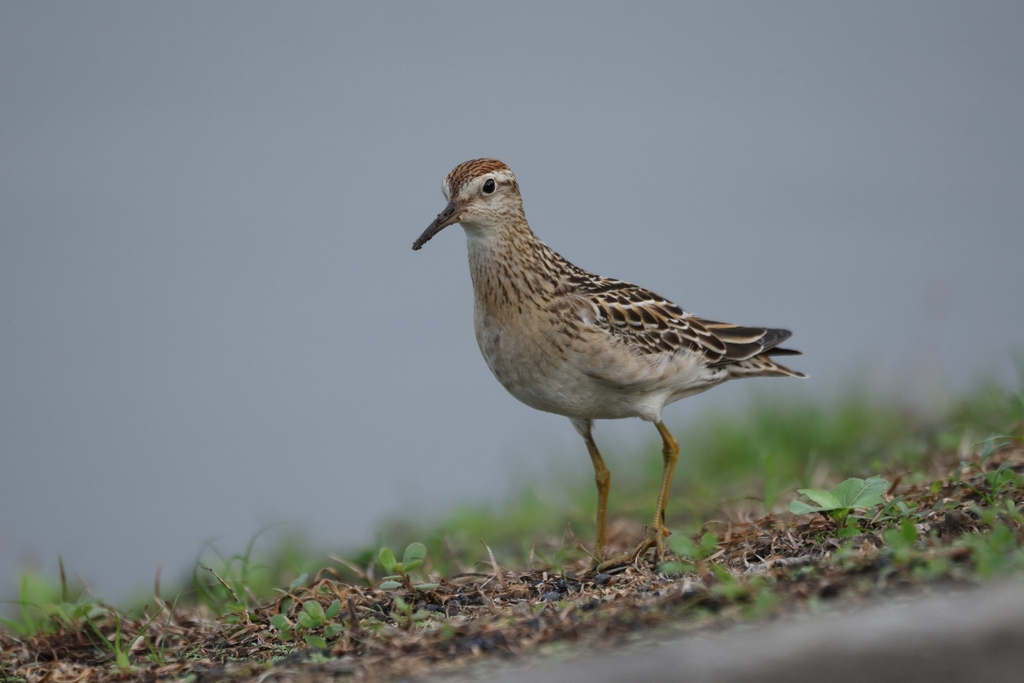
no rights reserved · CC0
Family: Scolopacidae · Class: Aves · Order: Charadriiformes
Calidris acuminata (Sharp-tailed Sandpiper) is a California animal in the Scolopacidae family.
The Sharp-tailed Sandpiper is a medium-sized shorebird measuring 17 to 21 cm (6.7 to 8.3 inches) in length with a wingspan of 34 to 38 cm (13.4 to 15.0 inches). Adults weigh between 55 to 120 grams. The species exhibits distinct seasonal plumage variations. Breeding adults display rich rufous and black streaking on the crown and back, with a white supercilium and dark eye stripe. The breast shows heavy dark streaking against a buff background, while the belly remains white. The bill is straight and dark, measuring approximately 23 to 28 mm in length. Non-breeding adults appear more subdued with gray-brown upperparts and minimal breast streaking. The sharp-pointed tail feathers, from which the species derives its name, extend slightly beyond the wing tips when at rest. The Sharp-tailed Sandpiper breeds across the tundra regions of northeastern Siberia, from the Taimyr Peninsula east to Chukotka and south to Kamchatka. The species migrates through eastern Asia and winters primarily in Australia and New Zealand. In California, Sharp-tailed Sandpipers occur as rare but regular vagrants along the Pacific coast, typically appearing during fall migration from August through November. Most California records originate from coastal estuaries, mudflats, and wetlands from Del Norte County south to San Diego County, with the highest occurrence rates in the San Francisco Bay Area and Central Valley. During migration and winter, Sharp-tailed Sandpipers inhabit coastal mudflats, salt marshes, sewage ponds, flooded agricultural fields, and shallow freshwater wetlands. The species shows preference for areas with soft substrate suitable for probing and exposed mudflats during low tide. In California, vagrant individuals are most frequently observed in managed wetlands, wastewater treatment facilities, and estuarine environments where invertebrate prey concentrations are high. Sharp-tailed Sandpipers are active foragers, employing both visual hunting and tactile probing techniques. Their diet consists primarily of small invertebrates including polychaete worms, amphipods, small mollusks, and various aquatic insects. During migration, the species often associates with other Calidris sandpipers, particularly Pectoral Sandpipers, which can complicate field identification. Breeding occurs on Arctic tundra from June through July, with females laying three to four eggs in ground scrapes lined with vegetation. Males perform aerial displays and maintain territories during the breeding season. The Sharp-tailed Sandpiper is not federally listed and maintains a stable global population estimated between 160,000 to 290,000 individuals. The species faces typical shorebird conservation challenges including habitat loss at stopover sites along the East Asian-Australasian Flyway, coastal development, and climate change impacts on Arctic breeding grounds. In California, the species' status as a vagrant limits conservation concerns, though protection of coastal wetland habitats benefits this and other migrating shorebirds. The species' occurrence in California provides valuable opportunities for research on vagrancy patterns and shorebird migration ecology.
Classification
Class: Aves · Order: Charadriiformes · Family: Scolopacidae
Frequently asked questions
How is Calidris acuminata classified?
Calidris acuminata belongs to class Aves, order Charadriiformes, family Scolopacidae.
What family does Calidris acuminata belong to?
Calidris acuminata is in the Scolopacidae family.
What is Calidris acuminata?
The Sharp-tailed Sandpiper is a medium-sized shorebird measuring 17 to 21 cm (6.7 to 8.3 inches) in length with a wingspan of 34 to 38 cm (13.4 to 15.0 inches).
Is Calidris acuminata found in California?
Yes. Calidris acuminata is recorded in California in The California Species Project's catalogue.
Related species
Other California species in the same genus, family, or bioregion.
Data from The California Species Project — 14,000+ California species with verified data from CNPS, CDFW, USFWS, and more.