Calidris canutus roselaari
Red Knot
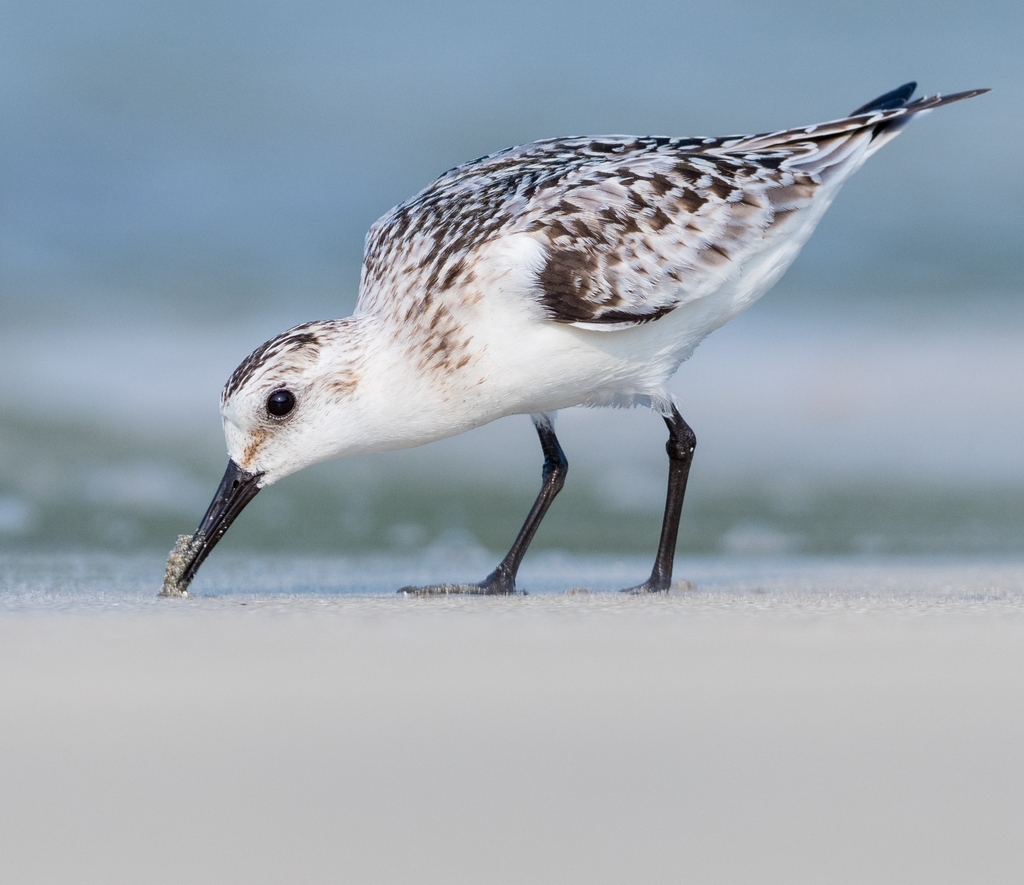
(c) Marco Chan, some rights reserved (CC BY) · licence
Family: Scolopacidae · Class: Aves · Order: Charadriiformes
Calidris canutus roselaari (Red Knot) is a California animal in the Scolopacidae family.
The Red Knot (Calidris canutus roselaari) is a medium-sized shorebird and the largest calidridine sandpiper in North America. Adults measure approximately 23-25 cm (9-10 inches) in length with a wingspan of 57-64 cm (22-25 inches). In breeding plumage, the species displays rusty-red underparts and head, with mottled brown and black upperparts. During winter, the plumage transitions to dull gray dorsally and white ventrally, with few distinct markings distinguishing it from other shorebirds. The roselaari subspecies breeds in northwestern Alaska and on Wrangel Island in eastern Russia (Carmona et al. 2013). Its wintering range extends along the Pacific coast from northern Mexico through Panama and possibly farther south, with the largest concentrations occurring at Guerrero Negro, Mexico, though some individuals winter as far south as Chiloé Island, Chile (USFWS 2024). The subspecies migrates through California during spring and fall, utilizing coastal staging areas for rest and feeding. Red Knots inhabit coastal marine and estuarine environments with large areas of exposed intertidal sediments. During breeding season, they prefer drier tundra and sparsely vegetated gravel ridges in the Arctic. Migration and wintering habitats include muddy or sandy coastal areas, specifically bays and estuaries, tidal flats, and unimproved tidal inlets. The species utilizes both high-energy ocean-front areas and more sheltered tidal flats in bays and lagoons. This subspecies is monogamous and single-brooded, typically laying a four-egg clutch in ground nests scraped into patches of mountain avens (Dryas octopetala) or low spreading vegetation containing lichens, leaves, and moss. After hatching, chicks and adults quickly move from high nesting terrain to lower freshwater wetland habitats. Red Knots are noted for long-distance migrations of up to 15,000 km between breeding and wintering grounds, making them among the world's longest-distance migrants. The roselaari Red Knot population is considered one of North America's rarest shorebird populations, with estimates ranging from 35,000-50,000 individuals (Wetlands International 2006). The subspecies is listed as endangered in Mexico and threatened in Canada. In the United States, the roselaari Red Knot was denied threatened status by the U.S. Fish and Wildlife Service due to insufficient information, despite documented declines in breeding and migration areas (USFWS 2024). The subspecies is currently designated as a bird of conservation concern and has been proposed for federal protection in the past. Primary threats include habitat loss at stopover sites, climate change effects on Arctic breeding grounds, and disturbance at critical staging areas during migration.
Classification
Class: Aves · Order: Charadriiformes · Family: Scolopacidae
Frequently asked questions
How is Calidris canutus roselaari classified?
Calidris canutus roselaari belongs to class Aves, order Charadriiformes, family Scolopacidae.
What family does Calidris canutus roselaari belong to?
Calidris canutus roselaari is in the Scolopacidae family.
What is Calidris canutus roselaari?
The Red Knot (Calidris canutus roselaari) is a medium-sized shorebird and the largest calidridine sandpiper in North America.
Is Calidris canutus roselaari found in California?
Yes. Calidris canutus roselaari is recorded in California in The California Species Project's catalogue.
Related species
Other California species in the same genus, family, or bioregion.
Data from The California Species Project — 14,000+ California species with verified data from CNPS, CDFW, USFWS, and more.