Calidris ptilocnemis
Rock Sandpiper
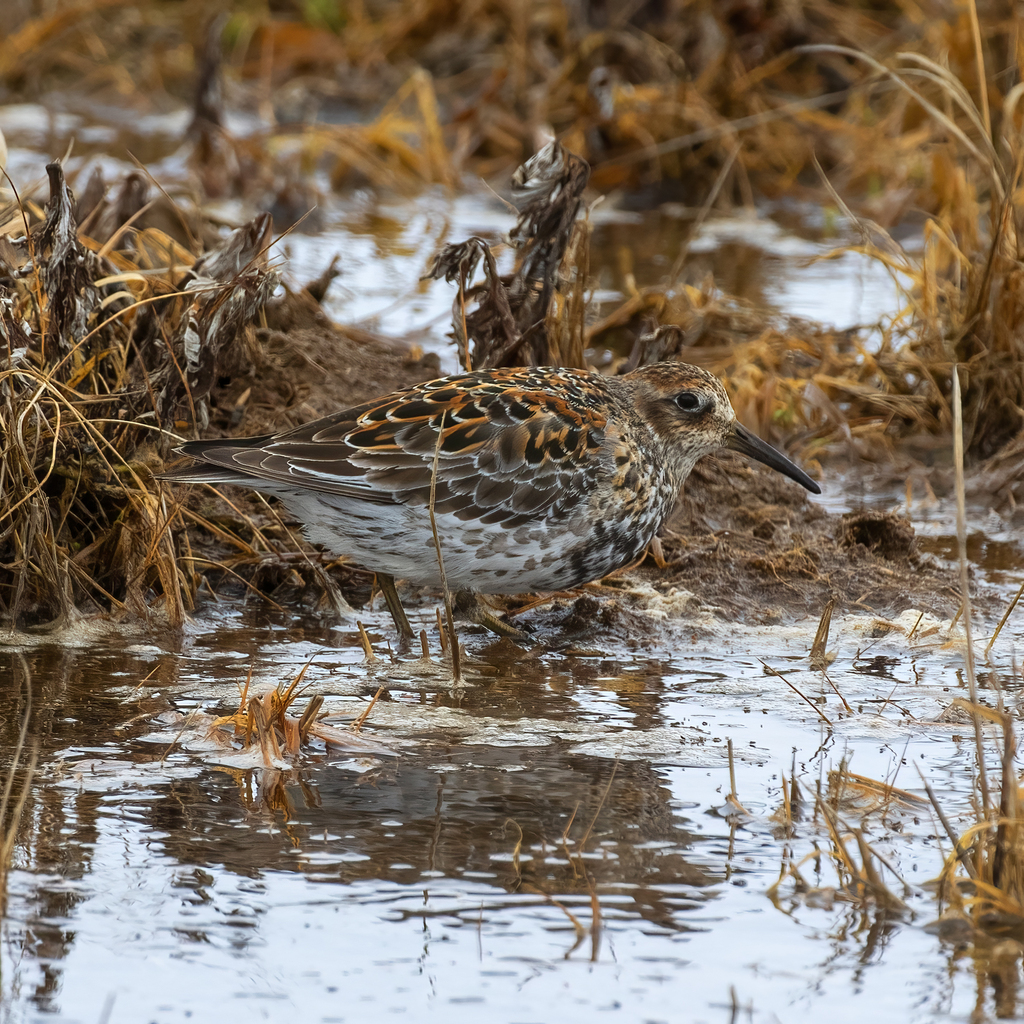
(c) Dan Vickers, some rights reserved (CC BY) · licence
Family: Scolopacidae · Class: Aves · Order: Charadriiformes
Calidris ptilocnemis (Rock Sandpiper) is a California animal in the Scolopacidae family.
The Rock Sandpiper is a medium-sized shorebird measuring 20-23 cm (8-9 inches) in length with a wingspan of 43-46 cm (17-18 inches). Adults weigh 60-100 grams. In breeding plumage, the species displays a rusty-brown crown and back with dark streaking, white underparts marked by a distinctive black patch on the lower breast and belly, and bright orange-yellow legs. The bill is slightly drooped and dark-tipped. Non-breeding adults appear much grayer above with less distinct markings. Juveniles resemble non-breeding adults but show buff-colored feather edges on the upperparts. The Rock Sandpiper breeds across western and northern Alaska, the Aleutian Islands, and parts of eastern Siberia. During migration and winter, the species occurs along the Pacific Coast from Alaska to California. In California, Rock Sandpipers are primarily winter visitors and migrants along rocky coastlines, with regular occurrence from October through April. They are most commonly observed along the northern and central California coast, with fewer records from southern California. This species inhabits rocky intertidal zones, jetties, breakwaters, and wave-washed rocky shores during the non-breeding season. Unlike most sandpipers that prefer sandy beaches, Rock Sandpipers are specialized for foraging on hard substrates covered with algae, barnacles, and mussels. During the breeding season, they nest on tundra and alpine areas, typically near coastlines or inland areas with scattered vegetation and rocky outcrops. Rock Sandpipers are tactile feeders that probe and pick prey from rock crevices and algae-covered surfaces. Their diet consists primarily of small invertebrates including amphipods, isopods, snails, worms, and insects. During winter, they feed extensively on algae and small mollusks scraped from rocks during low tide. The species breeds from May through July, with females laying 3-4 olive-colored eggs with dark markings in a shallow scrape lined with vegetation. Incubation lasts 19-21 days, and chicks fledge after 19-21 days. Rock Sandpipers often form small flocks during migration and winter, sometimes mixing with other shorebird species like Surfbirds and Turnstones. The Rock Sandpiper is not federally listed and is considered relatively stable across its range, though population monitoring is limited due to its remote breeding areas and specialized habitat preferences. According to the North American Bird Conservation Initiative, the species shows stable population trends continent-wide. In California, the species is considered a regular winter visitor with no specific conservation concerns. Primary threats include oil spills and marine pollution that could affect intertidal prey populations, coastal development that eliminates rocky habitat, and climate change impacts on marine ecosystems. Human disturbance at roosting and feeding sites may also impact wintering populations along developed coastlines.
Classification
Class: Aves · Order: Charadriiformes · Family: Scolopacidae
Frequently asked questions
How is Calidris ptilocnemis classified?
Calidris ptilocnemis belongs to class Aves, order Charadriiformes, family Scolopacidae.
What family does Calidris ptilocnemis belong to?
Calidris ptilocnemis is in the Scolopacidae family.
What is Calidris ptilocnemis?
The Rock Sandpiper is a medium-sized shorebird measuring 20-23 cm (8-9 inches) in length with a wingspan of 43-46 cm (17-18 inches).
Is Calidris ptilocnemis found in California?
Yes. Calidris ptilocnemis is recorded in California in The California Species Project's catalogue.
Related species
Other California species in the same genus, family, or bioregion.
Data from The California Species Project — 14,000+ California species with verified data from CNPS, CDFW, USFWS, and more.