Calidris pugnax
Ruff
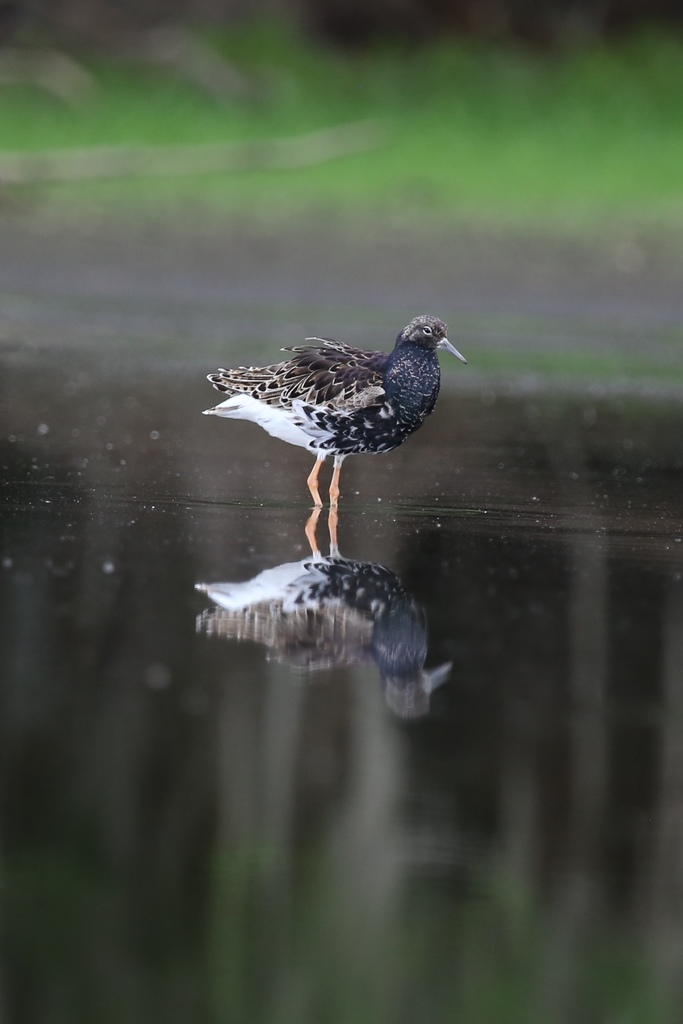
(c) Laura Gaudette, some rights reserved (CC BY) · licence
Family: Scolopacidae · Class: Aves · Order: Charadriiformes
Calidris pugnax (Ruff) is a California animal in the Scolopacidae family.
The Ruff is a medium-sized sandpiper with pronounced sexual dimorphism, particularly evident during breeding season. Males (ruffs) measure 29-32 cm (11.4-12.6 inches) in length with a wingspan of 54-60 cm (21-24 inches), while females (reeves) are notably smaller at 22-25 cm (8.7-9.8 inches) with a wingspan of 46-52 cm (18-20 inches). Non-breeding adults display gray-brown upperparts with darker feather centers and whitish underparts. During breeding season, males develop elaborate plumage including distinctive neck ruffs and head tufts that vary dramatically in color from white, chestnut, and black to iridescent purple or green. The bill is straight and medium-length, orange-yellow with a dark tip during breeding season, becoming darker in winter. Legs are orange to yellow-orange. The Ruff breeds across northern Eurasia from Scandinavia to eastern Siberia, with primary wintering grounds in sub-Saharan Africa. In North America, the species occurs as a vagrant, with records distributed across the continent but most frequently along the Atlantic and Pacific coasts. California records are irregular but documented annually, primarily during fall migration from August through October. Most California observations occur at coastal wetlands, inland freshwater marshes, and flooded agricultural fields in the Central Valley. The species has been recorded in numerous California counties including Los Angeles, Orange, San Diego, Riverside, Imperial, Fresno, and Alameda. Ruffs inhabit shallow wetlands, mudflats, flooded grasslands, and agricultural fields. During migration and winter, they prefer freshwater and brackish marshes, sewage ponds, and rice fields with water depths of 5-20 cm (2-8 inches). The species shows preference for areas with emergent vegetation and exposed muddy substrates. In breeding habitat, Ruffs utilize wet meadows, marshes, and tundra with scattered pools. Ruffs are opportunistic feeders, probing and picking invertebrates from mud and shallow water. Their diet consists primarily of chironomid larvae, beetles, flies, worms, and crustaceans, with some plant material including seeds. The species exhibits unique breeding behavior with males gathering at traditional display grounds called leks, where they perform elaborate courtship displays. Breeding occurs from May through July in native range. Males are classified into three morphs: territorial residents with dark ruffs, satellite males with lighter plumage, and female-mimicking faeders. Females lay 3-4 eggs in ground nests and provide all parental care. The Ruff is not federally listed in the United States and has no special conservation status in California due to its vagrant status. Globally, the species is classified as Least Concern by the International Union for Conservation of Nature, though European breeding populations have experienced declines due to habitat loss from agricultural intensification and wetland drainage. Climate change may affect migration patterns and vagrant occurrence patterns in North America. In California, the species benefits from wetland conservation efforts and managed flooding of agricultural lands that provide temporary habitat during irregular appearances.
Classification
Class: Aves · Order: Charadriiformes · Family: Scolopacidae
Frequently asked questions
How is Calidris pugnax classified?
Calidris pugnax belongs to class Aves, order Charadriiformes, family Scolopacidae.
What family does Calidris pugnax belong to?
Calidris pugnax is in the Scolopacidae family.
What is Calidris pugnax?
The Ruff is a medium-sized sandpiper with pronounced sexual dimorphism, particularly evident during breeding season.
Is Calidris pugnax found in California?
Yes. Calidris pugnax is recorded in California in The California Species Project's catalogue.
Related species
Other California species in the same genus, family, or bioregion.
Data from The California Species Project — 14,000+ California species with verified data from CNPS, CDFW, USFWS, and more.