Calidris pusilla
Semipalmated Sandpiper
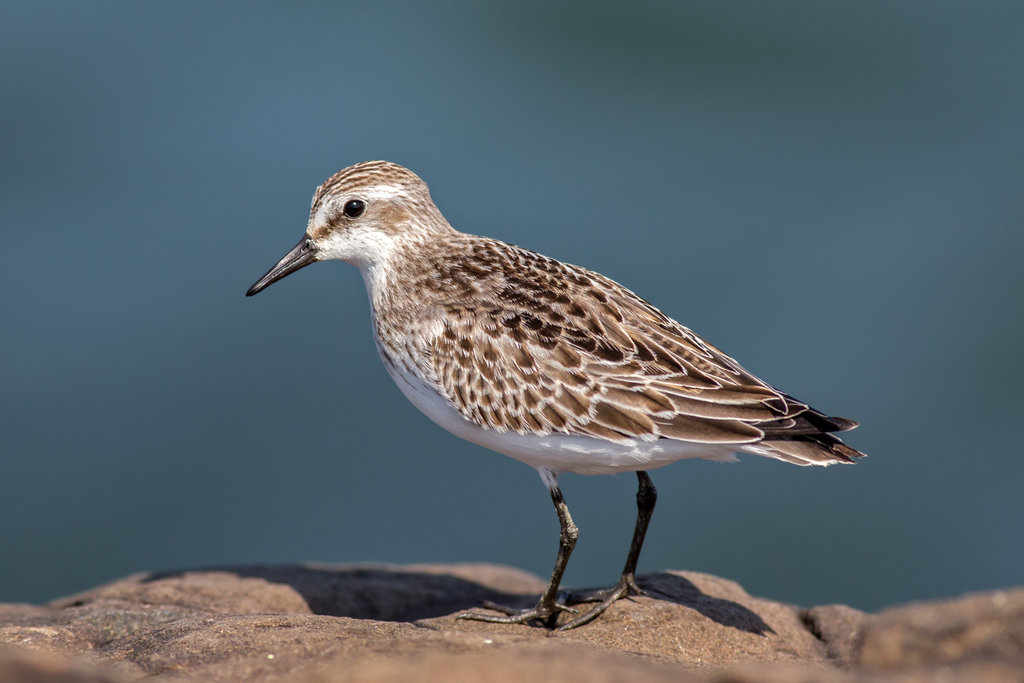
(c) Bill Keim, some rights reserved (CC BY) · licence
Family: Scolopacidae · Class: Aves · Order: Charadriiformes
Calidris pusilla (Semipalmated Sandpiper) is a California animal in the Scolopacidae family.
The Semipalmated Sandpiper is a small shorebird measuring 13-15 cm (5.1-5.9 inches) in length with a wingspan of 24-27 cm (9.4-10.6 inches). Adults weigh 17-32 grams. The species displays seasonal plumage variation, with breeding adults showing a brown-streaked back, white underparts with dark streaking on the breast and flanks, and a distinctive rufous cap. Non-breeding adults are grayer above with minimal streaking below. The bill is straight, black, and relatively short, measuring 15-21 mm in length. The species' common name derives from partial webbing between the front toes, distinguishing it from similar sandpipers. The Semipalmated Sandpiper breeds across the Arctic tundra from Alaska to Labrador. In California, the species occurs as a common to abundant migrant along the coast and in interior valleys during spring (April-May) and fall (July-October) migration periods. Peak migration typically occurs in late April to early May and again from mid-July through September. The species is less common in winter, with small numbers remaining along the coast and in the Central Valley. During migration and winter, Semipalmated Sandpipers inhabit mudflats, sandy beaches, salt ponds, sewage treatment facilities, and shallow wetlands. They prefer areas with soft substrates that facilitate probing for invertebrate prey. The species commonly associates with mixed flocks of other small sandpipers, particularly Least and Western Sandpipers. In California, important stopover sites include San Francisco Bay, Monterey Bay, the Salton Sea, and agricultural wetlands in the Central Valley. Semipalmated Sandpipers are active foragers, using rapid pecking motions and shallow probing to capture invertebrates. Their diet consists primarily of marine worms, small crustaceans, insects, and insect larvae. During migration, individuals may increase body weight by 40-60% to fuel long-distance flights. The species exhibits documented endurance during migration, with some individuals capable of non-stop flights exceeding 4,000 kilometers from breeding grounds to wintering areas in South America. Breeding occurs on Arctic tundra from June through July. Females lay 3-4 eggs in ground scrapes lined with vegetation. Both sexes incubate eggs for 18-22 days, though females often depart before chicks fledge, leaving males to provide parental care. Young birds fledge at approximately 14-19 days of age. While not federally listed, the Semipalmated Sandpiper faces conservation challenges from habitat loss at critical stopover sites, climate change affecting Arctic breeding grounds, and sea level rise threatening coastal wintering areas. The species' dependence on specific stopover locations during migration makes it vulnerable to habitat degradation. Population monitoring through the Christmas Bird Count and breeding bird surveys indicates stable to slightly declining trends in recent decades. Conservation efforts focus on protecting key stopover habitats and maintaining water levels in managed wetlands during peak migration periods.
Classification
Class: Aves · Order: Charadriiformes · Family: Scolopacidae
Frequently asked questions
How is Calidris pusilla classified?
Calidris pusilla belongs to class Aves, order Charadriiformes, family Scolopacidae.
What family does Calidris pusilla belong to?
Calidris pusilla is in the Scolopacidae family.
What is Calidris pusilla?
The Semipalmated Sandpiper is a small shorebird measuring 13-15 cm (5.1-5.9 inches) in length with a wingspan of 24-27 cm (9.4-10.6 inches).
Is Calidris pusilla found in California?
Yes. Calidris pusilla is recorded in California in The California Species Project's catalogue.
Related species
Other California species in the same genus, family, or bioregion.
Data from The California Species Project — 14,000+ California species with verified data from CNPS, CDFW, USFWS, and more.