Caliroa cerasi
Cherry Slug Sawfly
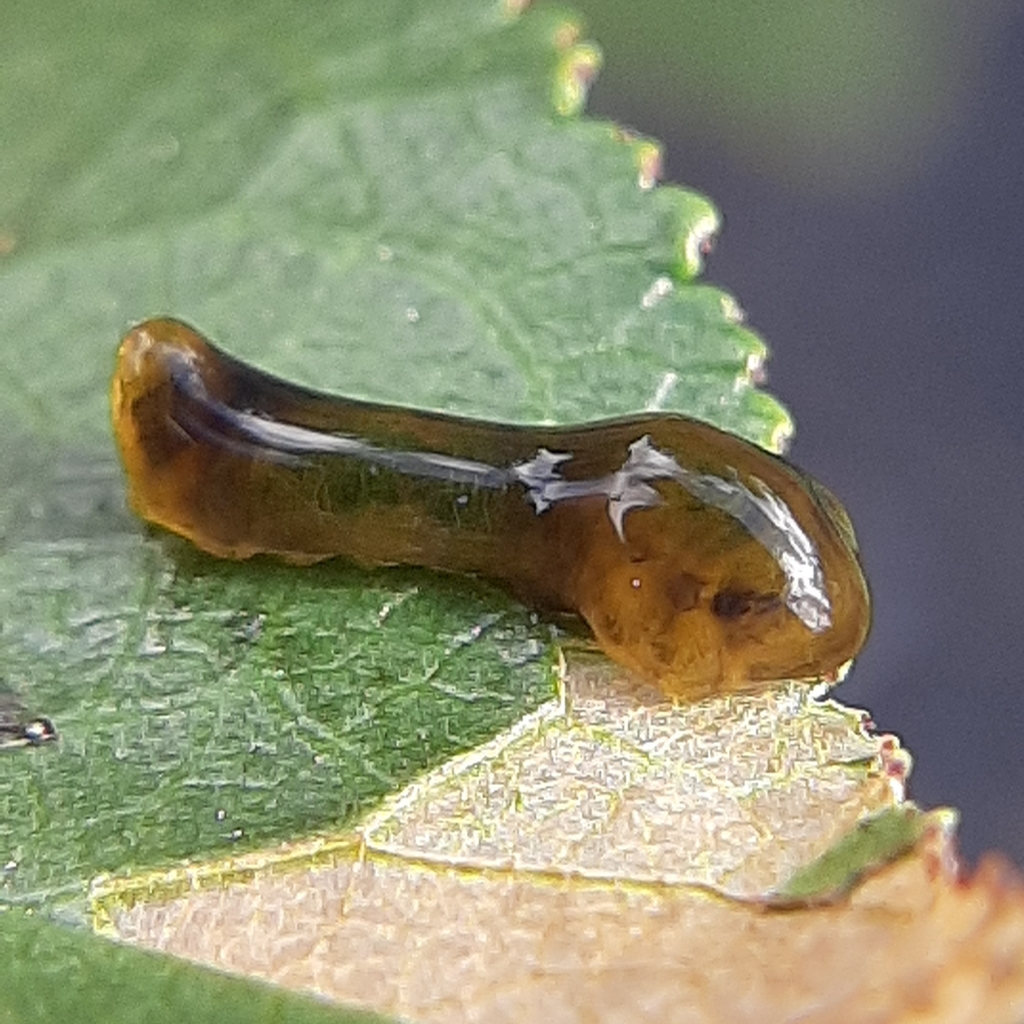
(c) Will Linnard, some rights reserved (CC BY) · licence
Family: Tenthredinidae · Class: Insecta · Order: Hymenoptera
Caliroa cerasi (Cherry Slug Sawfly) is a California animal in the Tenthredinidae family.
The cherry slug sawfly is a small hymenopteran insect in the family Tenthredinidae, commonly known as common sawflies. Adult sawflies measure approximately 4-6 mm (0.16-0.24 inches) in length and are dark-colored with transparent wings. The species is distinguished by its larval stage, which produces distinctive slug-like larvae that feed on the upper leaf surfaces of their host plants, creating a characteristic skeletonized feeding pattern. Caliroa cerasi is widely distributed across North America, having been introduced from Europe. The species occurs throughout California and most other states, establishing populations wherever suitable host plants are present. As a non-native species, it has successfully colonized urban, suburban, and rural environments across the continent. The species primarily inhabits areas where cherry trees (Prunus species) and pear trees (Pyrus species) grow, including orchards, residential landscapes, parks, and wild areas with native Prunus species. Adults and larvae can be found from sea level to moderate elevations, adapting to various climatic conditions throughout California's diverse regions. The species shows particular abundance in areas with Mediterranean climates similar to its native European range. Adult cherry slug sawflies emerge in late spring and early summer, typically May through July. Females use their saw-like ovipositor to insert eggs into leaf tissue of host plants. The larvae that emerge are distinctive for their slimy, slug-like appearance, covered in a dark olive-green mucus that gives them their common name. These larvae feed gregariously on the upper epidermis and mesophyll of leaves, leaving the lower epidermis and major veins intact, creating a translucent, skeletonized appearance. Larvae typically complete development in 2-3 weeks, then drop to the soil to pupate. The species typically produces one generation per year in most regions, though warmer areas may support partial second generations. Caliroa cerasi is not listed under federal or state endangered species legislation, as it is a non-native species that has successfully established across North America. Rather than being of conservation concern, this species is sometimes considered a minor pest of ornamental and fruit trees. The larvae can cause aesthetic damage to cherry and pear trees when populations are high, though they rarely cause significant harm to tree health. Natural enemies including parasitic wasps, predatory beetles, and birds help regulate populations in most areas. The species serves as an example of successful biological invasion, having spread from its native European range to become established across much of North America within the past century. While not typically requiring management in most situations, heavy infestations can be controlled through various methods including biological control agents and cultural practices. The cherry slug sawfly demonstrates the complex ecological relationships between introduced species and their new environments.
Classification
Class: Insecta · Order: Hymenoptera · Family: Tenthredinidae
Frequently asked questions
How is Caliroa cerasi classified?
Caliroa cerasi belongs to class Insecta, order Hymenoptera, family Tenthredinidae.
What family does Caliroa cerasi belong to?
Caliroa cerasi is in the Tenthredinidae family.
What is Caliroa cerasi?
The cherry slug sawfly is a small hymenopteran insect in the family Tenthredinidae, commonly known as common sawflies.
Is Caliroa cerasi found in California?
Yes. Caliroa cerasi is recorded in California in The California Species Project's catalogue.
Related species
Other California species in the same genus, family, or bioregion.
Data from The California Species Project — 14,000+ California species with verified data from CNPS, CDFW, USFWS, and more.