Callianax biplicata
Purple Olive Snail
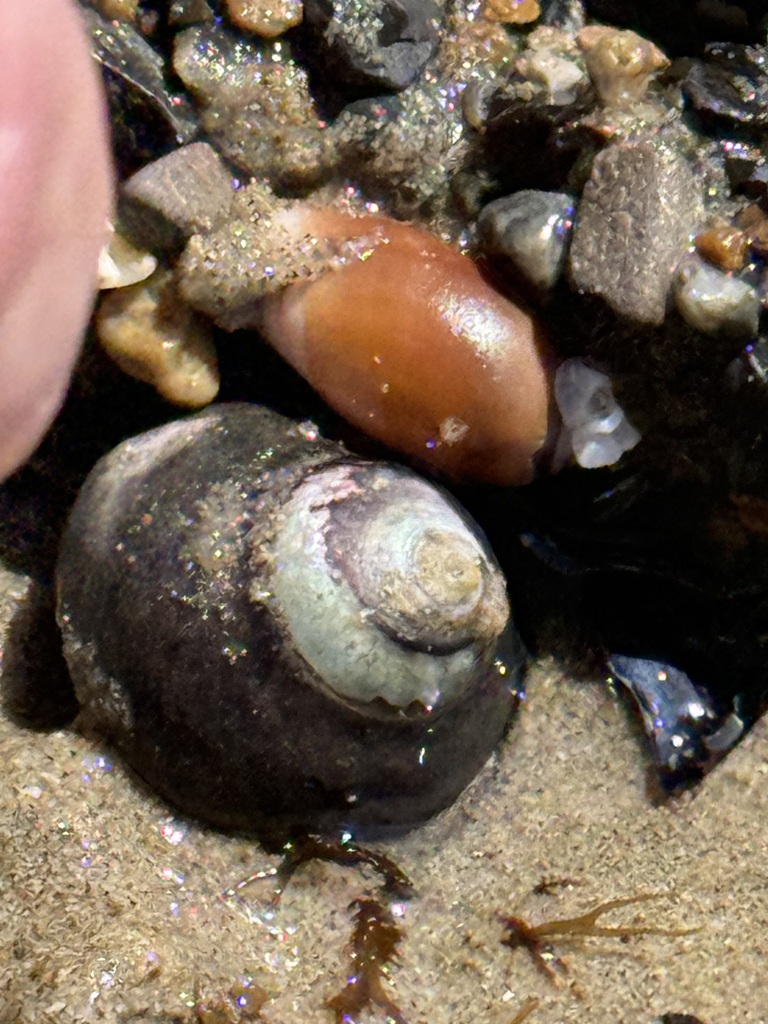
(c) Tanner Barnharst, some rights reserved (CC BY) · licence
Family: Olividae · Class: Gastropoda · Order: Neogastropoda
Callianax biplicata (Purple Olive Snail) is a California animal in the Olividae family.
The Purple Olive Snail (Callianax biplicata) is a marine gastropod mollusk in the family Olividae. This species reaches up to 3 cm (1.2 inches) in length, making it one of the largest olive shells on the Pacific coast (Walla Walla University). The shell is characterized by a smooth surface, slight spire, and an elongate, notched aperture. The common name "purple olive snail" refers to the shell's coloration, though specific color patterns and variations have not been well documented in available literature. Callianax biplicata occurs along the Eastern Pacific Ocean coasts from British Columbia, Canada to Baja California, Mexico (The BioFiles). Within California, this species is found along the entire coastline, with documented occurrences including the Channel Islands. Fossil records indicate the species was present in marine terrace deposits on Santa Cruz Island alongside other gastropods such as Californiconus californicus and Crepidula adunca (Muhs et al. 2021). This species inhabits clean sand environments in marine coastal waters. The snails are typically found in sandy substrates along the intertidal and subtidal zones. Purple olive snails are commonly associated with wave-washed sandy shores where their shells frequently wash ashore. Historical evidence indicates that these shells were culturally significant to indigenous peoples; the Ohlone used purple olive snail shells that commonly washed ashore along the central California coast (California Department of Fish and Wildlife). Specific behavioral and ecological information for Callianax biplicata remains limited in available scientific literature. Like other members of the Olividae family, these snails are presumed to be carnivorous, though detailed studies of their feeding habits, reproductive behavior, and life cycle have not been well documented. The species' role in coastal ecosystems and interactions with other marine organisms require further research to fully understand. No federal or state conservation listing status has been assigned to Callianax biplicata, and current population trends are not well documented. The species appears to maintain a stable distribution throughout its Pacific coast range, with over 1,600 documented occurrences recorded in biodiversity databases (GBIF). However, comprehensive population assessments and monitoring programs specific to this species have not been identified in available sources. The taxonomic classification of this species has undergone revision, with Olivella biplicata serving as a synonym for the currently accepted name Callianax biplicata (GBIF). This nomenclatural change reflects ongoing taxonomic research within the Olividae family. Scientific documentation for this species remains limited compared to other marine gastropods. The information presented here is based on available taxonomic databases, coastal surveys, and archaeological records. Additional research is needed to better understand the species' ecology, population dynamics, and conservation status along the California coast.
Classification
Class: Gastropoda · Order: Neogastropoda · Family: Olividae
Frequently asked questions
How is Callianax biplicata classified?
Callianax biplicata belongs to class Gastropoda, order Neogastropoda, family Olividae.
What family does Callianax biplicata belong to?
Callianax biplicata is in the Olividae family.
What is Callianax biplicata?
The Purple Olive Snail (Callianax biplicata) is a marine gastropod mollusk in the family Olividae.
Is Callianax biplicata found in California?
Yes. Callianax biplicata is recorded in California in The California Species Project's catalogue.
More California species
This species has no close relatives in our California data — here are other species to explore.
Data from The California Species Project — 14,000+ California species with verified data from CNPS, CDFW, USFWS, and more.