Callibaetis ferrugineus
Red Speckled Dun
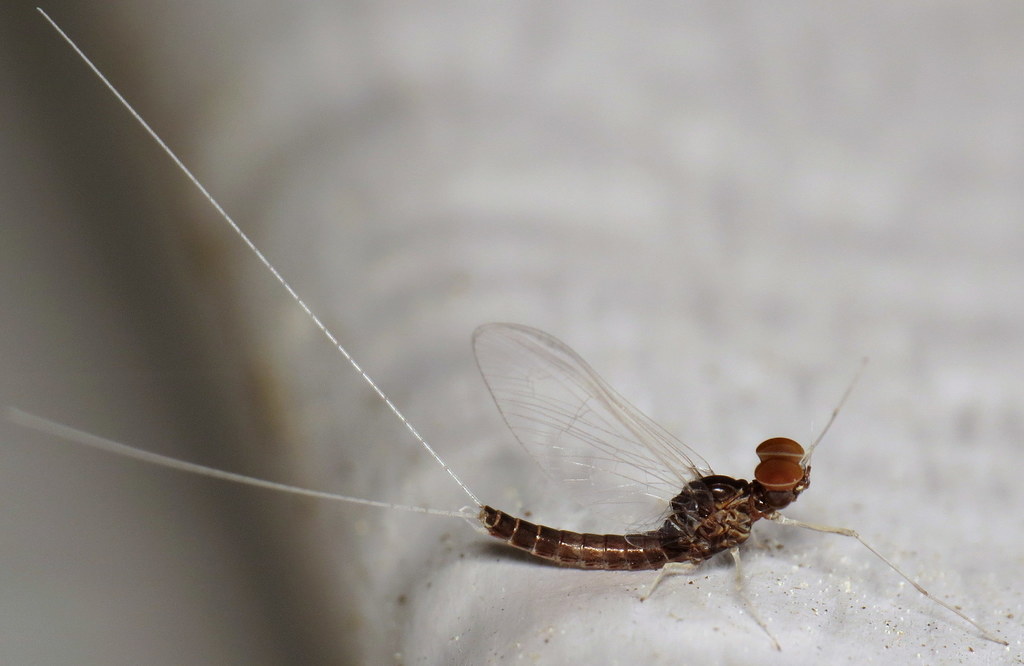
(c) Nick Block, some rights reserved (CC BY) · licence
Family: Baetidae · Class: Insecta · Order: Ephemeroptera
Callibaetis ferrugineus (Red Speckled Dun) is a California animal in the Baetidae family.
Callibaetis ferrugineus, commonly known as the Red Speckled Dun, is a mayfly species belonging to the family Baetidae within the order Ephemeroptera. This aquatic insect represents one of 13 species within the genus Callibaetis documented by the U.S. Fish and Wildlife Service taxonomic database. The species exhibits the characteristic ephemeral adult stage typical of mayflies, with a brief terrestrial phase following an extended aquatic larval period. Adult Red Speckled Duns display the reddish-brown coloration suggested by their common name, with speckled patterns on their wings and body. Like other Baetidae family members, they possess delicate, membranous wings with intricate venation patterns. The forewings are typically larger than the hindwings, and males often exhibit longer tails (cerci) than females. Body length typically ranges from 6 to 12 millimeters, though specific measurements for this species require further documentation. The geographic distribution of Callibaetis ferrugineus spans multiple regions across North America, though detailed range maps specific to this species are not readily available in current literature. The genus Callibaetis is widely distributed across temperate regions, typically associated with lentic (still water) environments. According to NatureServe Explorer, the subspecies Callibaetis ferrugineus ferrugineus carries a global conservation rank of G5T5, indicating the taxon is demonstrably secure globally. Red Speckled Duns inhabit freshwater environments, particularly lakes, ponds, and slow-moving streams with suitable substrate for larval development. The aquatic nymphs require well-oxygenated water and typically occur in areas with aquatic vegetation or organic debris. Water temperature and dissolved oxygen levels significantly influence their distribution and abundance. The species shows preference for waters with moderate alkalinity and minimal pollution. The life cycle follows the typical mayfly pattern of incomplete metamorphosis. Females deposit eggs directly into water or on the water surface. Aquatic nymphs undergo multiple molts over several months to a year, depending on water temperature and food availability. Nymphs are primarily herbivorous, feeding on algae, detritus, and microscopic organic matter. They serve as important prey items for fish, other aquatic invertebrates, and amphibians. Adult emergence typically occurs in synchronized events, with large numbers emerging simultaneously. Adults do not feed and focus entirely on reproduction during their brief 24 to 48-hour lifespan. Currently, Callibaetis ferrugineus does not appear on federal or state endangered species lists. The species faces typical threats associated with freshwater aquatic insects, including water pollution, habitat modification, and climate-induced changes to aquatic ecosystems. Eutrophication from agricultural runoff and urban development can alter water chemistry and reduce suitable habitat. As indicators of aquatic ecosystem health, mayfly populations including Callibaetis species serve as valuable biomonitoring tools for assessing freshwater habitat quality. Detailed ecological studies specific to Callibaetis ferrugineus remain limited in the scientific literature. Additional research is needed to fully document this species' habitat requirements, population dynamics, and conservation needs across its range.
Classification
Class: Insecta · Order: Ephemeroptera · Family: Baetidae
Frequently asked questions
How is Callibaetis ferrugineus classified?
Callibaetis ferrugineus belongs to class Insecta, order Ephemeroptera, family Baetidae.
What family does Callibaetis ferrugineus belong to?
Callibaetis ferrugineus is in the Baetidae family.
What is Callibaetis ferrugineus?
Callibaetis ferrugineus, commonly known as the Red Speckled Dun, is a mayfly species belonging to the family Baetidae within the order Ephemeroptera.
Is Callibaetis ferrugineus found in California?
Yes. Callibaetis ferrugineus is recorded in California in The California Species Project's catalogue.
Related species
Other California species in the same genus, family, or bioregion.
Data from The California Species Project — 14,000+ California species with verified data from CNPS, CDFW, USFWS, and more.