Callibaetis pictus
Speckled Dun
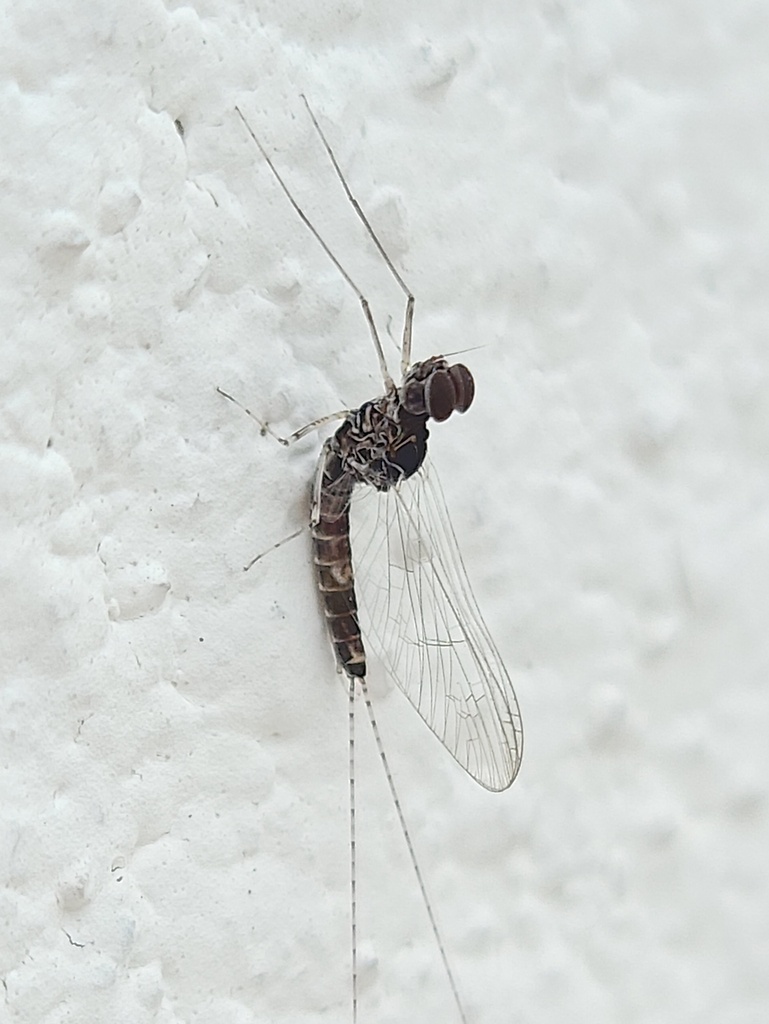
(c) Rodolfo Salinas Villarreal, some rights reserved (CC BY) · licence
Family: Baetidae · Class: Insecta · Order: Ephemeroptera
Callibaetis pictus (Speckled Dun) is a California animal in the Baetidae family.
Callibaetis pictus, commonly known as the speckled dun, is a mayfly species in the family Baetidae. As an aquatic insect in the order Ephemeroptera, this species exhibits the characteristic ephemeral adult stage that defines mayflies, with a complex life cycle involving aquatic nymphal development followed by brief terrestrial reproduction. The speckled dun displays the typical mayfly body plan with elongated, slender proportions. Adults possess two pairs of membranous wings held vertically at rest, with the forewings considerably larger than the hindwings. The species name "pictus" refers to the distinctive markings or patterns present on the wings and body, though detailed morphological descriptions require specialized taxonomic keys for accurate identification. Like other Callibaetis species, adults have prominent compound eyes and long, thread-like antennae. Callibaetis pictus occurs across western North America, with documented populations in various aquatic systems. The species has been recorded in locations including the Sheldon-Hart Mountain National Wildlife Refuge Complex, where it is listed among aquatic invertebrates in refuge surveys. Distribution patterns suggest adaptation to diverse freshwater habitats across its range, though specific locality data remains scattered in the scientific literature. This mayfly species inhabits freshwater aquatic environments during its nymphal stage. Nymphs develop in still or slow-moving waters including ponds, lakes, and quiet stream reaches. The aquatic larvae require clean water conditions with adequate dissolved oxygen levels. Adult emergence typically occurs near the water's edge, with timing influenced by water temperature and seasonal conditions. Specific habitat preferences within the genus Callibaetis often include areas with submerged vegetation and soft substrates where nymphs can burrow or find shelter. The life cycle follows the typical mayfly pattern of incomplete metamorphosis. Nymphs are aquatic herbivores and detritivores, feeding on algae, organic matter, and plant material in the water column and benthic zone. Development occurs over multiple instars before emergence as winged adults. Adults are short-lived, focusing entirely on reproduction, with males forming mating swarms over water bodies. Females return to the water surface to deposit eggs, which sink to the substrate to begin the next generation. The species likely exhibits seasonal emergence patterns, though specific timing varies with geographic location and local environmental conditions. According to NatureServe, Callibaetis pictus holds a global conservation status of G5, indicating it is demonstrably secure globally with no immediate conservation concerns (NatureServe 2009). This ranking suggests stable populations across the species' range, though local population trends may vary depending on habitat quality and water management practices. As with many aquatic insects, potential threats include water quality degradation, habitat modification, and climate-induced changes to aquatic ecosystems. The species serves as an indicator of aquatic ecosystem health, as mayflies are sensitive to pollution and environmental changes. Continued monitoring of aquatic invertebrate communities helps assess the conservation status of freshwater habitats supporting this and related species.
Classification
Class: Insecta · Order: Ephemeroptera · Family: Baetidae
Frequently asked questions
How is Callibaetis pictus classified?
Callibaetis pictus belongs to class Insecta, order Ephemeroptera, family Baetidae.
What family does Callibaetis pictus belong to?
Callibaetis pictus is in the Baetidae family.
What is Callibaetis pictus?
Callibaetis pictus, commonly known as the speckled dun, is a mayfly species in the family Baetidae.
Is Callibaetis pictus found in California?
Yes. Callibaetis pictus is recorded in California in The California Species Project's catalogue.
Related species
Other California species in the same genus, family, or bioregion.
Data from The California Species Project — 14,000+ California species with verified data from CNPS, CDFW, USFWS, and more.