Callinicus pictitarsis
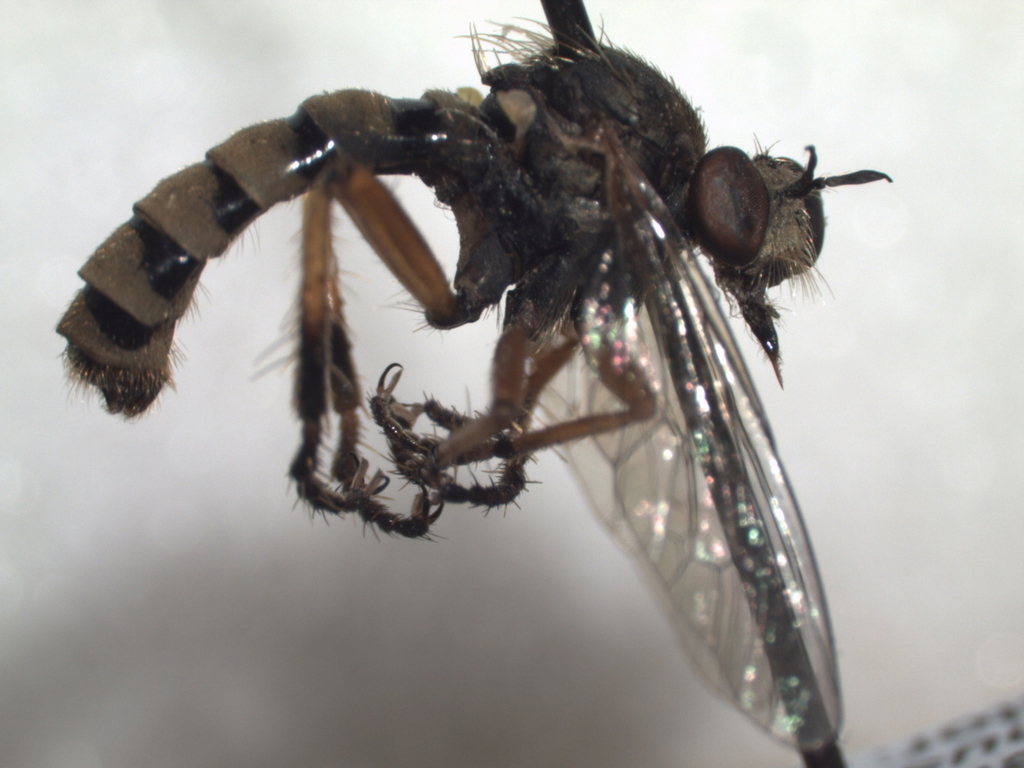
(c) Bennett Grappone, some rights reserved (CC BY) · licence
Family: Asilidae · Class: Insecta · Order: Diptera
Callinicus pictitarsis is a California animal in the Asilidae family.
Callinicus pictitarsis is a species of robber fly (family Asilidae) in the order Diptera. As a member of the Asilidae, this species belongs to a diverse family of predatory flies known for their hunting behavior and bristly appearance. Like other robber flies, C. pictitarsis likely possesses a prominent proboscis, large compound eyes, and a robust, bristly body adapted for capturing prey in flight. The distribution and range of C. pictitarsis within California have not been well documented in available scientific literature. The species does not appear in current federal or state wildlife databases, suggesting it may be either extremely rare, recently described, or represent a taxonomic designation that requires further verification. No records were found in the U.S. Fish and Wildlife Service ECOS database or California Department of Fish and Wildlife species accounts as of December 2025. Specific habitat requirements for C. pictitarsis remain undocumented. Robber flies in the genus Callinicus typically inhabit areas with exposed perches where they can hunt for prey, such as open woodlands, chaparral, or grassland edges. These flies generally prefer sunny locations with adequate visibility for aerial hunting, often utilizing dead branches, rocks, or other prominent structures as hunting perches. As a member of the Asilidae, C. pictitarsis is presumed to be a predatory species that captures other insects in flight. Robber flies are ambush predators that use their powerful legs to grasp prey and their piercing mouthparts to inject digestive enzymes. They typically feed on a variety of flying insects including flies, bees, wasps, beetles, and other small arthropods. Specific prey preferences, reproductive behavior, and seasonal activity patterns for this species have not been documented. The conservation status of C. pictitarsis is unknown due to the lack of scientific documentation. The species is not listed under federal or California endangered species legislation, and no population assessments have been conducted. The absence of this species from major taxonomic databases and field guides suggests either extremely limited distribution, recent taxonomic changes, or gaps in scientific knowledge regarding California's dipteran fauna. Scientific documentation for this species remains extremely limited. The information presented here is based on taxonomic classification and general knowledge of robber fly ecology. Detailed studies of this species' biology, distribution, ecology, and conservation needs are lacking. We welcome contributions of verified scientific data, photographs, or field observations to enhance this species account.
Classification
Class: Insecta · Order: Diptera · Family: Asilidae
Frequently asked questions
How is Callinicus pictitarsis classified?
Callinicus pictitarsis belongs to class Insecta, order Diptera, family Asilidae.
What family does Callinicus pictitarsis belong to?
Callinicus pictitarsis is in the Asilidae family.
What is Callinicus pictitarsis?
Callinicus pictitarsis is a species of robber fly (family Asilidae) in the order Diptera.
Is Callinicus pictitarsis found in California?
Yes. Callinicus pictitarsis is recorded in California in The California Species Project's catalogue.
Related species
Other California species in the same genus, family, or bioregion.
Data from The California Species Project — 14,000+ California species with verified data from CNPS, CDFW, USFWS, and more.