Callionima parce
Parce sphinx
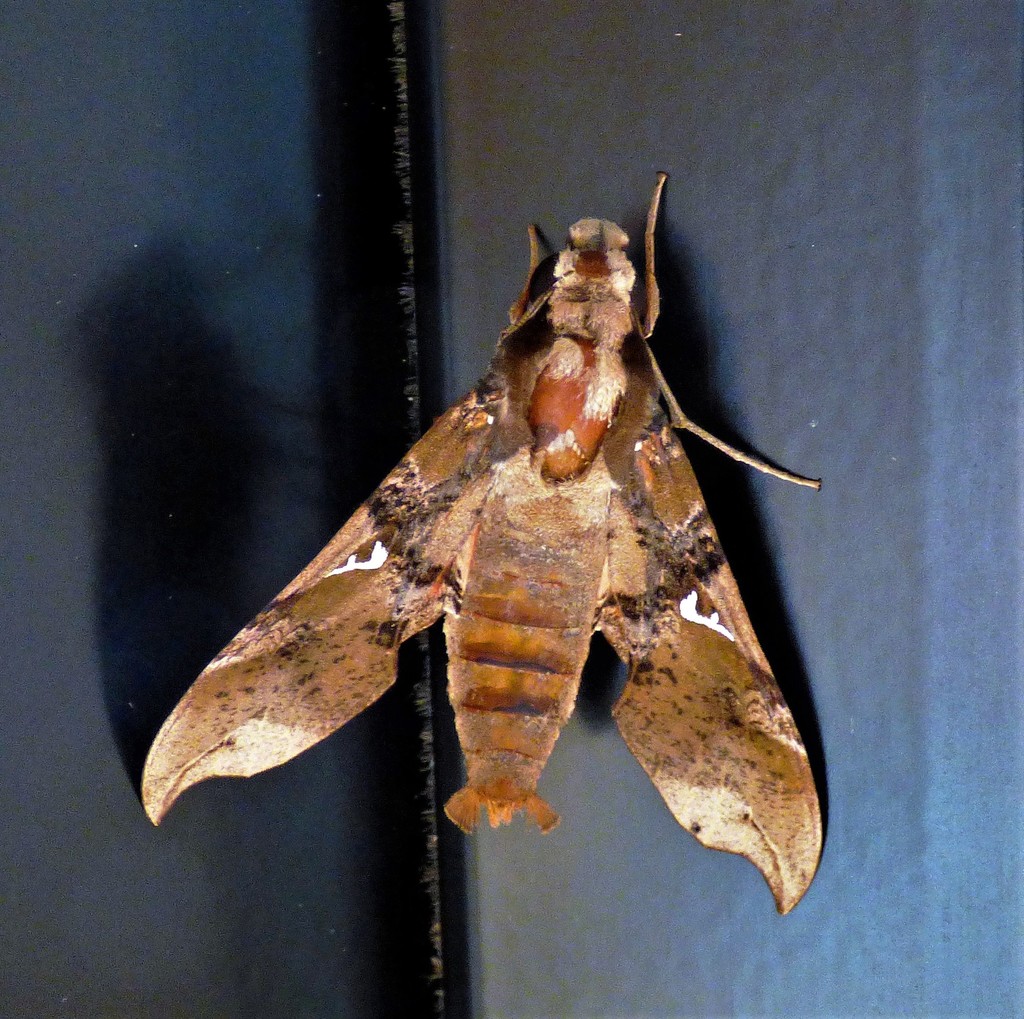
no rights reserved · CC0
Family: Sphingidae · Class: Insecta · Order: Lepidoptera
Callionima parce (Parce sphinx) is a California animal in the Sphingidae family.
The Parce sphinx (Callionima parce) is a medium-sized hawkmoth in the family Sphingidae, characterized by distinctive wing patterns and cryptic coloration. Adults typically measure 45 to 65 mm (1.8 to 2.6 inches) in wingspan, with forewings displaying mottled brown and gray patterns that provide effective camouflage against tree bark. The hindwings are typically darker with subtle banding. Like other sphinx moths, the species has a robust, streamlined body adapted for rapid flight and a long proboscis for nectar feeding. The Parce sphinx exhibits an extensive range from Brazil north through Central America and Mexico, extending into the southern United States including south Florida, South Texas, southern Arizona, and southern California. This broad distribution suggests the species tolerates diverse climatic conditions across tropical and subtropical regions. In California, the species likely occurs in the southernmost counties where suitable habitat and host plants are present. The species inhabits tropical and subtropical environments, favoring areas with dense vegetation where host plants in the dogbane family (Apocynaceae) are available. In the United States portion of its range, the moth likely occurs in riparian corridors, desert oases, and urban areas with appropriate plantings. The species appears to prefer warm, humid microhabitats that support both larval development and adult nectar sources. Like other sphinx moths, Callionima parce is primarily crepuscular and nocturnal, becoming active during twilight hours. Adults feed on nectar from various flowering plants using their elongated proboscis, hovering at flowers in a manner similar to hummingbirds. The species likely has multiple generations per year in warmer portions of its range. Larvae, known as hornworms, feed on plants in the dogbane family, which includes species such as milkweeds and oleanders. The caterpillars typically display the characteristic horn or spine at the posterior end common to sphinx moth larvae. Reproduction follows typical sphinx moth patterns, with females depositing eggs singly on host plant leaves. Larvae undergo five instars before pupating in soil or leaf litter. The pupal stage may extend through cooler months in temperate portions of the range. Adult flight periods likely correspond with warm seasons and host plant availability. The conservation status of Callionima parce has not been formally assessed by major conservation organizations. As a widely distributed species ranging from South America to the southern United States, populations appear stable across most of its range. However, habitat modification and urbanization in border regions may affect local populations. The species' dependence on specific host plants in the dogbane family means conservation of native vegetation communities is important for maintaining viable populations. Climate change may potentially allow range expansion northward in response to warming temperatures, though this would require suitable host plants and habitat conditions.
Classification
Class: Insecta · Order: Lepidoptera · Family: Sphingidae
Frequently asked questions
How is Callionima parce classified?
Callionima parce belongs to class Insecta, order Lepidoptera, family Sphingidae.
What family does Callionima parce belong to?
Callionima parce is in the Sphingidae family.
What is Callionima parce?
The Parce sphinx (Callionima parce) is a medium-sized hawkmoth in the family Sphingidae, characterized by distinctive wing patterns and cryptic coloration.
Is Callionima parce found in California?
Yes. Callionima parce is recorded in California in The California Species Project's catalogue.
Related species
Other California species in the same genus, family, or bioregion.
Data from The California Species Project — 14,000+ California species with verified data from CNPS, CDFW, USFWS, and more.