Callipepla californica
California Quail
(c) Barry Langdon-Lassagne, some rights reserved (CC BY) · licence
Family: Odontophoridae · Class: Aves · Order: Galliformes
Callipepla californica (California Quail) is a California animal in the Odontophoridae family.
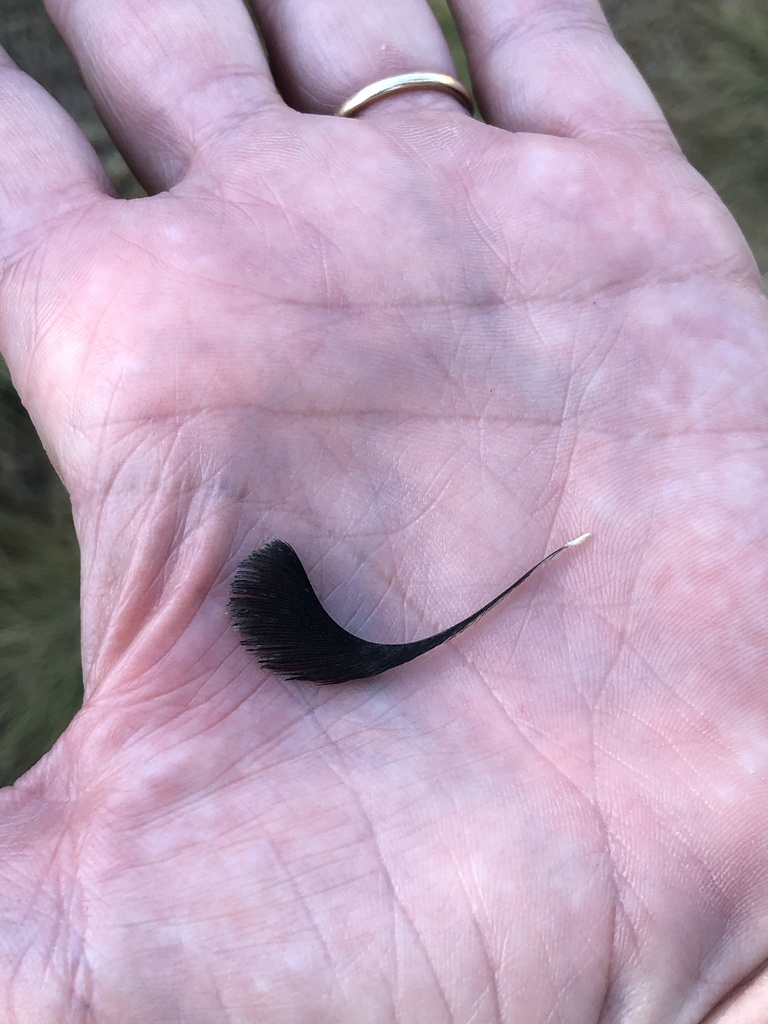
The California quail is a plump, ground-dwelling gamebird measuring 24 to 27 cm (9.4 to 10.6 inches) in length and weighing 140 to 230 grams (4.9 to 8.1 ounces). Males display distinctive black and white head markings with a prominent forward-curving black plume, chestnut crown, and scaled underparts with white streaks. The throat is black bordered by white stripes. Females are more subdued with grayish-brown plumage, a shorter plume, and buff-colored throat. Both sexes exhibit blue-gray backs and wings with intricate scaling patterns on the underparts. Historically, California quail ranged from southern Oregon through Baja California, Mexico, with populations extending eastward into Nevada. The species has been successfully introduced to numerous locations including Hawaii, Chile, New Zealand, and parts of the Pacific Northwest. Within California, they occur from sea level to approximately 1,500 meters (4,900 feet) elevation, occupying diverse habitats throughout most of the state except high mountain regions and desert areas. California quail inhabit chaparral, oak woodlands, riparian areas, agricultural lands, and suburban environments with suitable cover. They require a mosaic of dense shrubland for escape cover, open areas for foraging, and proximity to water sources. Preferred vegetation includes manzanita, ceanothus, scrub oak, and sage scrub communities. The species adapts well to edge habitats where different vegetation types meet, including parks and residential areas with appropriate landscaping. These highly social birds form coveys of 25 to 40 individuals during fall and winter, breaking into smaller groups during breeding season from April through June. California quail are primarily granivorous, consuming seeds from forbs, shrubs, and trees, supplemented by green vegetation, berries, and occasional insects. Females construct shallow ground nests lined with grass and leaves, typically concealed under shrubs or brush piles. Clutch size ranges from 10 to 17 cream-colored eggs with brown markings. Incubation lasts 21 to 23 days, with chicks capable of leaving the nest within hours of hatching. Males often assist with brood care, and pairs may produce second broods in favorable years. California quail populations remain stable across most of their range, with the species classified as Least Concern by the International Union for Conservation of Nature. They are designated as California's official state bird, adopted in 1931. Primary threats include habitat loss from urban development and intensive agriculture, particularly in coastal areas. Predation by domestic cats, dogs, and various wildlife species affects local populations. The species benefits from habitat management practices that maintain shrubland cover and water sources. Climate change may impact future distributions through altered precipitation patterns affecting food and cover resources. Overall, California quail demonstrate strong adaptability to human-modified landscapes while maintaining healthy population levels throughout their core range.
Classification
Class: Aves · Order: Galliformes · Family: Odontophoridae
Frequently asked questions
How is Callipepla californica classified?
Callipepla californica belongs to class Aves, order Galliformes, family Odontophoridae.
What family does Callipepla californica belong to?
Callipepla californica is in the Odontophoridae family.
What is Callipepla californica?
The California quail is a plump, ground-dwelling gamebird measuring 24 to 27 cm (9.4 to 10.6 inches) in length and weighing 140 to 230 grams (4.9 to 8.1 ounces).
Is Callipepla californica found in California?
Yes. Callipepla californica is recorded in California in The California Species Project's catalogue.
Related species
Other California species in the same genus, family, or bioregion.
Data from The California Species Project — 14,000+ California species with verified data from CNPS, CDFW, USFWS, and more.