Callipepla californica catalinensis
Catalina California Quail
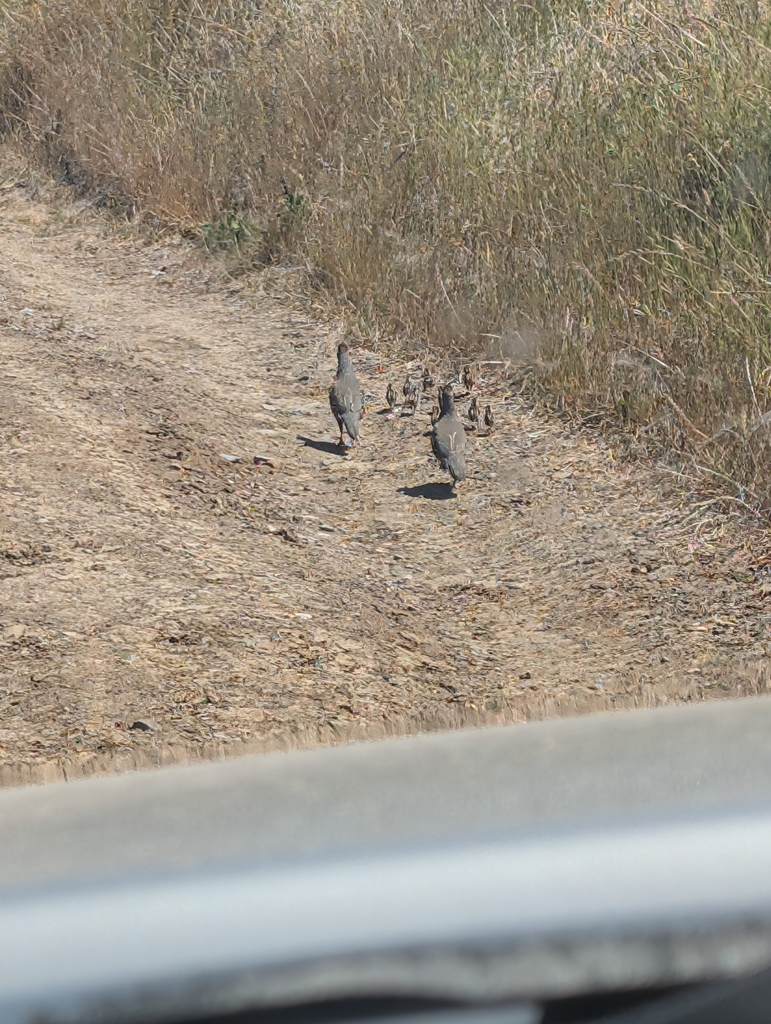
(c) Aaron Kreisberg, some rights reserved (CC BY) · licence
Family: Odontophoridae · Class: Aves · Order: Galliformes
Conservation status: G5T2 S2
Callipepla californica catalinensis (Catalina California Quail) is a California animal in the Odontophoridae family.
The Catalina California Quail is a subspecies of the California Quail endemic to Santa Catalina Island off the coast of Southern California. This ground-dwelling gamebird exhibits the characteristic features of California Quail, including a distinctive black teardrop-shaped crest that curves forward over the bill, scaled underparts, and chestnut flanks with white streaking. Adults measure approximately 24-27 cm (9.4-10.6 inches) in length and weigh 140-230 grams (4.9-8.1 ounces). Males display more pronounced markings with a black throat bordered by white, while females show more subdued brown and gray coloration with less distinct facial patterns. Historically, the Catalina California Quail was found throughout Santa Catalina Island, approximately 35 kilometers (22 miles) southwest of Los Angeles. The subspecies evolved in isolation on this 194 square kilometer (75 square mile) island, developing distinct characteristics that differentiate it from mainland California Quail populations. Current distribution is significantly reduced from historical levels, with populations now restricted to specific areas of the island where suitable habitat remains. The subspecies inhabits chaparral, oak woodlands, and scrubland communities characteristic of Santa Catalina Island's Mediterranean climate. They require areas with dense cover for roosting and nesting, interspersed with more open areas for feeding. The birds utilize native plant communities including island scrub oak, toyon, and various shrub species that provide both shelter and food sources. Elevation ranges from sea level to the island's higher ridges, though specific elevation preferences have not been comprehensively documented. Catalina California Quail are ground-foragers that feed primarily on seeds, leaves, and fruits of native plants, supplemented by insects during breeding season. They form coveys of 10-30 individuals outside the breeding season, which typically occurs from April through July. Pairs are generally monogamous during the breeding season, with females laying 10-17 cream-colored eggs with brown markings in ground nests concealed under shrubs. Incubation lasts approximately 23 days, and chicks are precocial, leaving the nest within hours of hatching to follow their parents. The Catalina California Quail is designated as a California Species of Special Concern and carries a NatureServe global rank of G5T2, indicating the subspecies is imperiled with a high risk of extinction (NatureServe 2010). The subspecies has experienced significant population decline due to habitat degradation, introduced predators including feral cats and non-native mammals, and competition from introduced plant species that alter native vegetation communities. Historical grazing by introduced herbivores damaged native plant communities essential for quail survival. Current threats include ongoing predation pressure, limited genetic diversity due to small population size, habitat fragmentation, and potential impacts from climate change affecting island ecosystems. Conservation efforts focus on predator control, habitat restoration, and monitoring of remaining populations to prevent further decline of this endemic island subspecies.
Classification
Class: Aves · Order: Galliformes · Family: Odontophoridae
Conservation status
G5T2 S2
Frequently asked questions
How is Callipepla californica catalinensis classified?
Callipepla californica catalinensis belongs to class Aves, order Galliformes, family Odontophoridae.
What family does Callipepla californica catalinensis belong to?
Callipepla californica catalinensis is in the Odontophoridae family.
Is Callipepla californica catalinensis protected or of conservation concern?
Callipepla californica catalinensis carries the following status: G5T2 S2.
What is Callipepla californica catalinensis?
The Catalina California Quail is a subspecies of the California Quail endemic to Santa Catalina Island off the coast of Southern California.
Is Callipepla californica catalinensis found in California?
Yes. Callipepla californica catalinensis is recorded in California in The California Species Project's catalogue.
Related species
Other California species in the same genus, family, or bioregion.
Data from The California Species Project — 14,000+ California species with verified data from CNPS, CDFW, USFWS, and more.