Calliphora vicina
Blue Blowfly
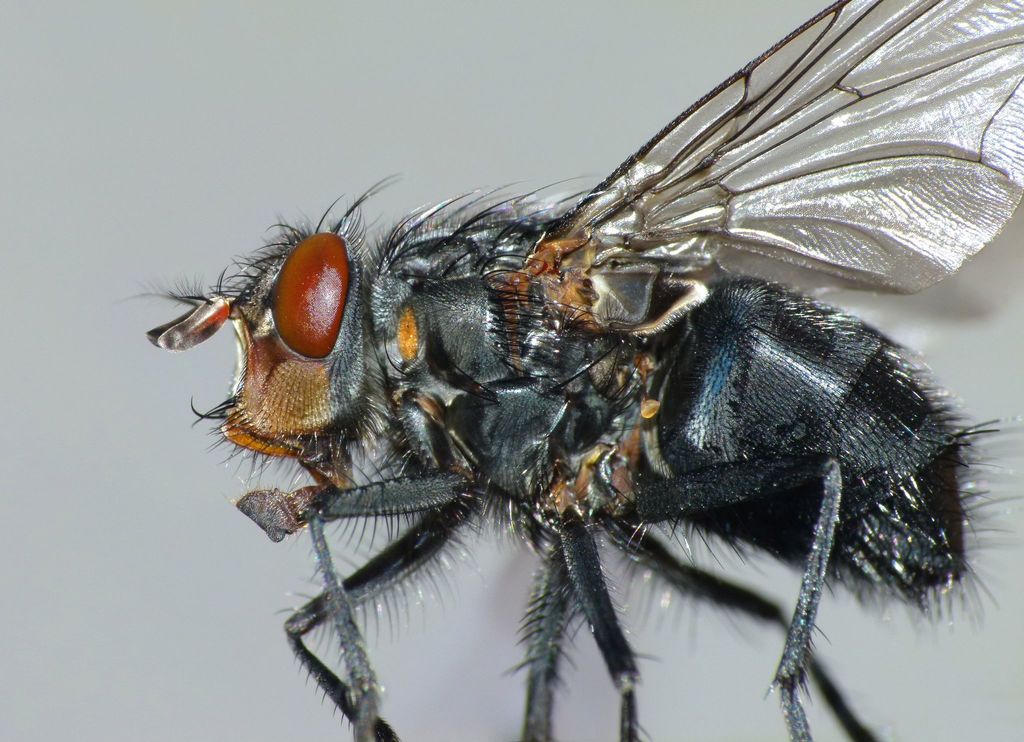
(c) Steve Kerr, some rights reserved (CC BY) · licence
Family: Calliphoridae · Class: Insecta · Order: Diptera
Calliphora vicina (Blue Blowfly) is a California animal in the Calliphoridae family.
The blue blowfly is a robust metallic blue-green fly measuring 6-12 mm in body length, belonging to the family Calliphoridae. Adults display a distinctive metallic blue to blue-green sheen on the thorax and abdomen, with dark reddish-brown facial coloration. The thorax features a characteristic dark median stripe running longitudinally down the center. Wings are clear to slightly smoky, and the species possesses the typical robust build of blow flies with prominent compound eyes and strong bristles. Calliphora vicina occurs throughout North America, with a range extending from Alaska to Greenland and south to California, Texas, and Georgia (BugGuide). In California, the species is found statewide from coastal areas to mountainous regions, adapting to diverse elevational zones. The blue blowfly demonstrates wide geographic plasticity, occurring across multiple biomes and climatic conditions. This species inhabits a wide variety of environments but shows preference for areas with available organic matter. Blue blowflies are commonly found in urban and suburban settings, agricultural areas, woodlands, and open grasslands. They frequent locations near human habitation, garbage disposal sites, and areas where animal carcasses or organic waste accumulate. The species shows tolerance for both humid coastal conditions and drier inland environments. Blue blowflies are saprophagous insects that play crucial ecological roles as decomposers. Adults are commonly found on carrion and excrement, where they feed and lay eggs (BugGuide). Females deposit clusters of white, elongated eggs directly onto decaying organic matter. Larvae, known as maggots, develop through three instars while feeding on decomposing tissue, completing development in 1-2 weeks under optimal conditions. Adults emerge after pupation in soil or organic debris. The species exhibits seasonal activity patterns, being most abundant during fall and spring months when temperatures are moderate (BugGuide). Adults are strong fliers and can locate suitable breeding sites from considerable distances using chemoreception. Calliphora vicina serves important forensic and ecological functions. In forensic entomology, the species provides valuable evidence for estimating post-mortem intervals due to its predictable colonization patterns on human remains. Ecologically, blue blowflies accelerate nutrient cycling by breaking down organic matter and serving as prey for various predators including spiders, birds, and other insects. The species also functions as a minor pollinator, visiting flowers for nectar when not engaged in reproductive activities. While not of conservation concern, blue blowflies face indirect pressures from pesticide use and habitat modification that reduce available organic matter sources. Their synanthropic nature and broad ecological tolerance suggest stable populations throughout their range, though specific population monitoring is not conducted for this species.
Classification
Class: Insecta · Order: Diptera · Family: Calliphoridae
Frequently asked questions
How is Calliphora vicina classified?
Calliphora vicina belongs to class Insecta, order Diptera, family Calliphoridae.
What family does Calliphora vicina belong to?
Calliphora vicina is in the Calliphoridae family.
What is Calliphora vicina?
The blue blowfly is a robust metallic blue-green fly measuring 6-12 mm in body length, belonging to the family Calliphoridae.
Is Calliphora vicina found in California?
Yes. Calliphora vicina is recorded in California in The California Species Project's catalogue.
Related species
Other California species in the same genus, family, or bioregion.
Data from The California Species Project — 14,000+ California species with verified data from CNPS, CDFW, USFWS, and more.