Callirhytis perdens
Ruptured Twig Gall Wasp
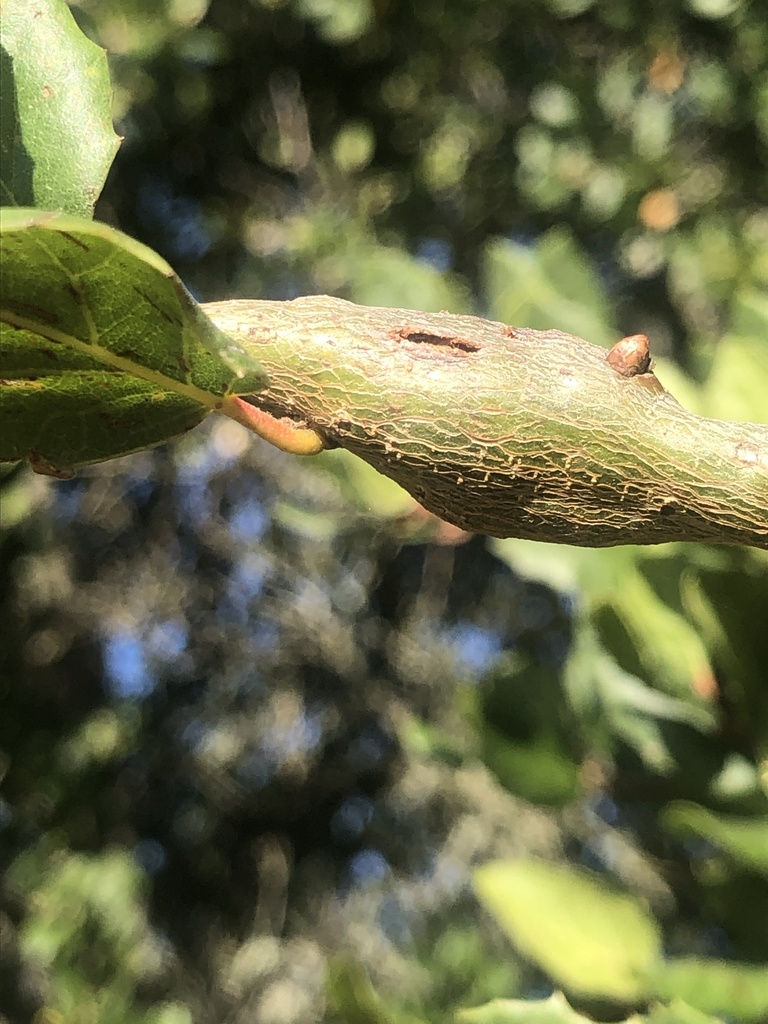
(c) LJ Moore-McClelland, some rights reserved (CC BY) · licence
Family: Cynipidae · Class: Insecta · Order: Hymenoptera
Callirhytis perdens (Ruptured Twig Gall Wasp) is a California animal in the Cynipidae family.
The Ruptured Twig Gall Wasp (Callirhytis perdens) is a small parasitoid wasp in the family Cynipidae, known for inducing distinctive galls on oak trees. Adults are typically small, measuring approximately 2-3 mm in length, with the characteristic hymenopteran body plan of a narrow waist between thorax and abdomen. The species exhibits typical cynipid morphology with elbowed antennae and a compressed abdomen equipped with an ovipositor for egg-laying. Callirhytis perdens occurs in western North America, with documented populations in California. Based on available records, the species has been observed in San Mateo County, indicating presence in the San Francisco Bay Area region (BugGuide 2008). The full extent of its California range requires further documentation, though cynipid wasps in this genus typically have distributions tied to their oak host availability. This species inhabits oak woodlands and mixed forests where suitable Quercus species are present. The wasps are associated with oak trees, where they induce galls on twigs and branches. The common name "Ruptured Twig Gall Wasp" refers to the characteristic appearance of the galls, which create swollen, often split or ruptured-looking formations on oak twigs. These galls serve as both nurseries for developing larvae and feeding sites. The species follows a typical cynipid life cycle, with adults emerging to mate and lay eggs in oak tissue. Females use their ovipositor to insert eggs into young oak twigs, along with chemicals that stimulate abnormal plant growth. This process creates the distinctive twig galls that provide shelter and nutrition for developing larvae. The galls appear as swollen, often cracked or split formations along oak branches, typically measuring 2-3 cm in length. The timing of adult emergence and gall formation likely follows seasonal patterns typical of oak gall wasps, though specific phenological data for this species remains undocumented. Like many specialized gall-inducing insects, Callirhytis perdens faces potential conservation challenges related to habitat modification and oak woodland loss in California. However, no formal conservation status has been assigned to this species at federal or state levels as of December 2025. The species' dependence on specific oak-gall relationships makes it vulnerable to changes in oak forest composition and health. Climate change impacts on oak distributions could affect gall wasp populations indirectly through host plant changes. Detailed ecological studies of this species remain limited. The information presented here synthesizes available observations from taxonomic databases and field reports. Oak gall wasps represent a diverse and ecologically important group, with many species still poorly known despite their significant roles in oak forest ecosystems. Further research is needed to document the full range, host plant relationships, and ecological requirements of Callirhytis perdens in California.
Classification
Class: Insecta · Order: Hymenoptera · Family: Cynipidae
Frequently asked questions
How is Callirhytis perdens classified?
Callirhytis perdens belongs to class Insecta, order Hymenoptera, family Cynipidae.
What family does Callirhytis perdens belong to?
Callirhytis perdens is in the Cynipidae family.
What is Callirhytis perdens?
The Ruptured Twig Gall Wasp (Callirhytis perdens) is a small parasitoid wasp in the family Cynipidae, known for inducing distinctive galls on oak trees.
Is Callirhytis perdens found in California?
Yes. Callirhytis perdens is recorded in California in The California Species Project's catalogue.
Related species
Other California species in the same genus, family, or bioregion.
Data from The California Species Project — 14,000+ California species with verified data from CNPS, CDFW, USFWS, and more.