Callirhytis quercussuttoni
Gouty Stem Gall Wasp
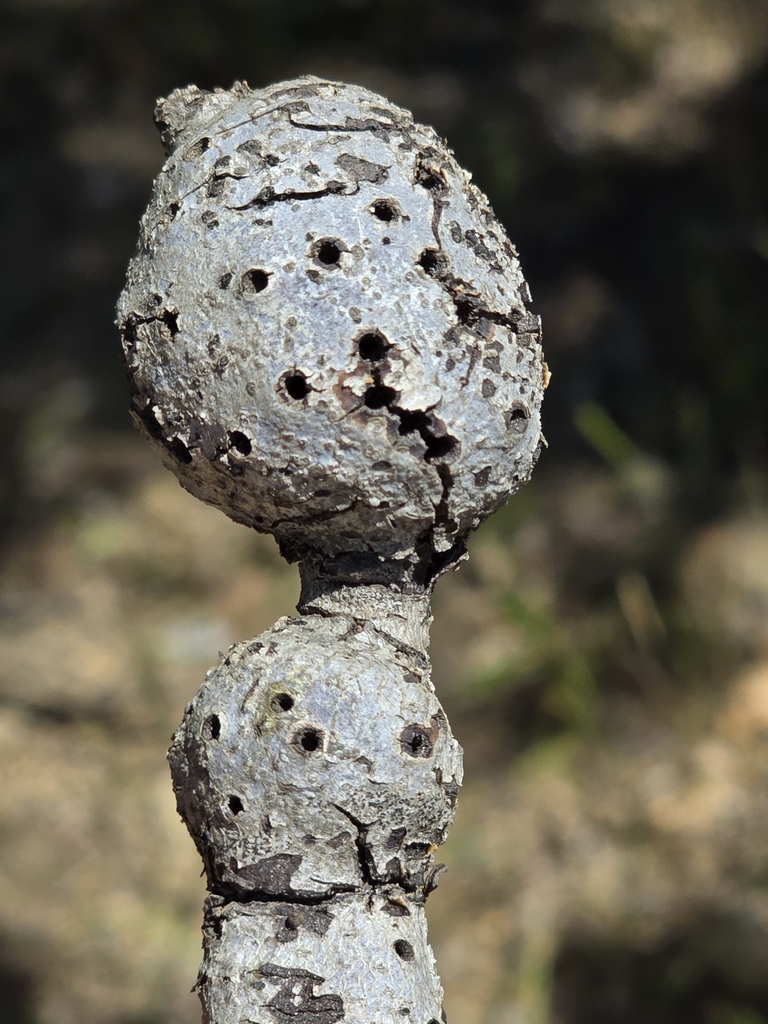
(c) Alan Rockefeller, some rights reserved (CC BY) · licence
Family: Cynipidae · Class: Insecta · Order: Hymenoptera
Callirhytis quercussuttoni (Gouty Stem Gall Wasp) is a California animal in the Cynipidae family.
The Gouty Stem Gall Wasp (Callirhytis quercussuttoni) is a small parasitoid wasp belonging to the family Cynipidae, commonly known as gall wasps. Adult wasps are typically 2-4 mm in length with dark brown to black bodies and transparent wings. Like other cynipid wasps, they possess a compressed abdomen and elbowed antennae. The species exhibits sexual dimorphism, with females having a prominent ovipositor used for egg-laying within host plant tissues. This species is endemic to California and is primarily found in oak woodlands throughout the state. The wasp's distribution closely follows that of its host plants, occurring in areas where suitable oak species are present. Specific county-level distribution records indicate presence in both coastal and inland regions where oak habitats persist. Callirhytis quercussuttoni inhabits oak woodland and mixed forest environments, typically at elevations ranging from sea level to approximately 1,500 meters. The species requires the presence of its specific oak host plants to complete its life cycle. Adults are most commonly found near their characteristic stem galls during emergence periods, which typically occur in late spring to early summer depending on local climate conditions. The species exhibits a specialized gall-forming relationship with oak trees (Quercus species). Female wasps inject eggs into young oak stems using their ovipositor, along with chemical compounds that stimulate abnormal plant growth. This process results in the formation of distinctive gouty or swollen galls on oak stems, which provide both nutrition and protection for developing larvae. The galls appear as enlarged, bulbous growths on twigs and small branches, giving the species its common name. Larvae develop within these galls, feeding on nutritious plant tissues induced by the wasp's presence. The life cycle typically requires one year to complete, with adults emerging from mature galls to mate and begin the cycle anew. Adults are short-lived, focusing their brief existence on reproduction and dispersal to suitable oviposition sites. Currently, Callirhytis quercussuttoni does not hold federal or state listing status under endangered species legislation. However, like many specialized gall wasps, the species may face conservation challenges due to habitat loss and fragmentation of California's oak woodlands. Urban development, agricultural conversion, and altered fire regimes have reduced oak habitat throughout much of the species' range. Climate change poses additional concerns, as shifting temperature and precipitation patterns may affect both the wasp's life cycle timing and the health of its oak hosts. The species' narrow ecological requirements and dependence on specific oak-wasp interactions make it potentially vulnerable to environmental changes. Conservation of oak woodland habitats benefits not only this species but the entire community of specialized insects that depend on these ecosystems. Monitoring programs focused on oak gall wasp communities could provide valuable insights into the health of California's oak woodland ecosystems and the specialized species they support.
Classification
Class: Insecta · Order: Hymenoptera · Family: Cynipidae
Frequently asked questions
How is Callirhytis quercussuttoni classified?
Callirhytis quercussuttoni belongs to class Insecta, order Hymenoptera, family Cynipidae.
What family does Callirhytis quercussuttoni belong to?
Callirhytis quercussuttoni is in the Cynipidae family.
What is Callirhytis quercussuttoni?
The Gouty Stem Gall Wasp (Callirhytis quercussuttoni) is a small parasitoid wasp belonging to the family Cynipidae, commonly known as gall wasps.
Is Callirhytis quercussuttoni found in California?
Yes. Callirhytis quercussuttoni is recorded in California in The California Species Project's catalogue.
Related species
Other California species in the same genus, family, or bioregion.
Data from The California Species Project — 14,000+ California species with verified data from CNPS, CDFW, USFWS, and more.