Callizzia amorata
Gray-patched Looper
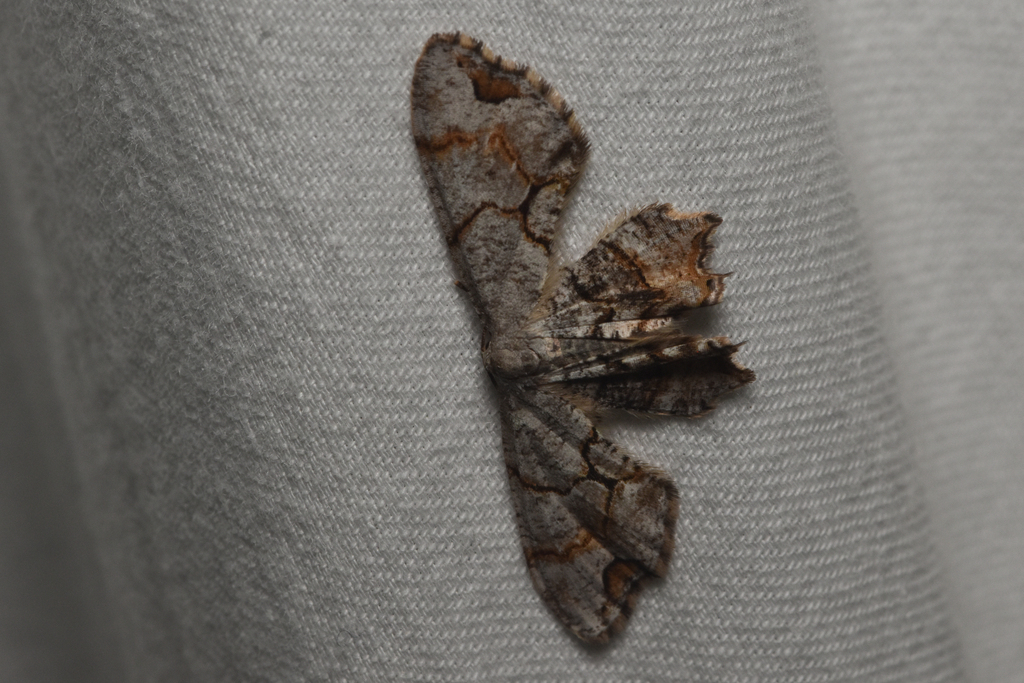
no rights reserved · CC0
Family: Uraniidae · Class: Insecta · Order: Lepidoptera
Callizzia amorata (Gray-patched Looper) is a California animal in the Uraniidae family.
The Gray-patched Looper (Callizzia amorata), also known as the Gray Scoopwing, is a moth species belonging to the family Uraniidae, subfamily Epipleminae. This lepidopteran represents one of only two species within the genus Callizzia recognized by taxonomic authorities. The species exhibits the characteristic features of the Uraniidae family, which are distinguished from the more common Geometridae loopers by their wing venation patterns and taxonomic placement within the superfamily Geometroidea. Physical description details for this species remain poorly documented in the scientific literature. As a member of the looper complex, larvae likely possess the characteristic reduced number of prolegs typical of geometrid-type caterpillars, resulting in their distinctive arching locomotion. Adult moths presumably display the gray coloration suggested by their common name, though specific measurements, wingspan data, and detailed morphological descriptions have not been well established in available sources. The range and distribution of Callizzia amorata across North America requires further documentation. The species appears in the U.S. Fish and Wildlife Service taxonomic database, indicating its presence within United States territories, though specific state and regional distributions remain unclear from current records. The relationship between this species and California populations specifically has not been well documented in accessible scientific literature. Habitat preferences and ecological requirements for the Gray-patched Looper have not been comprehensively studied. As with many uraniid species, adults likely exhibit nocturnal behavior and may be attracted to artificial light sources during their flight period. The timing of adult emergence, seasonal activity patterns, and preferred vegetation types remain undocumented in available sources. Life history characteristics including larval host plants, feeding behavior, and reproductive ecology are not well established for this species. The lack of detailed ecological studies limits understanding of its role within local ecosystems and potential interactions with other lepidopteran species. Larval development patterns, overwintering strategies, and generation number per year have not been documented. Conservation status information for Callizzia amorata is notably absent from federal and state listing databases as of December 2025. The species does not appear on the U.S. Fish and Wildlife Service Endangered Species List, nor does it carry any apparent state-level protection status in California or other jurisdictions. Population trends, threat assessments, and conservation needs remain uncharacterized due to limited research attention. The taxonomic stability of this species within the Uraniidae family appears well-established, with its placement in the subfamily Epipleminae supported by morphological and phylogenetic evidence. However, the paucity of ecological and distributional data represents a significant knowledge gap for this North American moth species. Scientific documentation for this species remains extremely limited. The information presented here is based on available sources including the U.S. Fish and Wildlife Service taxonomic database. If you have additional verified information about this species' biology, distribution, or ecology, please contact us to help improve this species account.
Classification
Class: Insecta · Order: Lepidoptera · Family: Uraniidae
Frequently asked questions
How is Callizzia amorata classified?
Callizzia amorata belongs to class Insecta, order Lepidoptera, family Uraniidae.
What family does Callizzia amorata belong to?
Callizzia amorata is in the Uraniidae family.
What is Callizzia amorata?
The Gray-patched Looper (Callizzia amorata), also known as the Gray Scoopwing, is a moth species belonging to the family Uraniidae, subfamily Epipleminae.
Is Callizzia amorata found in California?
Yes. Callizzia amorata is recorded in California in The California Species Project's catalogue.
More California species
This species has no close relatives in our California data — here are other species to explore.
Data from The California Species Project — 14,000+ California species with verified data from CNPS, CDFW, USFWS, and more.