Callobius severus
West Coast Laceweaver
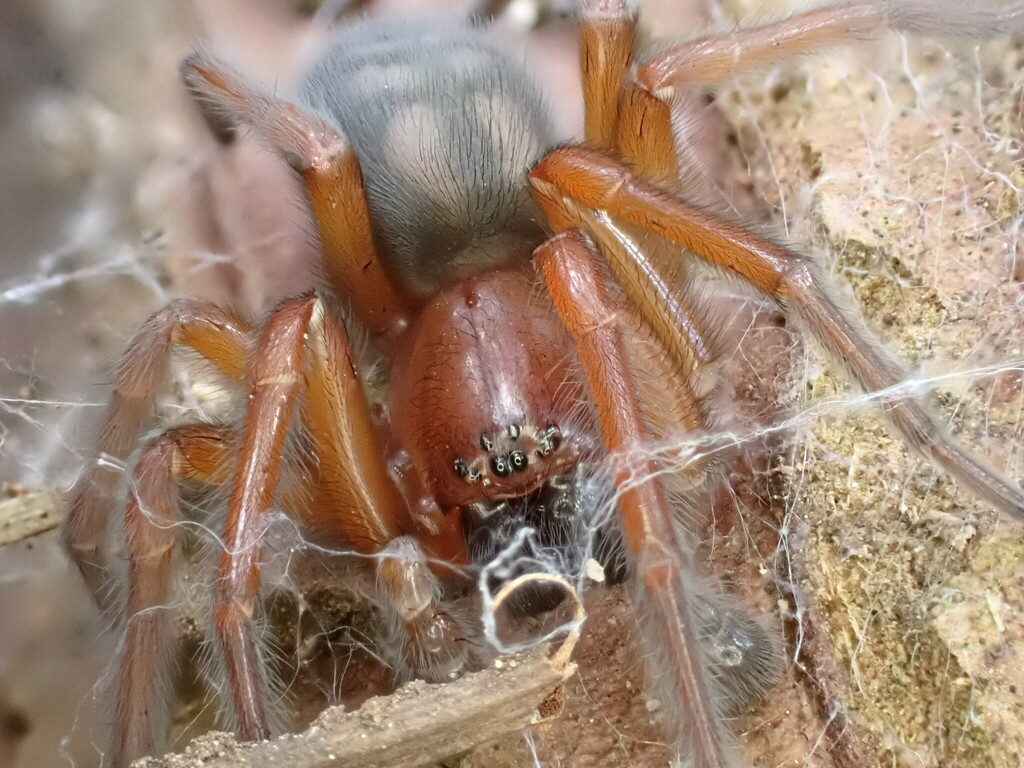
no rights reserved · CC0
Family: Amaurobiidae · Class: Arachnida · Order: Araneae
Callobius severus (West Coast Laceweaver) is a California animal in the Amaurobiidae family.
Callobius severus, known as the West Coast Laceweaver, is a medium-sized spider in the family Amaurobiidae. Members of this family are characterized by their distinctive cribellate silk production, which creates the lace-like webs that give the group its common name. The cribellum is a specialized spinning organ that produces bands of fine silk fibers, creating webs with a characteristic bluish or woolly appearance when viewed under proper lighting conditions. The West Coast Laceweaver is distributed along the Pacific coastal regions of North America. The species occurs primarily in forested habitats from British Columbia south through California, with populations documented in the coastal mountain ranges and adjacent lowland areas. Within California, the species has been recorded from multiple counties along the coast and in the Sierra Nevada foothills, though specific distributional data remain incomplete for many arachnid species. This species inhabits temperate coniferous and mixed forests, typically constructing webs in protected microhabitats such as under bark, in rock crevices, or among fallen logs and debris. Laceweaver spiders prefer areas with stable moisture levels and protection from direct sunlight. The webs are typically built in corners or crevices where the distinctive cribellate silk can effectively capture small flying insects. These spiders show preference for habitats with moderate humidity levels, which are essential for proper web construction and maintenance. Callobius severus constructs irregular sheet webs with a funnel-shaped retreat where the spider waits for prey. The cribellate silk is combed out using specialized calamistrum setae on the hind legs, creating the characteristic woolly texture that enhances prey capture efficiency. The diet consists primarily of small arthropods, including flies, beetles, and other insects that become entangled in the sticky bands of cribellate silk. Reproduction typically occurs in late summer or fall, with females producing egg sacs that are guarded within the web retreat. Juveniles may overwinter in protected locations before reaching sexual maturity the following year. The conservation status of Callobius severus has not been formally assessed by state or federal agencies. Like many arachnid species, comprehensive population data are lacking, and the species does not appear on any official conservation lists as of December 2025. However, habitat loss from logging, urban development, and forest management practices may pose localized threats to populations. The species' dependence on stable forest microhabitats makes it potentially vulnerable to disturbance, though its relatively broad distribution likely provides some resilience against localized impacts. Further research is needed to assess population trends and habitat requirements for this species, as is common for many North American arachnids that remain understudied compared to vertebrate fauna.
Classification
Class: Arachnida · Order: Araneae · Family: Amaurobiidae
Frequently asked questions
How is Callobius severus classified?
Callobius severus belongs to class Arachnida, order Araneae, family Amaurobiidae.
What family does Callobius severus belong to?
Callobius severus is in the Amaurobiidae family.
What is Callobius severus?
Callobius severus, known as the West Coast Laceweaver, is a medium-sized spider in the family Amaurobiidae.
Is Callobius severus found in California?
Yes. Callobius severus is recorded in California in The California Species Project's catalogue.
More California species
This species has no close relatives in our California data — here are other species to explore.
Data from The California Species Project — 14,000+ California species with verified data from CNPS, CDFW, USFWS, and more.