Calonectris leucomelas
Streaked Shearwater
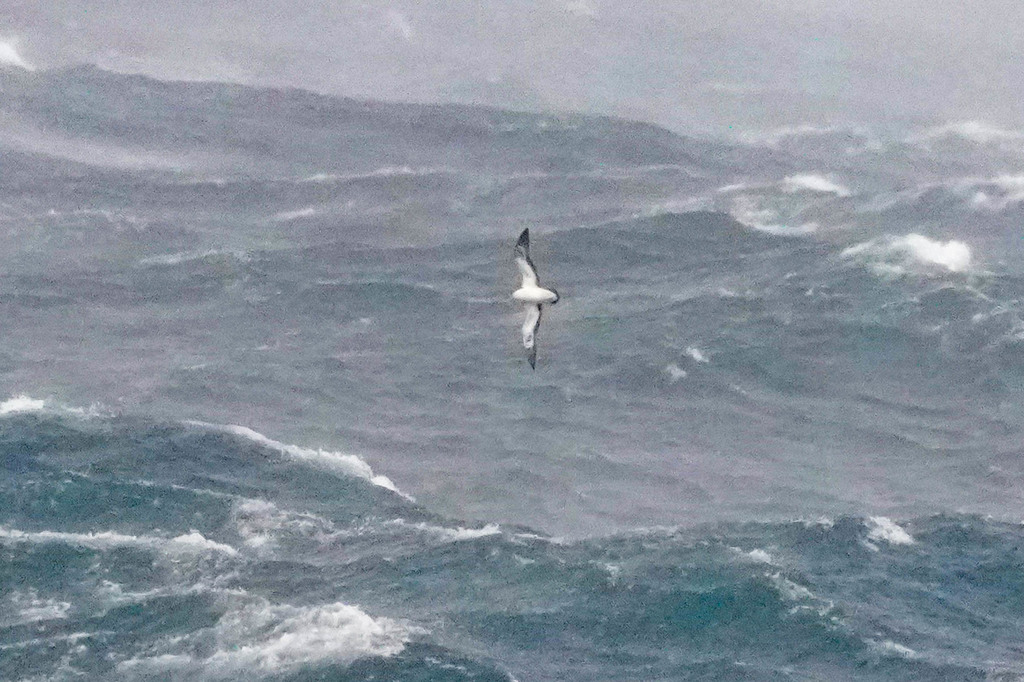
(c) WATANABE Hitoshi 渡辺仁, some rights reserved (CC BY) · licence
Family: Procellariidae · Class: Aves · Order: Procellariiformes
Calonectris leucomelas (Streaked Shearwater) is a California animal in the Procellariidae family.
The Streaked Shearwater is a medium-sized seabird with a wingspan ranging from 1.0 to 1.1 meters (3.3 to 3.6 feet) and a body length of 45 to 48 centimeters (18 to 19 inches). Adults weigh between 400 to 650 grams (0.9 to 1.4 pounds). The species displays distinctive plumage with dark brown upperparts heavily streaked with white, giving the bird its common name. The underparts are predominantly white with brown streaking on the breast and flanks. The head shows a brownish cap with white streaking, and a pale supercilium extends above the eye. The bill is yellowish-pink with a dark tip, and the legs are pink to flesh-colored. In flight, the wings appear long and narrow with dark flight feathers contrasting against lighter wing coverts. Streaked Shearwaters breed primarily on islands off Japan, Korea, and eastern China, with the largest colonies located on islands in the Japanese archipelago. Outside the breeding season, these birds undertake extensive migrations across the Pacific Ocean. In California waters, Streaked Shearwaters occur as uncommon to rare visitors, typically observed from late summer through fall between August and November. Sightings are most frequent in offshore waters beyond the continental shelf, particularly in areas of upwelling and high productivity. During their time in California waters, Streaked Shearwaters inhabit pelagic marine environments, typically remaining in waters deeper than 200 meters (656 feet). They prefer areas where cold, nutrient-rich waters create favorable feeding conditions. The species is often associated with oceanic fronts, convergence zones, and areas of upwelling where prey concentrations are highest. They rarely approach shore except during severe weather events or when following fishing vessels. Streaked Shearwaters are accomplished aerial foragers that employ surface-seizing and shallow diving techniques to capture prey. Their diet consists primarily of small schooling fish including anchovies, sardines, and juvenile rockfish, supplemented by squid and crustaceans. These birds are highly gregarious outside the breeding season, often forming large feeding flocks when prey is abundant. They exhibit typical shearwater flight patterns, alternating between rapid wingbeats and extended gliding close to the ocean surface. The species uses dynamic soaring techniques to cover vast distances with minimal energy expenditure. Streaked Shearwaters are not federally or state-listed in the United States, as they are visitors rather than breeding residents. The global population is considered stable, though specific population estimates vary widely in the literature. In their breeding range, the species faces threats from habitat modification on nesting islands, introduced predators, and marine pollution. Climate change may affect prey availability and distribution patterns during their trans-Pacific migrations. In California, the species may be vulnerable to oil spills, marine debris, and changes in oceanic productivity associated with El Niño events and long-term climate patterns. Monitoring of this species in California waters occurs through pelagic seabird surveys and citizen science observations.
Classification
Class: Aves · Order: Procellariiformes · Family: Procellariidae
Frequently asked questions
How is Calonectris leucomelas classified?
Calonectris leucomelas belongs to class Aves, order Procellariiformes, family Procellariidae.
What family does Calonectris leucomelas belong to?
Calonectris leucomelas is in the Procellariidae family.
What is Calonectris leucomelas?
The Streaked Shearwater is a medium-sized seabird with a wingspan ranging from 1.0 to 1.1 meters (3.3 to 3.6 feet) and a body length of 45 to 48 centimeters (18 to 19 inches).
Is Calonectris leucomelas found in California?
Yes. Calonectris leucomelas is recorded in California in The California Species Project's catalogue.
Related species
Other California species in the same genus, family, or bioregion.
Data from The California Species Project — 14,000+ California species with verified data from CNPS, CDFW, USFWS, and more.