Campaea perlata
Pale Beauty
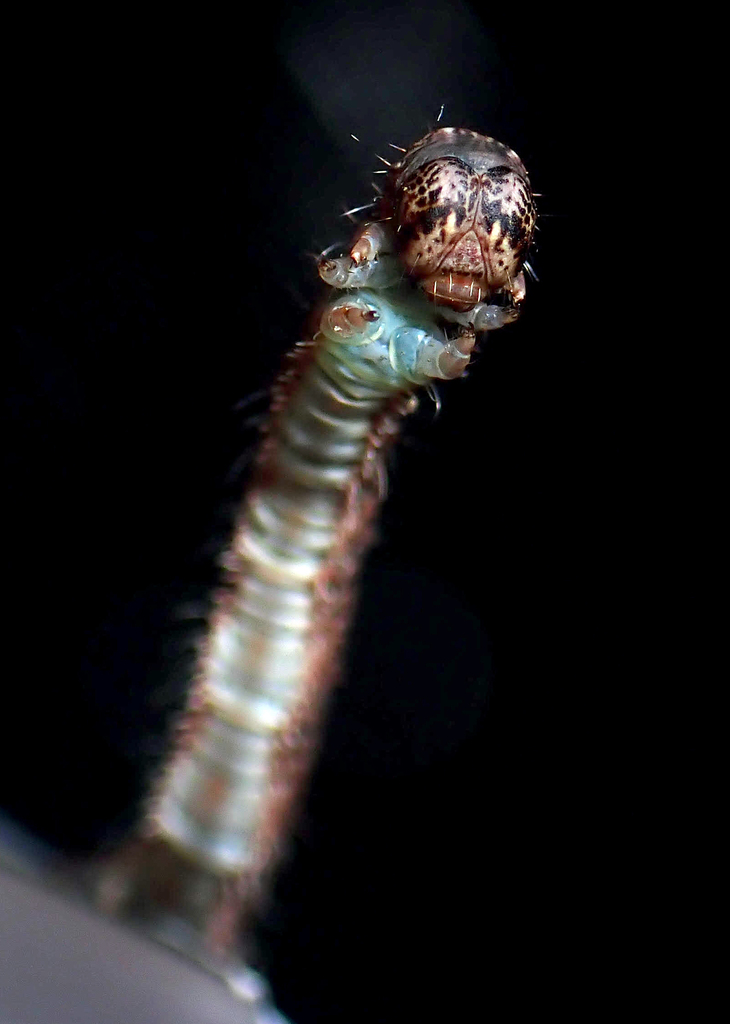
(c) Rand Workman, some rights reserved (CC BY-SA) · licence
Family: Geometridae · Class: Insecta · Order: Lepidoptera
Campaea perlata (Pale Beauty) is a California animal in the Geometridae family.
The Pale Beauty (Campaea perlata) is a medium-sized moth belonging to the family Geometridae, commonly known as geometrid or inchworm moths. Adults typically measure 25 to 35 mm (1.0 to 1.4 inches) in wingspan. The forewings are pale gray to whitish with subtle darker gray cross-lines and small dark discal spots. The hindwings are similarly colored but often slightly paler. Males can be distinguished from females by their more feathered antennae, while females possess thread-like antennae. The species exhibits the characteristic broad wings and relatively slender body typical of geometrid moths. The Pale Beauty occurs across much of North America, ranging from southern Canada south through the United States. In California, the species has been documented in various regions, though specific distributional data within the state remains limited in published literature. The moth's range extends eastward across the continent to the Atlantic coast, indicating a broad continental distribution typical of many geometrid species. This species inhabits deciduous and mixed forests, woodland edges, and areas with diverse shrub and tree communities. Adults are attracted to artificial lights and can be found in suburban areas with mature landscaping. The larvae, which are typical geometrid caterpillars or "inchworms," feed on a variety of deciduous trees and shrubs. Documented host plants include species in the genera Acer (maples), Betula (birches), Prunus (cherries and plums), and Quercus (oaks), among others. The polyphagous nature of the larvae contributes to the species' wide distribution and adaptability to different forest types. Pale Beauty moths are nocturnal and typically active from late spring through early fall, with peak activity occurring during summer months. In California, adults may be observed from May through September, depending on local climate conditions and elevation. The species is univoltine in most of its range, producing one generation per year. Adults are attracted to lights and can be commonly encountered at porch lights, street lamps, and moth sheets used by lepidopterists. Mating occurs during night hours, with females subsequently laying eggs on or near host plants. Larvae overwinter as pupae in the soil or leaf litter, emerging as adults the following season. The caterpillars are typical loopers, moving in the characteristic arching motion that gives inchworms their common name. They feed on foliage during late summer and fall before pupating. Currently, the Pale Beauty holds no special conservation status at federal or state levels. The species appears to be relatively stable across its range and adapts well to human-modified landscapes where suitable host plants are maintained. Urban and suburban environments with diverse tree plantings can support populations. No specific threats have been identified for this species, though general habitat loss and light pollution may affect local populations. The moth's broad host plant range and adaptability to various habitats suggest it is not immediately at conservation risk, though comprehensive population monitoring data is limited.
Classification
Class: Insecta · Order: Lepidoptera · Family: Geometridae
Frequently asked questions
How is Campaea perlata classified?
Campaea perlata belongs to class Insecta, order Lepidoptera, family Geometridae.
What family does Campaea perlata belong to?
Campaea perlata is in the Geometridae family.
What is Campaea perlata?
The Pale Beauty (Campaea perlata) is a medium-sized moth belonging to the family Geometridae, commonly known as geometrid or inchworm moths.
Is Campaea perlata found in California?
Yes. Campaea perlata is recorded in California in The California Species Project's catalogue.
Related species
Other California species in the same genus, family, or bioregion.
Data from The California Species Project — 14,000+ California species with verified data from CNPS, CDFW, USFWS, and more.