Camponotus semitestaceus
Brick Carpenter Ant
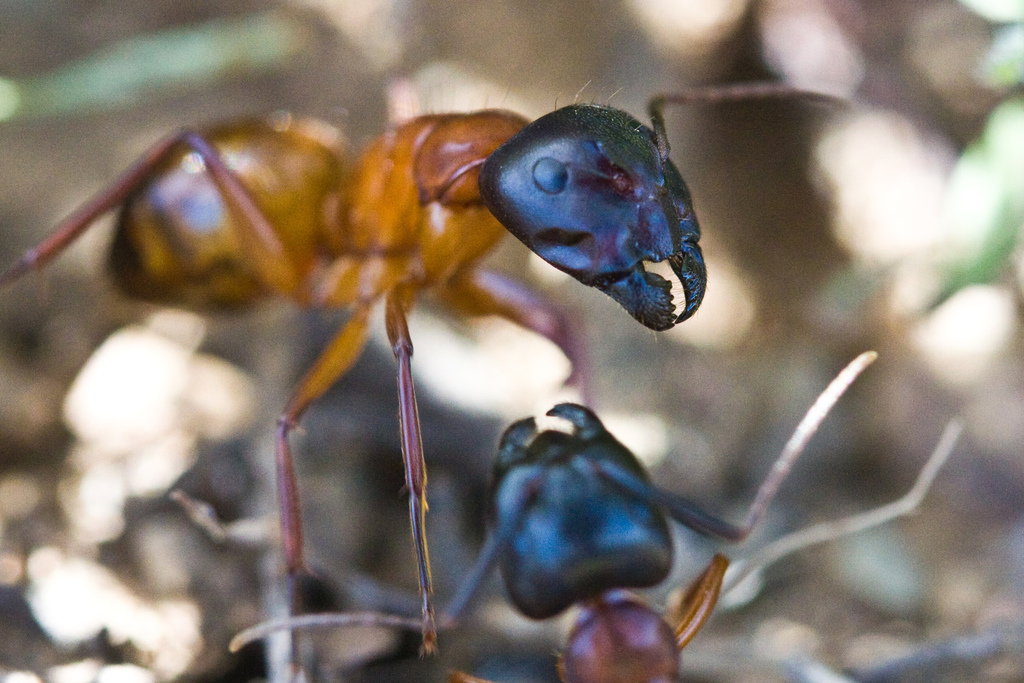
(c) Ken-ichi Ueda, some rights reserved (CC BY) · licence
Family: Formicidae · Class: Insecta · Order: Hymenoptera
Camponotus semitestaceus (Brick Carpenter Ant) is a California animal in the Formicidae family.
The brick carpenter ant (Camponotus semitestaceus) is a medium-sized ant species belonging to the subfamily Formicinae and the subgenus Tanaemyrmex. Workers typically measure 7 to 10 mm in length, displaying a distinctive coloration pattern with reddish-brown to brick-colored head and thorax contrasting with a darker abdomen (BugGuide). The species exhibits the typical carpenter ant body structure with a single-segmented waist (petiole) and elbowed antennae. Like other Camponotus species, workers show polymorphism with minor workers being smaller than major workers, though specific size ranges for different castes have not been well documented. Camponotus semitestaceus occurs primarily in the western United States, with documented populations in California extending from Santa Barbara County north through the coastal ranges and foothills. The species has been recorded from Burton Mesa Ecological Reserve in Santa Barbara County and Cleveland National Forest in southern California (BugGuide). Its distribution appears to be associated with chaparral and oak woodland regions, though the complete range extent requires further documentation. This species inhabits chaparral ecosystems and mixed oak woodlands, typically nesting under logs, rocks, or in sandy soil substrates. Observations from Burton Mesa Ecological Reserve indicate the species occurs in sandy chaparral habitats where workers are found under pieces of dead wood (BugGuide). Like other carpenter ants, colonies likely excavate galleries in dead wood or soil for nesting sites, though specific microhabitat preferences and nesting ecology remain poorly studied. As members of the Camponotus genus, brick carpenter ants are omnivorous foragers that likely feed on a combination of insect prey, honeydew from aphids and scale insects, and plant nectar. Workers are primarily nocturnal, with foraging activity concentrated during evening and nighttime hours (BugGuide). Nuptial flights occur during warmer months, though specific timing and reproductive ecology have not been thoroughly documented. Colonies are likely founded by single queens following mating flights, with colony development following the typical carpenter ant pattern of gradual growth over multiple years. Camponotus semitestaceus does not appear on federal or state threatened species lists as of December 2025. However, like many native ant species in California, populations may face pressure from habitat conversion, urbanization, and competition with invasive ant species. The conversion of chaparral and oak woodland habitats to agricultural and urban uses represents the primary long-term threat to this species. Climate change may also affect suitable habitat distribution, particularly in coastal and foothill regions where this species occurs. Detailed ecological studies of this species are lacking, and much of the available information comes from citizen science observations and taxonomic collections. The species is part of the sansabeanus complex within the subgenus Tanaemyrmex, indicating close relationships with other western North American carpenter ants. Additional research is needed to better understand population trends, detailed habitat requirements, and conservation status throughout its range.
Classification
Class: Insecta · Order: Hymenoptera · Family: Formicidae
Frequently asked questions
How is Camponotus semitestaceus classified?
Camponotus semitestaceus belongs to class Insecta, order Hymenoptera, family Formicidae.
What family does Camponotus semitestaceus belong to?
Camponotus semitestaceus is in the Formicidae family.
What is Camponotus semitestaceus?
The brick carpenter ant (Camponotus semitestaceus) is a medium-sized ant species belonging to the subfamily Formicinae and the subgenus Tanaemyrmex.
Is Camponotus semitestaceus found in California?
Yes. Camponotus semitestaceus is recorded in California in The California Species Project's catalogue.
Related species
Other California species in the same genus, family, or bioregion.
Data from The California Species Project — 14,000+ California species with verified data from CNPS, CDFW, USFWS, and more.