Canis latrans
Coyote
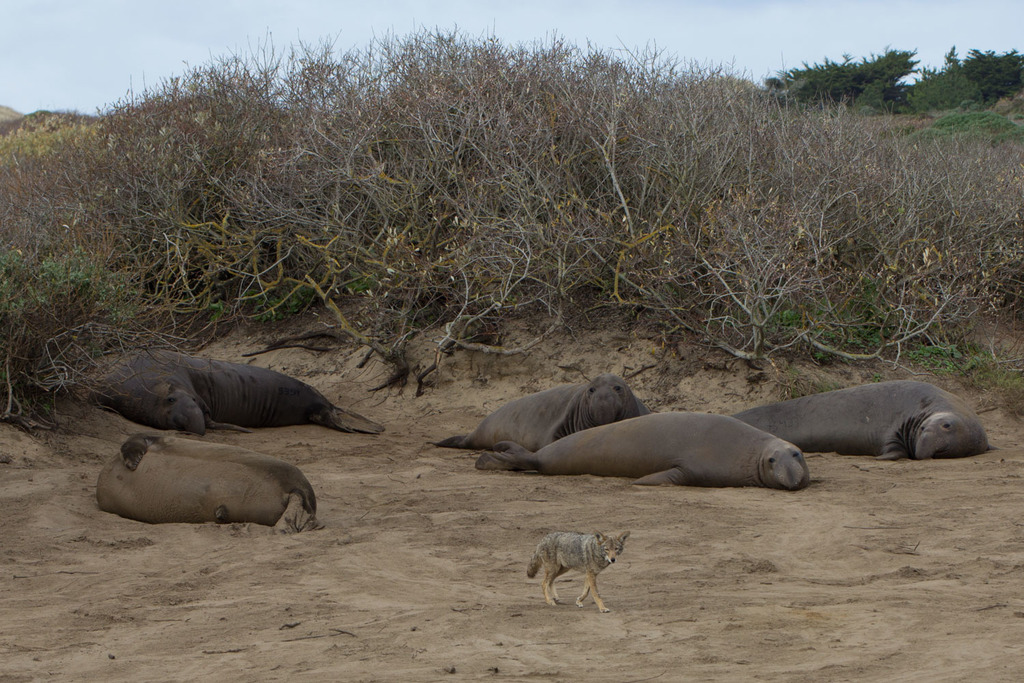
(c) avocat, some rights reserved (CC BY) · licence
Family: Canidae · Class: Mammalia · Order: Carnivora
Canis latrans (Coyote) is a California animal in the Canidae family.
The coyote is a medium-sized canid native to North America, with adults typically measuring 58 to 66 cm (23 to 26 inches) at shoulder height and weighing 7 to 21 kg (15 to 46 pounds). Males are generally larger than females. The species exhibits considerable variation in size and coloration across its range, with a typically grizzled gray to reddish-brown coat, white to cream underparts, and a black-tipped tail. The ears are proportionally large and pointed, and the snout is narrow and elongated compared to domestic dogs. Coyotes possess 42 teeth adapted for an omnivorous diet, with prominent canines and carnassial teeth for processing meat. Historically restricted to western North America, coyotes have dramatically expanded their range over the past century. In California, they now occur throughout the state, from sea level to elevations exceeding 3,000 meters (9,800 feet). This expansion followed the elimination of gray wolves and widespread habitat modification. Coyotes currently inhabit all 58 California counties, with populations established in urban areas including Los Angeles, San Francisco, and San Diego metropolitan regions. Coyotes demonstrate extensive habitat adaptability, occupying desert scrublands, chaparral, oak woodlands, coniferous forests, agricultural areas, and urban environments. They prefer areas with varied topography that provides cover and den sites, such as brushy ravines, rocky outcrops, or abandoned structures. In urban settings, coyotes utilize parks, golf courses, flood control channels, and greenbelts as corridors and habitat. Den sites are typically located in burrows excavated in hillsides, under fallen logs, or in human-made structures. Coyotes are opportunistic omnivores with a diet varying seasonally and geographically. Small mammals, particularly rodents and rabbits, comprise the primary prey base, supplemented by birds, reptiles, amphibians, fish, insects, fruits, and carrion. Hunting strategies include solitary stalking, cooperative pack hunting for larger prey, and scavenging. Breeding occurs from January through March, with a gestation period of 58 to 65 days. Females typically produce litters of 3 to 7 pups in underground dens. Pups emerge at 2 to 3 weeks and are weaned by 5 to 7 weeks. Family groups may remain together through the following winter, with some offspring dispersing up to 160 km (100 miles) from natal territories. Coyotes are not federally or state listed and maintain stable to increasing populations throughout California. The species is classified as a game mammal under California Fish and Game Code, with hunting and trapping permitted year-round in most areas. Population estimates suggest tens of thousands of individuals statewide, with densities varying from 0.1 to 1.8 individuals per square kilometer depending on habitat quality and prey availability. Primary management concerns involve human-wildlife conflicts in suburban areas, livestock depredation, and potential impacts on sensitive prey species. Urban populations have adapted behavioral patterns including increased nocturnality and reduced pack sizes to coexist with human activities.
Classification
Class: Mammalia · Order: Carnivora · Family: Canidae
Frequently asked questions
How is Canis latrans classified?
Canis latrans belongs to class Mammalia, order Carnivora, family Canidae.
What family does Canis latrans belong to?
Canis latrans is in the Canidae family.
What is Canis latrans?
The coyote is a medium-sized canid native to North America, with adults typically measuring 58 to 66 cm (23 to 26 inches) at shoulder height and weighing 7 to 21 kg (15 to 46 pounds).
Is Canis latrans found in California?
Yes. Canis latrans is recorded in California in The California Species Project's catalogue.
Related species
Other California species in the same genus, family, or bioregion.
Data from The California Species Project — 14,000+ California species with verified data from CNPS, CDFW, USFWS, and more.