Canis lupus
Gray wolf
(c) Matt Muir, some rights reserved (CC BY) · licence
Family: Canidae · Class: Mammalia · Order: Carnivora
Conservation status: SE · Endangered · G5 S1
Canis lupus (Gray wolf) is a California animal in the Canidae family.
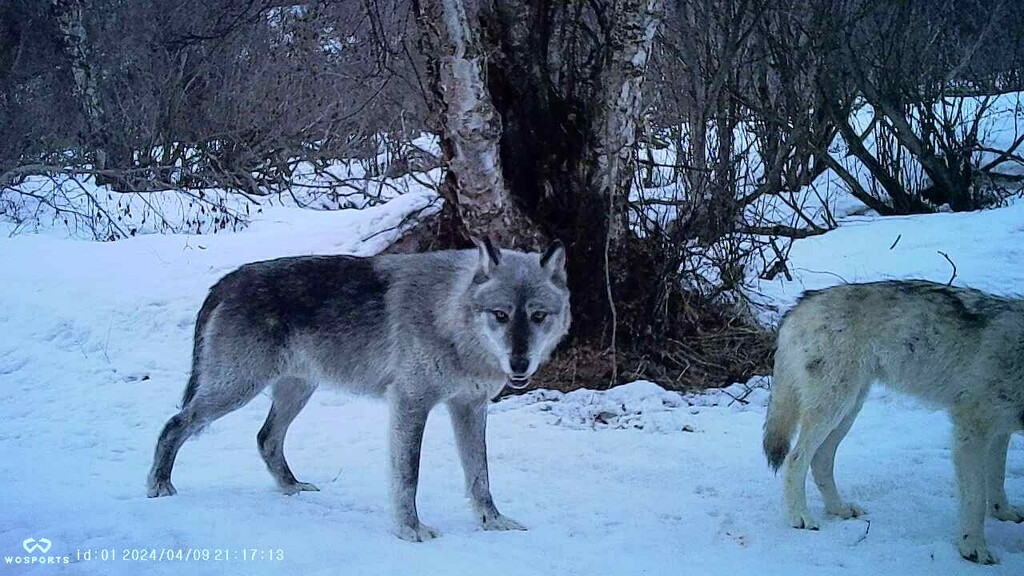
The gray wolf is North America's largest wild canid, weighing 25 to 32 kilograms (55 to 70 pounds) for females and 30 to 40 kilograms (66 to 88 pounds) for males. Adults measure 1.0 to 1.3 meters (3.3 to 4.3 feet) in body length with shoulder heights of 66 to 81 centimeters (26 to 32 inches). The species displays considerable color variation, ranging from pure white through cream, brown, gray, and black. The coat consists of long guard hairs over dense underfur, with a characteristic black-tipped tail. Wolves are distinguished from domestic dogs and coyotes by their broader heads, shorter ears, longer legs, and larger feet. Historically, gray wolves ranged throughout California, but were extirpated by the 1920s due to intensive predator control programs. The species began naturally recolonizing California in 2011 when wolves dispersed from Oregon. Current populations are concentrated in the northern counties, particularly Siskiyou, Modoc, and Lassen counties. According to California Department of Fish and Wildlife, as of 2024, California hosts at least seven known wolf packs with an estimated minimum population of 50 to 70 individuals. The Shasta Pack was the first confirmed breeding pair in California since the 1920s, producing pups in 2015. Wolves in California occupy diverse habitats including coniferous forests, mixed woodlands, chaparral, and oak savannas. They utilize elevations from 300 to 2,400 meters (1,000 to 8,000 feet), with pack territories ranging from 200 to 800 square kilometers (77 to 309 square miles) depending on prey density and habitat quality. Home ranges typically encompass areas with adequate ungulate populations, water sources, and denning sites such as rock caves or excavated dens. Gray wolves are highly social carnivores that live in family groups called packs, typically consisting of an alpha pair and their offspring. They are primarily nocturnal and crepuscular hunters, capable of traveling 50 to 100 kilometers (31 to 62 miles) per day. In California, wolves primarily prey on deer, elk, and occasionally livestock. Breeding occurs from February to March, with females producing litters of four to six pups after a 63-day gestation period. Pups remain with the pack for one to two years before dispersing to establish new territories. Gray wolves are federally listed as Endangered throughout the western United States. California Department of Fish and Wildlife notes that while the U.S. Fish and Wildlife Service delisted wolves nationally in January 2021, a federal court ruling in February 2022 reinstated Endangered status for all gray wolves in the lower 48 states except Minnesota, where they remain Threatened. Primary threats include vehicle strikes, illegal killing, disease transmission from domestic dogs, and habitat fragmentation. California has implemented compensation programs for livestock losses and monitoring protocols to track pack movements and population growth.
Classification
Class: Mammalia · Order: Carnivora · Family: Canidae
Conservation status
SE · Endangered · G5 S1
Frequently asked questions
How is Canis lupus classified?
Canis lupus belongs to class Mammalia, order Carnivora, family Canidae.
What family does Canis lupus belong to?
Canis lupus is in the Canidae family.
Is Canis lupus protected or of conservation concern?
Canis lupus carries the following status: SE · Endangered · G5 S1.
What is Canis lupus?
The gray wolf is North America's largest wild canid, weighing 25 to 32 kilograms (55 to 70 pounds) for females and 30 to 40 kilograms (66 to 88 pounds) for males.
Is Canis lupus found in California?
Yes. Canis lupus is recorded in California in The California Species Project's catalogue.
Related species
Other California species in the same genus, family, or bioregion.
Data from The California Species Project — 14,000+ California species with verified data from CNPS, CDFW, USFWS, and more.