Canis lupus baileyi
Mexican wolf
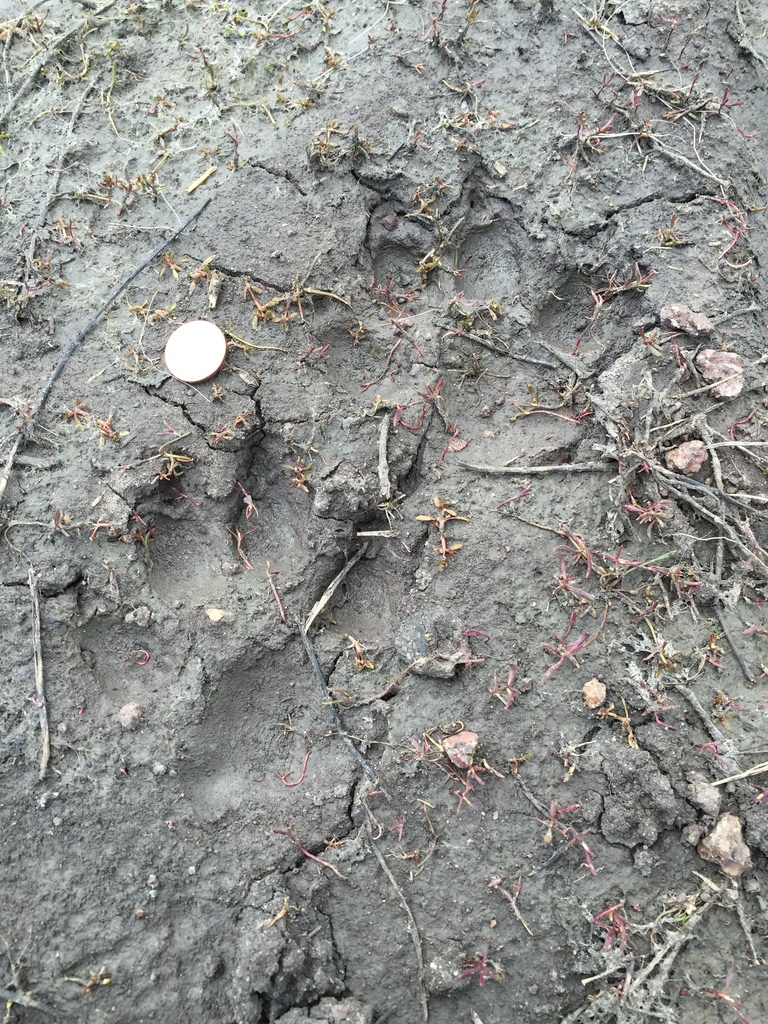
(c) Aaron Allen, some rights reserved (CC BY) · licence
Family: Canidae · Class: Mammalia · Order: Carnivora
Conservation status: Endangered
Canis lupus baileyi (Mexican wolf) is a California animal in the Canidae family.
The Mexican wolf (Canis lupus baileyi) is the smallest, most southern, rarest, and most genetically distinct subspecies of gray wolf in North America. Adults typically weigh 50 to 80 pounds (23 to 36 kg) and measure approximately 5.5 feet (1.7 meters) from nose to tail, standing 28 to 32 inches (71 to 81 cm) at the shoulder. The species exhibits a distinctive, richly colored coat of buff, gray, rust, and black, often with distinguishing facial patterns. Unlike other North American gray wolves, solid black or white color variations do not occur in Mexican wolves. Historically, Mexican wolves ranged throughout the southwestern United States and northwestern Mexico. The subspecies was extirpated from the wild in the United States by the 1970s but has been reintroduced through recovery efforts. Current populations exist in Arizona and New Mexico within the Mexican Wolf Experimental Population Area (MWEPA), which encompasses portions of both states. Some molecular analysis suggests the historical range may have extended as far north as Nebraska and Utah, and as far west as southern California, though this expanded range remains under scientific debate. Mexican wolves inhabit mountainous terrain with mixed coniferous and oak woodlands, typically at elevations between 4,000 and 9,000 feet (1,200 to 2,700 meters). They utilize areas with adequate prey density and suitable denning sites. Within the MWEPA, approximately 26,617 square miles (68,938 square kilometers) of suitable habitat has been identified. Pack home ranges vary considerably based on terrain and prey availability, with denning packs averaging 197 square miles (510 square kilometers) and non-denning packs averaging 343 square miles (888 square kilometers) between 1998 and 2015. Recent data shows pack home ranges ranging from 26 to 2,169 square miles, with an average of 275 square miles in 2023. Mexican wolves are social carnivores that form packs consisting of an alpha breeding pair and their offspring. They primarily prey on elk, white-tailed deer, and mule deer, though they will also consume smaller mammals when available. Breeding occurs once annually, typically in February and March, with pups born after a 63-day gestation period. Litters average four to six pups, which remain dependent on the pack for their first year. The Mexican wolf is listed as endangered under the Endangered Species Act. The species was listed wherever found, except where included in an experimental population as established under federal regulation 17.84(k). Recovery efforts began in the 1970s with captive breeding programs, and reintroduction to the wild commenced in 1998. According to the 2024 annual report, the population has grown from initial releases to over 240 individuals in the wild. Primary threats include habitat fragmentation, human-wildlife conflict, vehicle strikes, and limited genetic diversity. The recovery program continues through collaborative efforts between federal and state agencies, tribal nations, and private landowners.
Classification
Class: Mammalia · Order: Carnivora · Family: Canidae
Conservation status
Endangered
Frequently asked questions
How is Canis lupus baileyi classified?
Canis lupus baileyi belongs to class Mammalia, order Carnivora, family Canidae.
What family does Canis lupus baileyi belong to?
Canis lupus baileyi is in the Canidae family.
Is Canis lupus baileyi protected or of conservation concern?
Canis lupus baileyi carries the following status: Endangered.
What is Canis lupus baileyi?
The Mexican wolf (Canis lupus baileyi) is the smallest, most southern, rarest, and most genetically distinct subspecies of gray wolf in North America.
Is Canis lupus baileyi found in California?
Yes. Canis lupus baileyi is recorded in California in The California Species Project's catalogue.
Related species
Other California species in the same genus, family, or bioregion.
Data from The California Species Project — 14,000+ California species with verified data from CNPS, CDFW, USFWS, and more.