Caracara cheriway
Crested Caracara
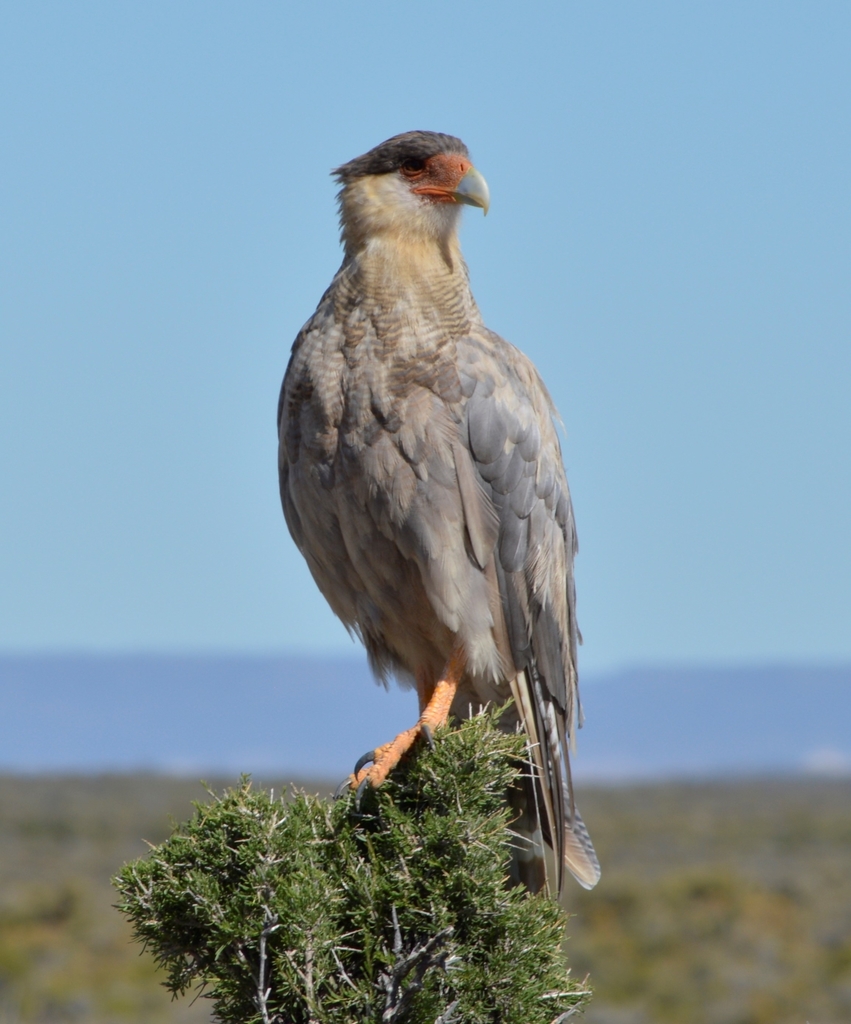
(c) E Santos Ortega, some rights reserved (CC BY) · licence
Family: Falconidae · Class: Aves · Order: Falconiformes
Caracara cheriway (Crested Caracara) is a California animal in the Falconidae family.
The Crested Caracara is a large raptor measuring 50 to 65 cm (20 to 26 inches) in length with a wingspan of 120 to 132 cm (47 to 52 inches). Adults weigh between 0.9 and 1.3 kg (2.0 to 2.9 pounds). The species displays distinctive plumage with a black body, white neck and chest, and a prominent black crest on the head. The bare facial skin is bright orange to red, contrasting with a pale blue to gray beak with a dark tip. In flight, the white patches at the wing tips and base of the tail create a distinctive pattern against the dark flight feathers. Juveniles are browner overall with streaked underparts and duller facial coloring. The Crested Caracara ranges from the southern United States through Central and South America to northern Argentina. In California, the species is considered a rare vagrant or casual visitor, with most records occurring in the southern portion of the state. Historical records exist from Imperial, Riverside, San Bernardino, and Los Angeles counties, typically during fall and winter months. The species is more regularly found in Arizona, Texas, and Florida within the United States. Crested Caracaras inhabit open and semi-open landscapes including grasslands, prairies, agricultural areas, and desert scrubland. They prefer areas with scattered trees or other elevated perches for nesting and roosting. The species occurs from sea level to approximately 3,000 meters (9,800 feet) in elevation. In their typical range, they favor cattle ranches and farmland where carrion and prey are abundant. This opportunistic raptor exhibits both scavenging and hunting behaviors. The diet consists primarily of carrion, but also includes small mammals, reptiles, amphibians, birds, eggs, insects, and occasionally fish. Crested Caracaras often feed on roadkill and are frequently observed walking on the ground searching for food, unlike most other falcons. They breed from December through May, constructing large stick nests in trees, cacti, or on artificial structures. Females typically lay 2 to 3 eggs, with an incubation period of 28 to 32 days. Both parents participate in nest building, incubation, and feeding of young. The Crested Caracara is not federally listed under the Endangered Species Act and maintains stable populations throughout most of its range. The species is classified as Least Concern by the International Union for Conservation of Nature. However, populations in some areas face pressure from habitat loss due to agricultural intensification and urban development. In Texas and Florida, where the species has established breeding populations within the United States, habitat conservation efforts focus on maintaining open rangeland and protecting nesting sites. The species benefits from cattle ranching operations that provide both foraging opportunities and suitable habitat structure.
Classification
Class: Aves · Order: Falconiformes · Family: Falconidae
Frequently asked questions
How is Caracara cheriway classified?
Caracara cheriway belongs to class Aves, order Falconiformes, family Falconidae.
What family does Caracara cheriway belong to?
Caracara cheriway is in the Falconidae family.
What is Caracara cheriway?
The Crested Caracara is a large raptor measuring 50 to 65 cm (20 to 26 inches) in length with a wingspan of 120 to 132 cm (47 to 52 inches).
Is Caracara cheriway found in California?
Yes. Caracara cheriway is recorded in California in The California Species Project's catalogue.
Related species
Other California species in the same genus, family, or bioregion.
Data from The California Species Project — 14,000+ California species with verified data from CNPS, CDFW, USFWS, and more.