Cardellina rubrifrons
Red-faced Warbler
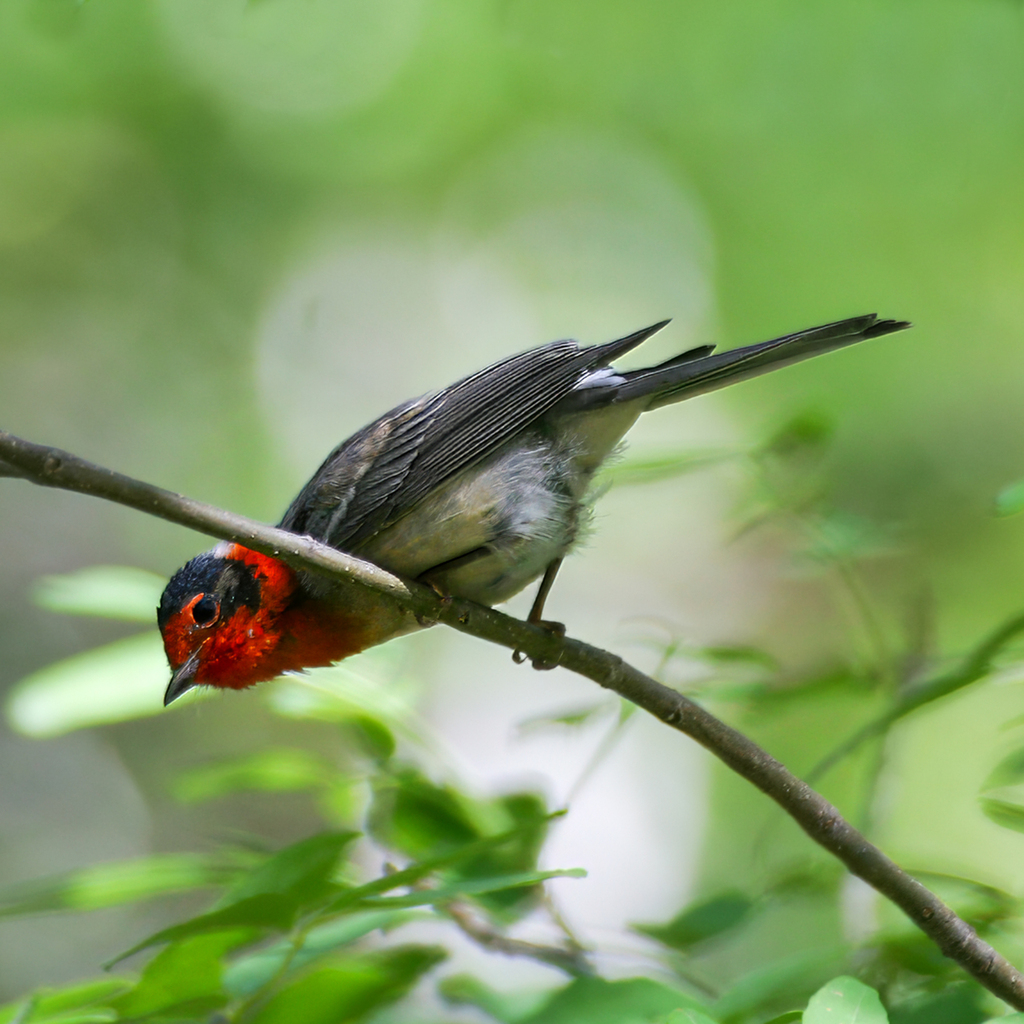
(c) Dan Vickers, some rights reserved (CC BY) · licence
Family: Parulidae · Class: Aves · Order: Passeriformes
Cardellina rubrifrons (Red-faced Warbler) is a California animal in the Parulidae family.
The Red-faced Warbler is a small passerine bird measuring 12.5 to 14 cm (4.9 to 5.5 inches) in length with a wingspan of approximately 18 cm (7.1 inches). Adults weigh 8 to 10 grams. The species is distinguished by its striking facial pattern: bright red face, throat, and upper breast contrasting with a black cap that extends from the bill through the eye to the nape. The back and wings are gray, while the underparts are white with a pale pink wash on the breast. Males and females appear similar, though males may show slightly more intense coloration during breeding season. Juveniles display duller plumage with brownish tones replacing the red facial markings. The Red-faced Warbler has a limited breeding range in the southwestern United States, extending into high-elevation forests of Arizona and New Mexico. In California, the species occurs as an uncommon visitor, primarily documented in the southeastern desert mountain ranges including the Laguna, Cuyamaca, and Palomar Mountains. Most California records are from late spring and early summer months, suggesting these represent individuals dispersing from breeding populations in Arizona. The species' core breeding range extends south through the Sierra Madre Occidental of Mexico to Honduras. This warbler inhabits montane coniferous forests at elevations between 1,800 and 3,400 meters (5,900 to 11,200 feet). Primary habitat consists of mixed pine-oak forests, with particular association with Ponderosa pine, Douglas-fir, and white fir. The species shows preference for forest edges, clearings, and areas with substantial understory development. In California, documented occurrences have been in similar high-elevation coniferous habitats, particularly areas with dense canopy cover and diverse vertical structure. Red-faced Warblers are insectivorous, foraging primarily in the middle to upper canopy levels. They employ various feeding strategies including gleaning insects from foliage, hawking flying insects, and occasionally probing bark crevices. Diet consists mainly of caterpillars, beetles, flies, and other small arthropods. During migration, the species may supplement its diet with small fruits. Breeding occurs from May through July, with females constructing cup-shaped nests on the ground, typically concealed under overhanging vegetation or fallen logs. Clutch size ranges from 3 to 5 eggs, with incubation lasting 12 to 13 days. The Red-faced Warbler is not federally or state listed in California, reflecting its status as a non-breeding visitor rather than a resident species. The species is considered stable throughout its primary range, though populations may face pressure from habitat loss due to logging and fire suppression in montane forests. Climate change poses potential long-term threats through upslope shifts in suitable habitat zones. In California, the species' irregular occurrence makes population assessment difficult, though continued habitat protection in high-elevation forests remains important for supporting transient individuals.
Classification
Class: Aves · Order: Passeriformes · Family: Parulidae
Frequently asked questions
How is Cardellina rubrifrons classified?
Cardellina rubrifrons belongs to class Aves, order Passeriformes, family Parulidae.
What family does Cardellina rubrifrons belong to?
Cardellina rubrifrons is in the Parulidae family.
What is Cardellina rubrifrons?
The Red-faced Warbler is a small passerine bird measuring 12.5 to 14 cm (4.9 to 5.5 inches) in length with a wingspan of approximately 18 cm (7.1 inches).
Is Cardellina rubrifrons found in California?
Yes. Cardellina rubrifrons is recorded in California in The California Species Project's catalogue.
Related species
Other California species in the same genus, family, or bioregion.
Data from The California Species Project — 14,000+ California species with verified data from CNPS, CDFW, USFWS, and more.