Carterocephalus palaemon
Arctic Skipper
no rights reserved · CC0
Family: Hesperiidae · Class: Insecta · Order: Lepidoptera
Carterocephalus palaemon (Arctic Skipper) is a California animal in the Hesperiidae family.
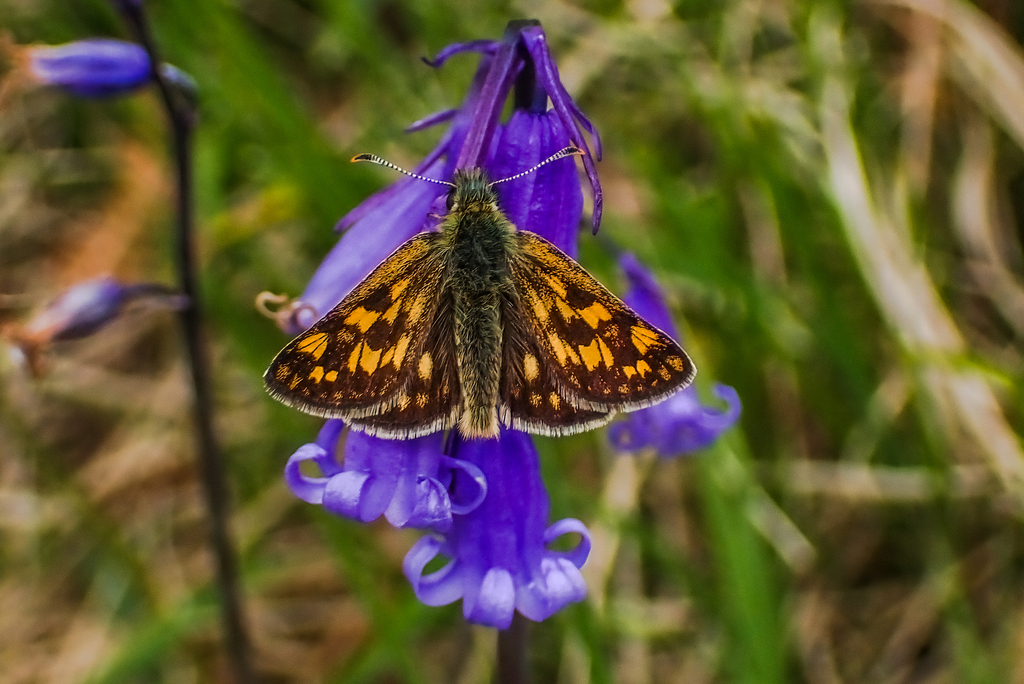
The Arctic Skipper (Carterocephalus palaemon) is a small butterfly in the family Hesperiidae with distinctive orange and black markings. Adults have a wingspan ranging from 19 to 28 mm (0.75 to 1.1 inches). The dorsal wing surfaces are dark brown to black with bright orange spots arranged in a checkerboard pattern. Males display a prominent black scent patch on the forewings. The ventral wing surfaces are orange-brown with cream-colored spots that form distinctive pale bands across both forewings and hindwings. The antennae are short with hooked clubs, typical of skipper butterflies. The Arctic Skipper has a holarctic distribution, occurring across northern North America from central Alaska south to central California, extending south in the Rocky Mountains to northwest Wyoming, and east across the Great Lakes states to New York and New England. The species also ranges throughout northern Eurasia. In California, populations occur in montane areas of the northern Sierra Nevada and southern Cascade Range, primarily in Nevada, Placer, El Dorado, and Shasta counties at elevations between 1,200 and 2,400 meters (4,000 to 7,900 feet). This species inhabits moist montane meadows, forest clearings, and riparian areas where host grasses grow in partial shade. Arctic Skippers prefer areas with moderate moisture levels and are typically found near streams or springs. The habitat includes both coniferous forest edges and subalpine meadow systems where purple reedgrass (Calamagrostis purpurascens) occurs naturally. Adults are most commonly observed in openings within mixed conifer forests dominated by fir, pine, and cedar species. Arctic Skippers are univoltine, producing one generation per year. Adults fly from late June through August, with peak flight activity occurring in July. Males exhibit territorial behavior, perching on low vegetation or bare ground in sunny patches where they intercept passing females. Mating occurs during mid-morning hours when temperatures are optimal. Females deposit single eggs on or near host plants, particularly purple reedgrass in California populations, though European populations utilize bromes (Bromus species) and likely other grass species. Larvae feed within grass sheaths and overwinter in this stage, pupating the following spring. Adults have a rapid, darting flight pattern typical of skippers and feed on nectar from various wildflowers including asters, fleabanes, and mints. The Arctic Skipper is not federally or state listed and appears to maintain stable populations throughout most of its range. However, California populations may face localized threats from habitat alteration, grazing pressure, and climate change effects on montane ecosystems. The species' dependence on specific grass species and moist meadow habitats makes it potentially vulnerable to drought conditions and changes in precipitation patterns. Conservation of montane meadow ecosystems and their associated grass communities is important for maintaining viable populations of this northern butterfly species in California.
Classification
Class: Insecta · Order: Lepidoptera · Family: Hesperiidae
Frequently asked questions
How is Carterocephalus palaemon classified?
Carterocephalus palaemon belongs to class Insecta, order Lepidoptera, family Hesperiidae.
What family does Carterocephalus palaemon belong to?
Carterocephalus palaemon is in the Hesperiidae family.
What is Carterocephalus palaemon?
The Arctic Skipper (Carterocephalus palaemon) is a small butterfly in the family Hesperiidae with distinctive orange and black markings.
Is Carterocephalus palaemon found in California?
Yes. Carterocephalus palaemon is recorded in California in The California Species Project's catalogue.
Related species
Other California species in the same genus, family, or bioregion.
Data from The California Species Project — 14,000+ California species with verified data from CNPS, CDFW, USFWS, and more.