Carterocephalus palaemon magnus
Sonoma Arctic Skipper
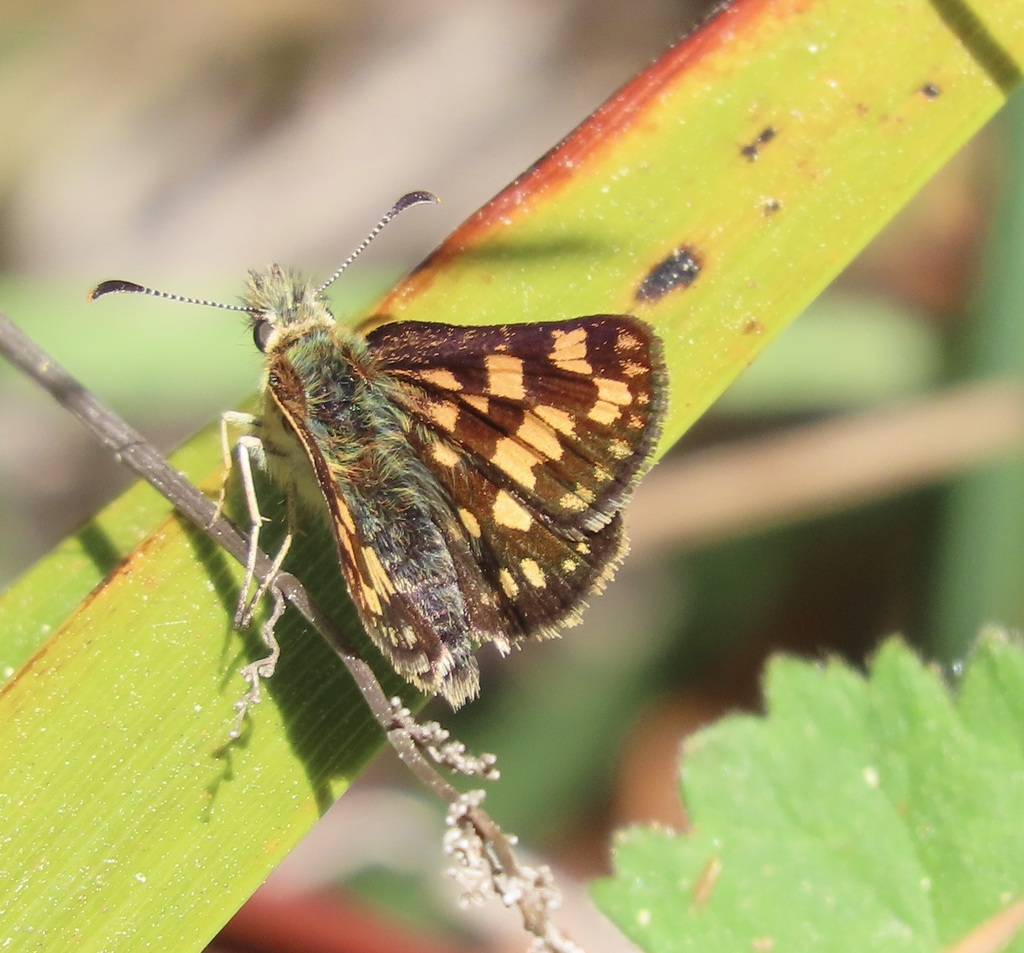
(c) John Hibbard, some rights reserved (CC BY) · licence
Family: Hesperiidae · Class: Insecta · Order: Lepidoptera
Conservation status: G5T5 S1S3
Carterocephalus palaemon magnus (Sonoma Arctic Skipper) is a California animal in the Hesperiidae family.
The Sonoma Arctic Skipper is a subspecies of the Arctic Skipper complex, representing one of California's rarest butterflies. Recent taxonomic work by Zhang et al. (2020) has reclassified this taxon, with some authorities now treating it as Carterocephalus skada magnus rather than C. palaemon magnus, reflecting the distinction between Old World C. palaemon and New World Arctic Skipper species. This small skipper displays the characteristic features of the Arctic Skipper group, with adults typically measuring 25-30 mm in wingspan. The forewings are dark brown to black with distinctive white or cream-colored spots arranged in a checkered pattern. The hindwings show a similar spotted pattern but with more muted coloration. Males possess a narrow stigma on the forewings, a specialized scent-dispersing structure typical of male skippers. The undersides of the wings are lighter, with more pronounced white spotting that creates a distinctive checkerboard appearance. The Sonoma Arctic Skipper has an extremely restricted range in California, found only in Sonoma County and possibly adjacent areas of northern California. This represents the southernmost extent of the Arctic Skipper complex's range on the Pacific Coast. The species occurs at elevations typically between 500-2,000 feet in coastal mountain ranges. According to NatureServe, this subspecies has a global rank of G5T5 but a California rank of S1S3, indicating it is critically imperiled to vulnerable within the state. This subspecies inhabits moist woodland clearings and edges in heavily forested areas, particularly favoring sites with dappled sunlight and high humidity. The species is associated with grassy openings within Douglas fir and mixed evergreen forests, often near streams or seeps that maintain soil moisture throughout the dry California summer. These habitats typically feature a diverse understory of grasses and forbs that provide both larval food sources and adult nectar resources. Like other Arctic Skippers, this subspecies likely has a single annual generation with adults flying from late May through July. Males establish territories in sunny patches within their forest habitat, perching on low vegetation to watch for passing females. The larvae feed on various grass species, overwintering as partially grown caterpillars before completing development the following spring. Adults nectar on a variety of small wildflowers found in forest clearings. The conservation status of the Sonoma Arctic Skipper reflects its extremely limited distribution and specialized habitat requirements. The species faces threats from habitat loss due to development pressure in Sonoma County, forest management practices that eliminate the open understory conditions it requires, and climate change effects that may alter the moisture regimes of its coastal forest habitats. Fire suppression has also contributed to forest densification, reducing the open conditions necessary for this species' survival. The small population size and restricted range make this subspecies particularly vulnerable to local extirpation events.
Classification
Class: Insecta · Order: Lepidoptera · Family: Hesperiidae
Conservation status
G5T5 S1S3
Frequently asked questions
How is Carterocephalus palaemon magnus classified?
Carterocephalus palaemon magnus belongs to class Insecta, order Lepidoptera, family Hesperiidae.
What family does Carterocephalus palaemon magnus belong to?
Carterocephalus palaemon magnus is in the Hesperiidae family.
Is Carterocephalus palaemon magnus protected or of conservation concern?
Carterocephalus palaemon magnus carries the following status: G5T5 S1S3.
What is Carterocephalus palaemon magnus?
The Sonoma Arctic Skipper is a subspecies of the Arctic Skipper complex, representing one of California's rarest butterflies.
Is Carterocephalus palaemon magnus found in California?
Yes. Carterocephalus palaemon magnus is recorded in California in The California Species Project's catalogue.
Related species
Other California species in the same genus, family, or bioregion.
Data from The California Species Project — 14,000+ California species with verified data from CNPS, CDFW, USFWS, and more.