Castianeira descripta
Red-spotted Ant-mimic Sac Spider
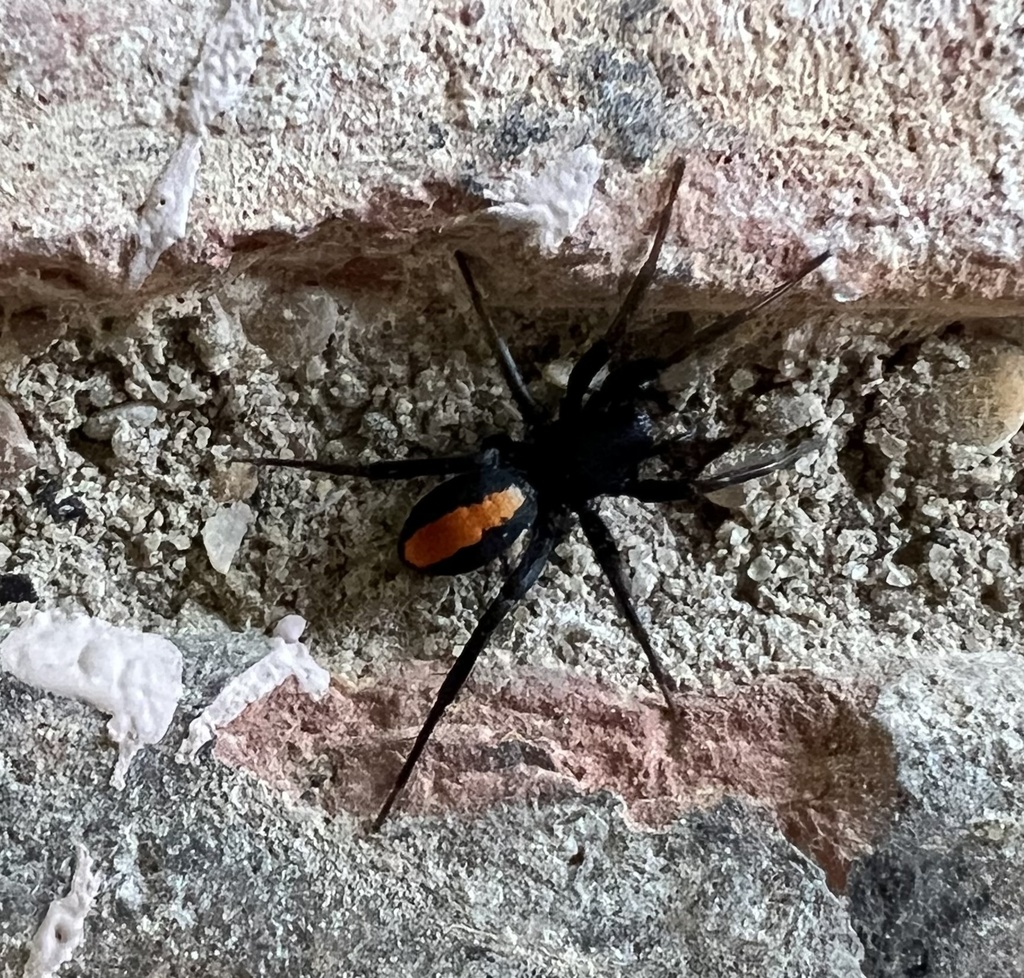
no rights reserved · CC0
Family: Corinnidae · Class: Arachnida · Order: Araneae
Castianeira descripta (Red-spotted Ant-mimic Sac Spider) is a California animal in the Corinnidae family.
The red-spotted ant-mimic sac spider is a small spider in the family Corinnidae, distinguished by its ant-like appearance and distinctive coloration. Females measure approximately 4-6 mm in body length, while males are slightly smaller at 3-5 mm. The species displays variable coloration with a dark cephalothorax and legs, and an abdomen marked with red spots or patches, though the amount of red coloration can vary considerably between individuals (BugGuide). The spider's elongated body shape and constricted waist create a strong resemblance to ants, an adaptation that likely provides protection from predators. Castianeira descripta has a broad distribution across eastern North America, extending from the eastern United States into Canada. According to BugGuide, the species occurs in Alberta, Saskatchewan, Manitoba, Ontario, Quebec, New Brunswick, and Nova Scotia, making it one of the more widely distributed Castianeira species in North America. Within the United States, it ranges throughout much of the eastern regions, though specific state-by-state documentation varies. This species inhabits diverse terrestrial environments including forests, grasslands, and disturbed areas. Like other members of the Corinnidae family, red-spotted ant-mimic sac spiders are ground-dwelling hunters that construct silken retreats under stones, logs, or in leaf litter rather than building webs for prey capture. They are typically found in areas with adequate ground cover that provides both hunting opportunities and shelter sites. Red-spotted ant-mimic sac spiders are active hunters that pursue prey on foot rather than using webs. Their diet consists primarily of small arthropods including other spiders, insects, and occasionally ants, despite their ant-mimetic appearance. The species exhibits typical spider reproductive behavior, with males seeking females during the mating season. Females construct silken egg sacs to protect their developing offspring. Seasonal activity patterns likely follow temperate zone norms, with peak activity during warmer months and overwintering in protected locations. The conservation status of Castianeira descripta has not been formally assessed at federal or state levels. The species appears to maintain stable populations across much of its range, though comprehensive population surveys are lacking. Arkansas has included this species on its list of Species of Greatest Conservation Need, citing uncertainty about population status and life history requirements rather than documented decline (BugGuide). The broad geographic distribution and apparent habitat flexibility suggest the species is not currently at significant conservation risk, though climate change and habitat modification could affect local populations. Like many arachnids, this species likely benefits from habitat management that preserves natural ground cover and limits pesticide use. The relative stability of this species contrasts with conservation concerns facing other specialized arthropods in North America.
Classification
Class: Arachnida · Order: Araneae · Family: Corinnidae
Frequently asked questions
How is Castianeira descripta classified?
Castianeira descripta belongs to class Arachnida, order Araneae, family Corinnidae.
What family does Castianeira descripta belong to?
Castianeira descripta is in the Corinnidae family.
What is Castianeira descripta?
The red-spotted ant-mimic sac spider is a small spider in the family Corinnidae, distinguished by its ant-like appearance and distinctive coloration.
Is Castianeira descripta found in California?
Yes. Castianeira descripta is recorded in California in The California Species Project's catalogue.
Related species
Other California species in the same genus, family, or bioregion.
Data from The California Species Project — 14,000+ California species with verified data from CNPS, CDFW, USFWS, and more.